Outpost Bio raised $3.5 million to build AI models of the human microbiome
The startup Outpost Bio raised $3.5 million to build AI models of the human microbiome, the ecosystem of trillions of microorganisms living in our bodies. The c
AI-processed from TNW; edited by Hamidun News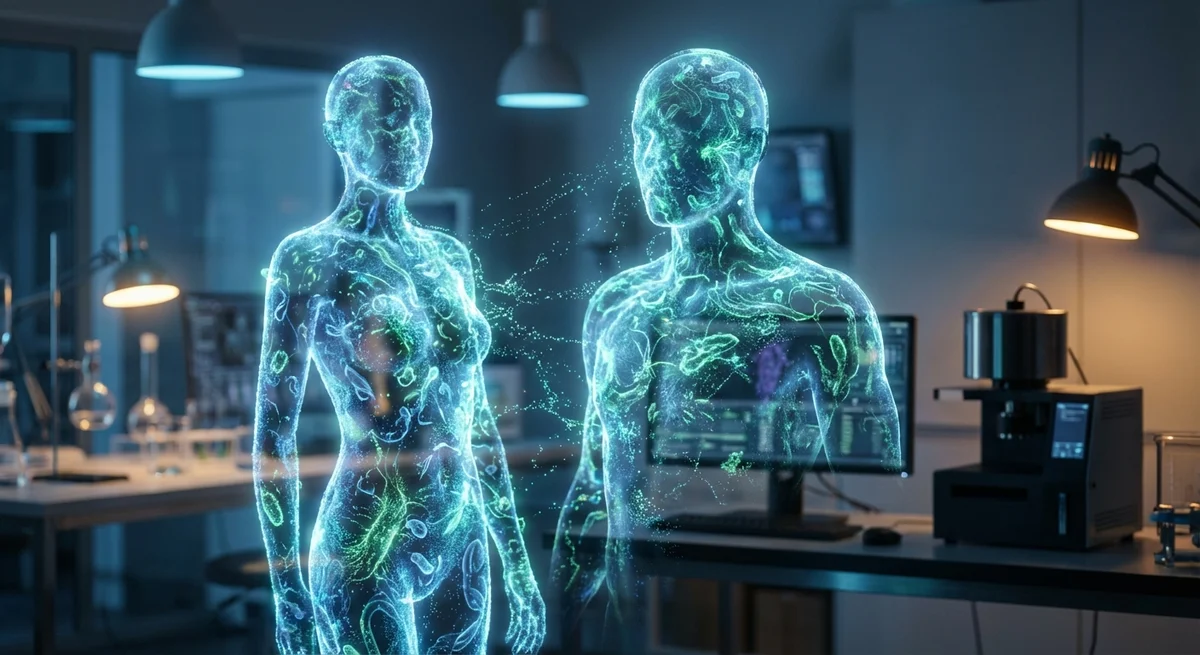
Inside each of us lives an entire universe. Trillions of bacteria, fungi, viruses and other microorganisms form an incredibly complex ecosystem that scientists call the microbiome. This invisible army influences absolutely everything — from digestion and immunity to mood and drug response. The problem is that making sense of this chaos is nearly impossible for the human mind. Young startup Outpost Bio has taken on exactly this challenge, having just raised $3.5 million in seed funding.
Outpost Bio offers a fundamentally new approach: instead of spending years studying individual bacterial strains in laboratories, the company builds computational AI models capable of grasping the microbiome as an integrated system. Essentially, this is about creating a digital twin of the human microbiological ecosystem — a model that can predict how changes in microbiome composition will affect health, how a specific patient will respond to a particular drug, and which dietary interventions will prove most effective.
To understand the scale of the problem, it's worth recalling a few numbers. The human body is inhabited by roughly as many microbial cells as our own — about 38 trillion. The genome of these microorganisms contains hundreds of times more genes than the human genome. The interactions between thousands of species of bacteria, fungi and viruses create combinatorial complexity that confounds classical methods of biological research. This is where artificial intelligence enters the scene: modern machine learning models are capable of finding patterns in datasets of a magnitude inaccessible to manual analysis.
Investor interest in Outpost Bio is no accident. Over the last five to seven years, microbiome research has experienced a genuine boom. Scientists have established connections between gut microflora composition and dozens of diseases — from type 2 diabetes and obesity to depression, Parkinson's disease, and even cancer immunotherapy effectiveness. Pharmaceutical giants are already investing billions in developing drugs targeting the microbiome. Yet until now, the industry has faced a fundamental problem: enormous amounts of data have been accumulated, but tools to make sense of it are critically lacking. Outpost Bio aspires to be exactly such a tool.
The raised $3.5 million — a modest sum by biotech standards — is sufficient for a seed round to assemble a team, train initial models, and move to the pilot project stage with pharmaceutical and nutritional companies. The startup fits into a broader trend at the intersection of AI and biology, which in recent years has been accelerating at incredible speed. One need only recall DeepMind's AlphaFold, which revolutionized protein structure prediction, or the numerous AI platforms for accelerating drug development. The microbiome is a logical next frontier for this approach.
Nevertheless, Outpost Bio's path will not be simple. Microbiome modeling comes with unique challenges. Unlike the genome, which is relatively stable, each person's microbiome is dynamic — it changes depending on diet, stress, antibiotic use, geography, and dozens of other factors. Creating a universal model that accounts for all this variability is a task of colossal complexity. Moreover, the quality of microbiome data remains uneven: different laboratories use different sequencing methods, which creates reproducibility issues.
Nevertheless, the potential payoff is enormous. If Outpost Bio succeeds in building sufficiently accurate predictive models, this could transform several industries at once. Personalized medicine will gain another powerful dimension — doctors will be able to select therapy taking into account a patient's individual microbiome profile. Pharmaceuticals will accelerate development of a new class of drugs — next-generation probiotics, postbiotics, and bacteriophages. Even the food industry will be able to create products optimized for specific microbiome needs.
Outpost Bio is a bet that the future of medicine lies not only in understanding our own cells, but in deciphering the language of the trillions of microscopic companions with whom we share our bodies. The $3.5 million round is merely a first step, but the direction is chosen correctly. In a world where AI has already learned to fold proteins and design drug molecules, microbiome modeling looks not like an ambitious dream, but as an inevitable next stage.
Want to stop reading about AI and start using it?
AI News is a curated feed of AI/tech news. Hamidun Academy teaches you to use AI systematically in your work.