MWC 2026: telecom giants seek answers to the challenges of the AI boom and geopolitics
At MWC 2026 in Barcelona, the telecom industry faced a dual challenge: explosive demand for AI infrastructure is straining supply chains, while geopolitical…
AI-processed from Bloomberg Tech; edited by Hamidun News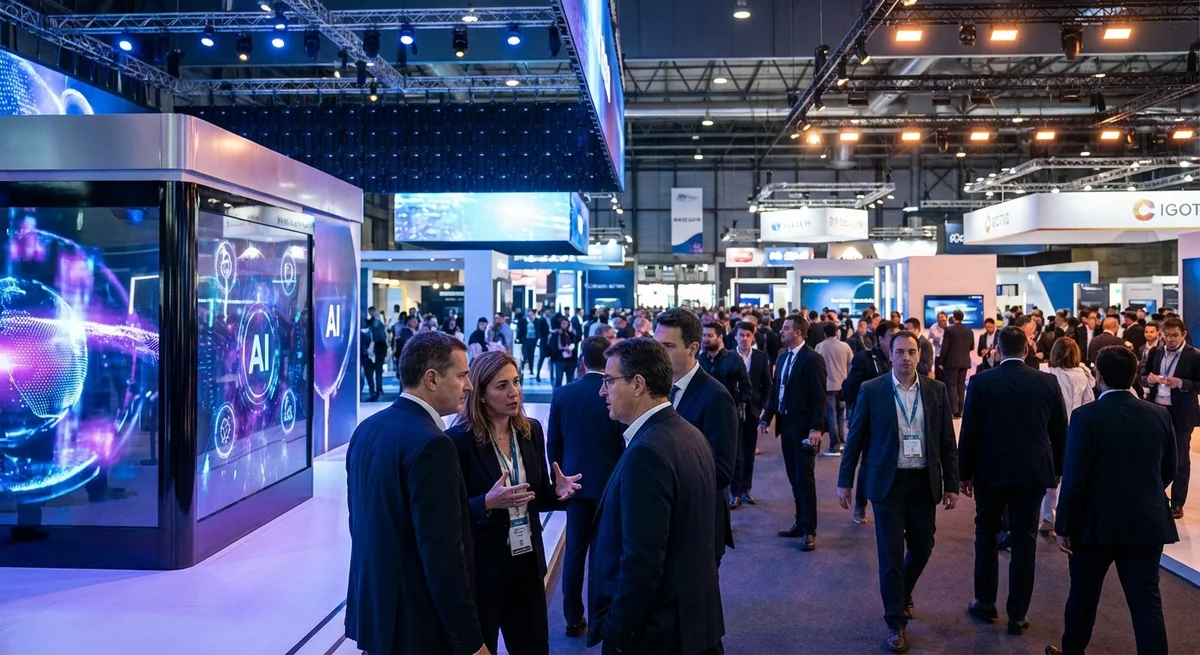
Barcelona once again became the epicenter of the mobile industry. This week, Mobile World Congress 2026 gathered tens of thousands of participants from around the world, but the atmosphere at the largest industry exhibition is noticeably different from previous years. Instead of the usual presentations of new smartphones and demonstrations of 5G speed, the main topic became how telecom companies are planning to survive — and possibly even thrive — in a world that is being rapidly redrawn by artificial intelligence and geopolitical confrontation.
The past year and a half of the AI boom has created unprecedented pressure on global technological infrastructure. Data centers are growing like mushrooms after rain, demand for computing power many times exceeds supply, and supply chains, barely recovered from the pandemic shock, are creaking again. For telecom operators, this is simultaneously a threat and an opportunity. A threat — because they risk becoming mere suppliers of communication channels through which other people's data and other people's money flow. An opportunity — because no AI service will be able to operate at scale without reliable networks, and operators understand this perfectly.
At MWC 2026, telecom giants are actively demonstrating their AI strategies. This is not just about implementing chatbots in customer support — though that is happening everywhere too. Operators are showing how artificial intelligence optimizes the networks themselves: predicts overloads, automatically redistributes traffic, reduces energy consumption of base stations. Some companies go further and offer corporate customers AI platforms based on their edge infrastructure — servers located as close as possible to end users. This allows data to be processed with minimal latency, which is critical for autonomous transport, industrial robotics, and medical applications.
But technological ambitions are running into harsh geopolitical reality. The confrontation between the US and China in semiconductors and telecom equipment has entered a new phase. European operators, many of whom have been using Huawei equipment for years, find themselves in a situation where they have to rebuild entire network segments under pressure from political decisions. At the same time, American restrictions on exporting advanced chips to China create a component shortage that the entire industry feels. At the Barcelona exhibition, this topic is discussed not so much on the main stage as in negotiation rooms and corridors — but it is largely this that determines strategic decisions for years to come.
A separate intrigue of MWC 2026 is new partnerships that seemed impossible not so long ago. Telecom companies, traditionally competing with each other down to the last subscriber, are beginning to join forces in the face of common challenges. Joint equipment purchases, common platforms for AI services, cross-operator APIs for developers — all of this is an attempt to create the scale necessary to compete with technology giants like Google, Amazon, and Microsoft, which are increasingly entering the telecom sector. The GSMA Open Gateway initiative, launched several years ago, is finally beginning to take real shape: dozens of operators around the world are opening up their network capabilities through standardized software interfaces.
However, skeptics rightly note that the telecom industry has promised transformations many times before that never materialized. Operators talked about a revolution in the days of 3G, then 4G, then 5G — but each time the main profits from the new network capabilities were taken by those who created services on top of them. The question is whether the AI era will be an exception. There are arguments for optimism: unlike previous technological waves, AI applications require not just a wide channel, but a complex distributed infrastructure with guarantees of latency, security, and reliability. This is exactly what telecom operators know how to build.
MWC 2026 leaves a dual impression. On one hand, the energy and ambitions at the exhibition are palpable — the telecom industry clearly is not planning to surrender without a fight. On the other hand, the scale of challenges — from geopolitical market fragmentation to the need for multi-billion-dollar investments in AI infrastructure — makes one wonder whether all players will survive this transformation. The next two to three years will show whether telecom operators will manage to convert their role as the foundation of the digital economy into a real competitive advantage, or whether they will remain what they have been for the last twenty years — an invisible pipe through which someone else's gold flows.
Want to stop reading about AI and start using it?
AI News is a curated feed of AI/tech news. Hamidun Academy teaches you to use AI systematically in your work.