Altman says: private companies should not be more powerful than the US government
Sam Altman announced OpenAI's contract with the Pentagon to integrate AI into the department's classified systems. Amid public concern, the company's CEO held a
AI-processed from 3DNews AI; edited by Hamidun News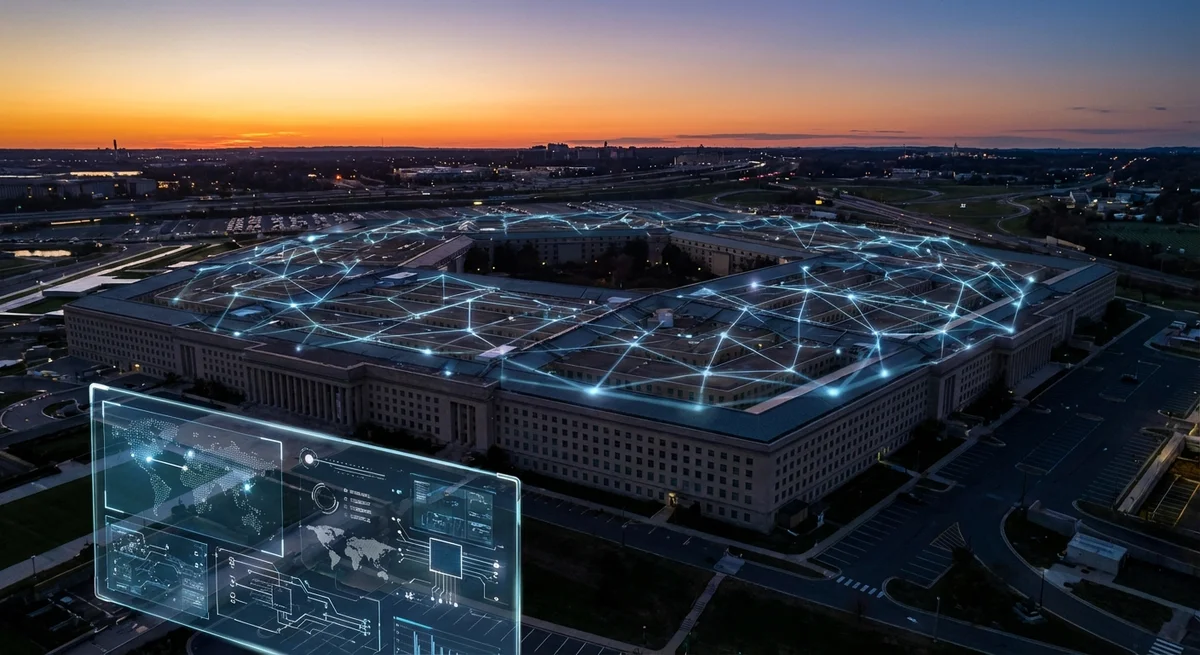
Sam Altman chose a Friday evening — a classic time for news outlets hoping to bury a story from broad public scrutiny — to make one of the most significant announcements in OpenAI's history. The company has signed a contract with the Pentagon to implement artificial intelligence technologies in classified systems of the U.S. Department of Defense. The scope and details of the agreement are not being disclosed, but the mere fact of a partnership between the world's largest developer of generative AI and the military agency of a superpower changes the rules of the game for the entire industry.
To understand why this announcement came as a thunderbolt from the blue, it's necessary to recall history. OpenAI was founded in 2015 as a non-profit research laboratory with a mission to ensure that artificial general intelligence would benefit all of humanity. Just a few years ago, the company adhered to a strict policy of refusing to collaborate with military structures. However, in January 2024, OpenAI quietly changed its acceptable use policy, removing the direct prohibition on military and intelligence applications. This provoked a wave of criticism at the time, but seemed more like a theoretical shift. Now theory has become practice — and a Pentagon contract.
Aware of the resonance this news would provoke, Altman held a public question-and-answer session. The central thesis of his remarks sounded unexpected coming from the head of a technology corporation: private companies cannot and should not have more power than a democratically elected government. According to Altman, if a country's legitimate authority decides to use certain technologies to ensure national security, then a private company has no right to place its own principles above that decision. In effect, Altman formulated a doctrine of corporate ethics subordination to state sovereignty — a position that would have been considered unthinkable in Silicon Valley just five years ago.
This rhetoric deserves careful analysis. On one hand, there is a rational kernel to it. Technology giants have indeed accumulated unprecedented power, and the idea that an elected government should maintain control over strategic technologies finds support across a broad spectrum of political forces.
On the other hand, Altman's argument conveniently aligns with OpenAI's commercial interests. Military contracts are a stable and generous source of financing. The Pentagon spends hundreds of billions of dollars annually, and even a small fraction of this budget could transform the financial position of any technology company.
For OpenAI, which continues to burn colossal sums on model training and infrastructure development, access to defense money is not simply a contract, but a strategic survival resource in the race against Google, Anthropic, and Meta.
The context of competition is equally important. Google faced an internal employee revolt in 2018 over Project Maven — a program analyzing drone video for the Pentagon — and was forced to retreat. The landscape has changed dramatically since then. Palantir, Anduril, and other defense technology companies are actively integrating AI into military systems, and Google itself has long since returned to working with the defense sector, albeit less publicly. Altman, in essence, acknowledges a new reality: in an era of geopolitical rivalry between the United States and China, refusing to work with the military is not a moral position, but a competitive loss. Technologies will be created regardless; the only question is who will create them.
However, Altman's statement raises troubling questions about boundaries. If a democratically elected government decides to use AI for mass surveillance or autonomous weapons systems, should the company comply in those cases as well? Where is the red line? Altman did not provide a clear answer, limiting himself to general words about the importance of security and responsible approaches. Critics already point out that the formula "government decides, we obey" is not an ethical position, but a refusal of ethical responsibility, wrapped in democratic rhetoric.
The integration of AI into the Pentagon's classified systems also raises the question of transparency. The public will likely never know exactly how OpenAI's models are used in defense projects. This creates a paradox: a company building one of the most powerful technologies in history simultaneously becomes less and less accountable to the very people it purports to serve.
OpenAI's contract with the Pentagon is a point of no return not only for one company, but for the entire artificial intelligence industry. The era in which technology companies could position themselves as neutral creators of tools has definitively ended. AI has become a weapon of geopolitics, and every major developer is forced to choose a side. Altman has made his choice, wrapping it in the language of democratic legitimacy. It remains to be seen whether society — or at least OpenAI's own employees — will agree with this choice.
Want to stop reading about AI and start using it?
AI News is a curated feed of AI/tech news. Hamidun Academy teaches you to use AI systematically in your work.