Data centers versus the power grid: an Australian case with global consequences
The data center construction boom in Australia has exposed a systemic problem: giant server farms consume vast amounts of electricity and water, threatening…
AI-processed from Guardian; edited by Hamidun News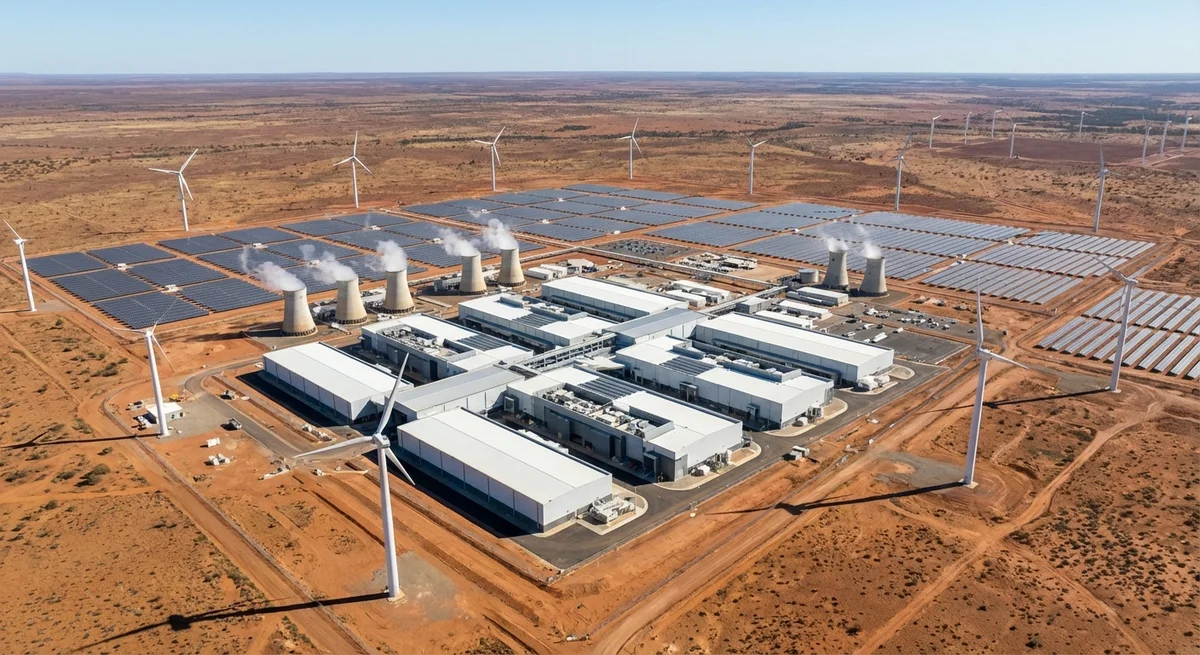
Data Centers vs. Power Grids: The Australian Case with Global Consequences
Every request to ChatGPT, every generated video, every transcribed online meeting — none of this lives in an abstract "cloud". Behind each such operation stands very real infrastructure: giant warehouses packed with servers that consume electricity, emit heat, and require water cooling. Australia, experiencing a data center construction boom, is the first among developed nations to face a question that will soon confront every state: who will pay for the energy appetite of artificial intelligence?
Data centers have existed for decades — there is nothing new in that. What is new is the scale and speed of growth. The explosive spread of generative AI has turned server farms from a quiet infrastructure story into one of the main challenges of energy policy. According to various estimates, a single query to a large language model consumes ten times more energy than a typical Google search. Multiply that by hundreds of millions of daily requests — and you get a load comparable to the energy consumption of small nations. Australia, where the world's largest technology companies are actively building new facilities, is already feeling this pressure.
The problem is not limited to electricity alone. Data centers are also major water consumers. Server cooling systems use evaporative technologies that require significant volumes of fresh water. In a country that regularly experiences droughts and water shortages, this is not an abstract threat but a concrete conflict of interests between tech corporations, agriculture, and urban water supplies. Every new data center in the suburbs of Sydney or Melbourne represents additional strain on already-stretched infrastructure.
A new political consensus is forming in Australia: if you build a data center, you must provide for your own energy needs. This sounds logical, but in practice it spawns a whole cascade of questions. Should operators build their own solar and wind power plants? Is it acceptable to connect to the grid if this raises rates for ordinary consumers? How should data center emissions be accounted for in national climate commitments? None of these questions have clear answers yet, and Australian regulators are essentially creating case law in real time.
The question of fairness is particularly acute. Major tech companies — Microsoft, Google, Amazon — have the resources to build renewable energy sources. But if they monopolize "green" generation for their own needs, the rest of the economy is left with dirtier and more expensive energy. This is already happening in some US regions, where data center contracts to purchase solar and wind energy effectively displace other buyers. Australia is trying to avoid this scenario, but striking a balance between attracting investment and protecting public interests is not easy.
There is also a climate dimension. Australia has committed to reducing greenhouse gas emissions, and the rapid growth in data center energy consumption could undermine these plans. If new server farms even partially operate on fossil fuels — which is inevitable in a transition period — the country risks failing to meet its climate goals. The paradox is that AI technologies are often positioned as tools for fighting climate change, but their own carbon footprint is growing faster than the ability to offset it.
The Australian case matters far beyond one continent. Similar debates are unfolding in Ireland, where data centers already consume about twenty percent of the country's electricity, in Singapore, which imposed a moratorium on new construction, and in Scandinavian countries that attract operators with cold climate and cheap hydropower. Russia, developing its own AI infrastructure, will also inevitably face these questions — especially in the context of the load on the power grids of Moscow and the Moscow Region, where most domestic data centers are concentrated.
The main lesson of the Australian discussion is simple and uncomfortable: the digital economy has very real physical limits. The era when data centers could quietly connect to the grid and dissolve into the overall energy balance is ending. Ahead lies a time of tough political decisions about who pays for the infrastructure of an AI future and whether society is ready to bear these costs. Australia is asking these questions first. The answers will determine what the balance between technological progress and sustainable development will look like in the coming decades.
Want to stop reading about AI and start using it?
AI News is a curated feed of AI/tech news. Hamidun Academy teaches you to use AI systematically in your work.