Billion-dollar deals: the infrastructure behind the AI boom
The world’s largest tech companies have launched a race to invest in AI infrastructure. Meta, Microsoft, Google, Oracle, and OpenAI are collectively…
AI-processed from TechCrunch; edited by Hamidun News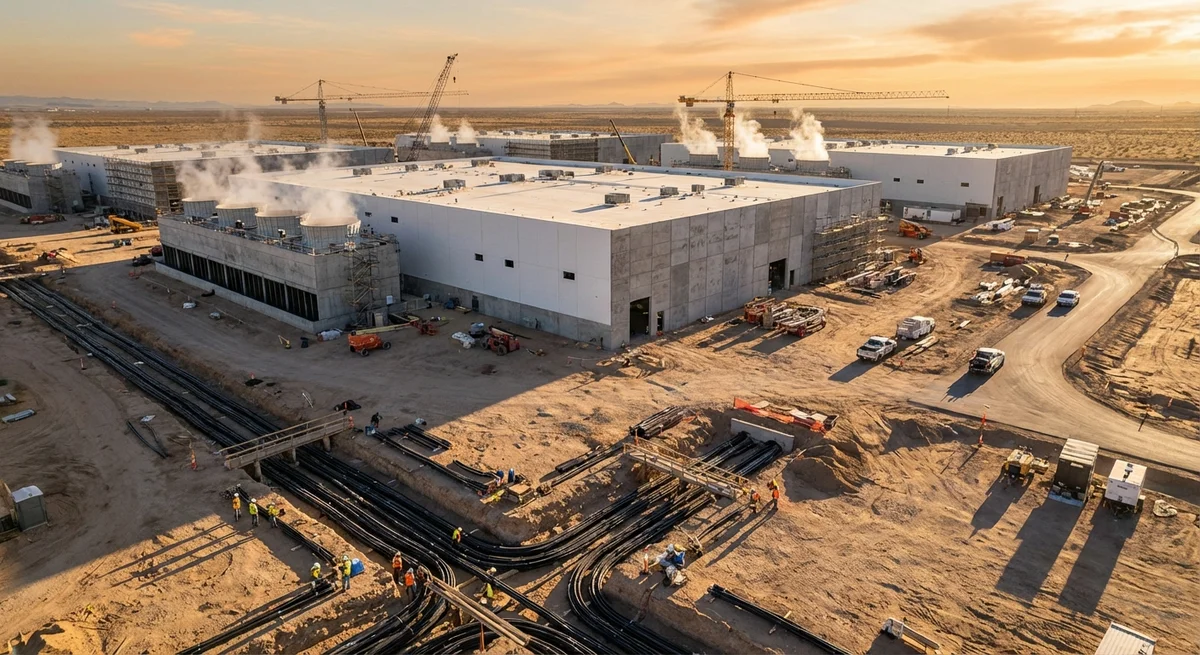
When it comes to artificial intelligence, the conversation usually centers on large language models, neural networks, and groundbreaking applications. But behind all this innovation lies a complex infrastructure that's becoming increasingly difficult to build and maintain — data centers with thousands of GPUs, specialized computing clusters, and all the accompanying energy requirements.
There's an interesting economic phenomenon unfolding: as competition intensifies and the race to develop cutting-edge AI accelerates, companies are investing in compute infrastructure faster than ever before. This isn't just about building servers or buying processors — it's about constructing entire technological ecosystems. Google is investing tens of billions in data centers. Meta is doing the same. OpenAI has struck partnerships worth billions with Microsoft to develop Azure infrastructure. Amazon AWS continues to expand its AI-focused offerings. Even smaller players like Anthropic (which I have a professional connection to) are seeking partnerships and capital for infrastructure expansion.
This infrastructure boom resembles the dot-com era in some ways, but with a crucial difference: back then, companies were building excess capacity that nobody needed. Today, nobody is entirely sure how much capacity will actually be needed, but everyone is rushing to build it anyway. The demand for computing power is growing exponentially, and the economics are becoming more aggressive.
A single data center with cutting-edge AI-optimized hardware can cost billions of dollars. Companies need multiple such facilities — in different geographic regions, for redundancy and latency optimization. And then there's the energy question: a large data center for AI training can consume as much electricity as a mid-sized city. Some technology companies are signing long-term contracts with nuclear power plants to secure stable, reliable energy sources for their data centers.
This creates a fascinating paradox: in order to democratize AI and make it more accessible to everyone, companies need to build increasingly centralized, massive infrastructure. The barrier to entry for creating competitive AI systems is rising because you need more data, more compute, and more power resources.
From an investment perspective, this is reshaping capital allocation. Instead of spreading billions across numerous small startups (as happened in the dot-com bubble), capital is now consolidating around a smaller number of large players with the resources to build this infrastructure. This isn't necessarily a bad thing — it reflects genuine technological needs and real business value — but it does centralize power and influence in the hands of a few major technology corporations.
What's particularly interesting is the global dimension. The data center infrastructure race isn't isolated to the United States anymore. China is investing heavily in its own AI infrastructure. Europe is attempting to catch up. India is exploring ways to leverage its talent and cost advantages. This creates geopolitical implications: the countries and companies that control the compute infrastructure will wield enormous influence over which AI systems get built, how they're deployed, and who benefits from them.
Looking ahead, I expect several trends to intensify. First, companies will continue investing aggressively in data center capacity — probably beyond what's actually needed short-term, because the fear of falling behind is stronger than fiscal caution. Second, energy partnerships will become increasingly important; we'll see more long-term contracts between tech companies and power providers. Third, the competition will likely consolidate further as only the largest players can sustain these investment levels.
The AI infrastructure race is real, it's accelerating, and it's reshaping not just the technology industry but the global economy. Understanding this infrastructure competition helps explain many of the business decisions and geopolitical tensions we're seeing emerge around artificial intelligence.
Want to stop reading about AI and start using it?
AI News is a curated feed of AI/tech news. Hamidun Academy teaches you to use AI systematically in your work.