Google Translate learns to explain: AI update changes the approach to translation
Google unveiled a major AI-powered update to Translate. Three key features have been added to the translator: alternative translation options, an “understand” b
AI-processed from Google AI Blog; edited by Hamidun News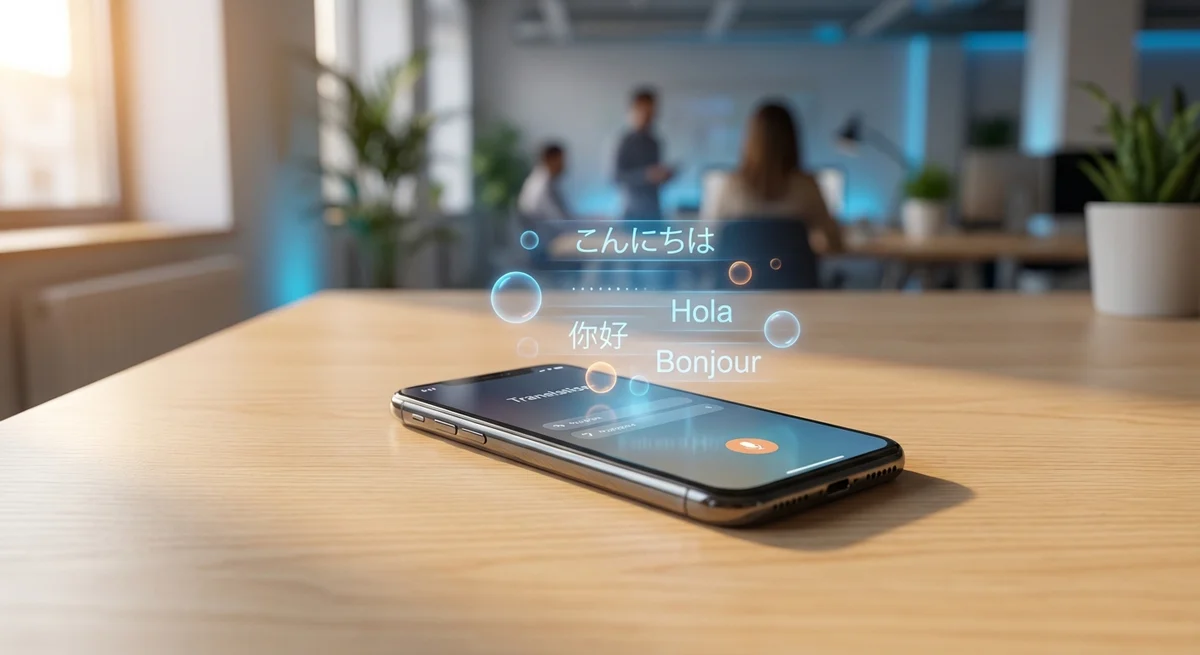
Translation is one of those tasks where machines learned long ago to produce acceptable results, but still stumbled on the main thing: understanding. Google decided to change the very philosophy of its translator, adding three AI-based functions to Translate — alternative translation options, an "understand" button, and an "ask" button. It sounds like a cosmetic update, but in practice it is a fundamental shift from mechanical translation to thoughtful interpretation.
Anyone who has worked seriously with foreign languages knows the main problem with machine translation: it produces one option and presents it as truth. Yet natural language is not mathematics. One and the same phrase can mean different things depending on context, region, tone, and even the relationship between speakers. A Japanese word might have a dozen shades of politeness, a French turn of phrase might carry an ironic subtext, and a Russian idiom might have no direct equivalent in any other language. Google Translate has so far bypassed this problem in silence: here is your translation, use it. Now the company acknowledges that one option is not enough.
The alternative translation feature shows several possible interpretations of the source text. These are not just synonyms — they are different ways to convey meaning, each of which may be appropriate in a particular situation. One option suits a business letter, another suits friendly correspondence, a third suits literary text.
For the first time, users get a choice instead of a verdict. The "understand" button goes even further: it explains why the translation looks the way it does, what cultural or grammatical nuances underlie it. Essentially, it is a built-in language consultant that reveals the logic of translation.
The "ask" button closes the loop, allowing you to ask a clarifying question — for example, whether this option is suitable for a formal context or how a native speaker in a particular region would understand this phrase.
Technically, the update is backed by the integration of large language models directly into the translation process. Google does not disclose the details of the architecture, but the direction is clear: the company is embedding capabilities similar to Gemini into one of its most massive products. Google Translate is used by over a billion people monthly, and turning it into an interactive language assistant is perhaps the most large-scale example of how generative AI penetrates everyday tools. Not through a separate chatbot, but through a familiar interface that people have been using for years.
For the industry, this is a signal more serious than it appears at first glance. The machine translation market is valued in the tens of billions of dollars, and DeepL, Microsoft, and numerous specialized business solutions compete in it. So far, competition has been primarily over the quality of basic translation — who conveys meaning more accurately.
Google is changing the rules of the game, shifting focus from accuracy to understanding. If a user can not just get a translation, but understand it, ask a question, and choose the optimal option — this is no longer a translator, but an educational tool. Competitors will have to respond with similar features, which means the entire category of machine translation products will be transformed.
Separately, it is worth noting the consequences for language learning. Duolingo, Babbel, and dozens of other platforms build their business on the fact that people want to understand a language, not just get a ready-made translation. Now Google is offering part of this experience for free right in the translator. The "understand" button is essentially a micro-lesson embedded in every query. For casual users who don't plan to take a full course but want to understand the nuances, this might be enough. Educational platforms are unlikely to lose their core audience, but Google is quite capable of capturing peripheral users.
There are also limitations worth keeping in mind. Language models tend toward confident but incorrect explanations — and in the context of translation, this can be more dangerous than in a regular chat. A person who receives a convincing but erroneous explanation of a cultural nuance risks finding themselves in an awkward situation or making a serious mistake in business communication. Google will need to figure out how to label the degree of confidence of the model and how to warn users about potential inaccuracies.
Nevertheless, the direction is set correctly. Translation is ceasing to be a black box that produces results without explanation. It is becoming transparent, interactive, and educational. If Google can maintain quality at the level of a billion users and hundreds of language pairs, this update will go down in history as the moment when machine translation truly came of age — stopped imitating understanding and started demonstrating it.
Want to stop reading about AI and start using it?
AI News is a curated feed of AI/tech news. Hamidun Academy teaches you to use AI systematically in your work.