Seedance 2.0 from ByteDance: a breakthrough in video generation or polished junk?
ByteDance has introduced Seedance 2.0, a new video generation model. Irish director Ruairi Robinson published a series of videos featuring a digital double of T
AI-processed from The Verge; edited by Hamidun News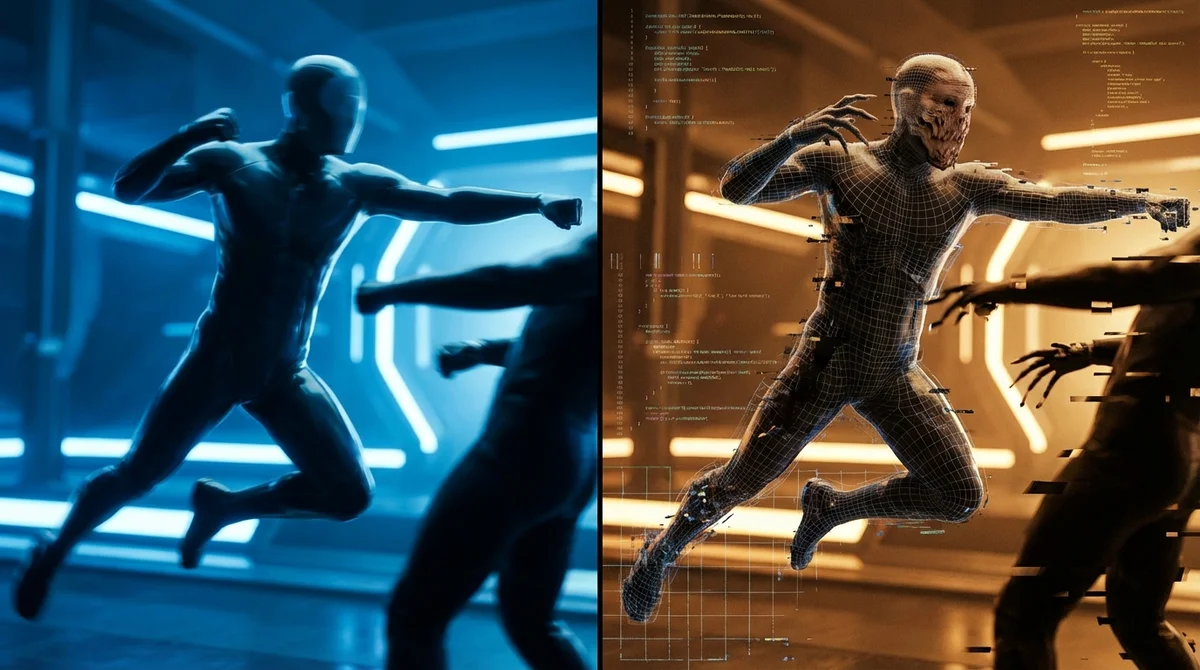
When Irish director Ruari Robinson began posting short videos created with Seedance 2.0 — ByteDance's latest video generation model, the parent company of TikTok — the industry held its breath for a moment. A digital Tom Cruise doppelgänger fought Brad Pitt, fended off humanoid robots, and demolished zombies. The characters moved with an almost choreographic complexity, and the virtual camera worked as if operated by a cameraman with twenty years of experience. It was genuinely impressive — and simultaneously deceptive.
To understand the context, one must look back at the past eighteen months of the generative video race. After OpenAI announced Sora in February 2024, the market practically exploded: Runway, Pika, Kling, Minimax — dozens of companies rushed to prove that their model was closest to making traditional filmmaking obsolete. Each new release was accompanied by a wave of enthusiastic posts about Hollywood being "already dead." Seedance 2.0 became yet another occasion for such claims, but this time the arguments looked weightier. ByteDance is not a garage startup, but a technology giant with colossal computational resources and access to the world's largest video platform.
Technically, Seedance 2.0 does make a step forward. The model handles the physics of movement noticeably better — characters no longer "float" across the scene like jellyfish in zero gravity, which was the scourge of early video generators. The interaction between objects has become more plausible: when digital Cruise throws a punch, his opponent reacts with the delay and inertia that at least remotely resemble real physics. Dynamic "camera work" — with push-ins, pans, and angle changes — gives the clips a cinematic quality that no model has managed to achieve before. Robinson, as a professional director, clearly understands how to present material, and his prompt engineering works toward results.
But here's the problem: upon closer inspection, Seedance 2.0 still produces what the industry has already gotten used to calling "slop" — visually striking but essentially empty content. The faces of characters, when viewed in slow motion, deform in a manner characteristic of neural networks. Hands remain the Achilles heel: fingers merge, disappear, or multiply at the most inappropriate moments. The textures of clothing and surfaces, upon careful inspection, betray their synthetic nature — they are too smooth, too perfect, lacking the microscopic chaos that distinguishes the real world from the digital. And most importantly — these clips have no narrative. There are striking seconds, but there is no story, no emotional arc, no meaning beyond technical demonstration.
This leads to a deeper question that the generative AI industry so far prefers to overlook. Filmmaking is not only, and not so much, the generation of beautiful frames. It is directing actors, it is screenplay logic, it is editing rhythm, it is sound design, it is thousands of micro-decisions that turn a set of images into coherent narrative. Seedance 2.0 can generate an impressive five-second clip, but ask the model to create a coherent two-minute scene with consistent action logic — and the illusion will shatter. Between the "wow factor" of a demo reel and a real production tool lies a chasm that no model has yet bridged.
For ByteDance, Seedance 2.0 is above all a strategic move in the context of TikTok. The company doesn't need to replace Hollywood; it needs to give millions of content creators on its platform a tool for producing more spectacular short clips. In this sense, the model hits the mark exactly. A five-second clip with a digital Tom Cruise fighting zombies fits perfectly into the format of vertical video and the algorithmic feed. This is not cinema — this is content, and in this capacity, Seedance 2.0 can turn out to be a truly successful product.
Generative video continues to develop at an impressive pace, and it would be foolish to deny the progress. What Seedance 2.0 demonstrates today was unthinkable a year ago. But it is equally foolish to accept demo reels as proof that traditional filmmaking is living its last days. Between "almost like the real thing" and "the real thing" is not a quantitative but a qualitative difference. And it is precisely in this gap, in these final percentages of plausibility, that the most difficult part of the task lies hidden. Seedance 2.0 is an impressive technological demonstration. But for now, it is precisely a demonstration, not a revolution.
Want to stop reading about AI and start using it?
AI News is a curated feed of AI/tech news. Hamidun Academy teaches you to use AI systematically in your work.