Oura develops its own AI model for women's reproductive health
Oura, known for its smart rings for health tracking, has launched a proprietary AI model focused on women's reproductive health. The model can answer questions
AI-processed from TechCrunch; edited by Hamidun News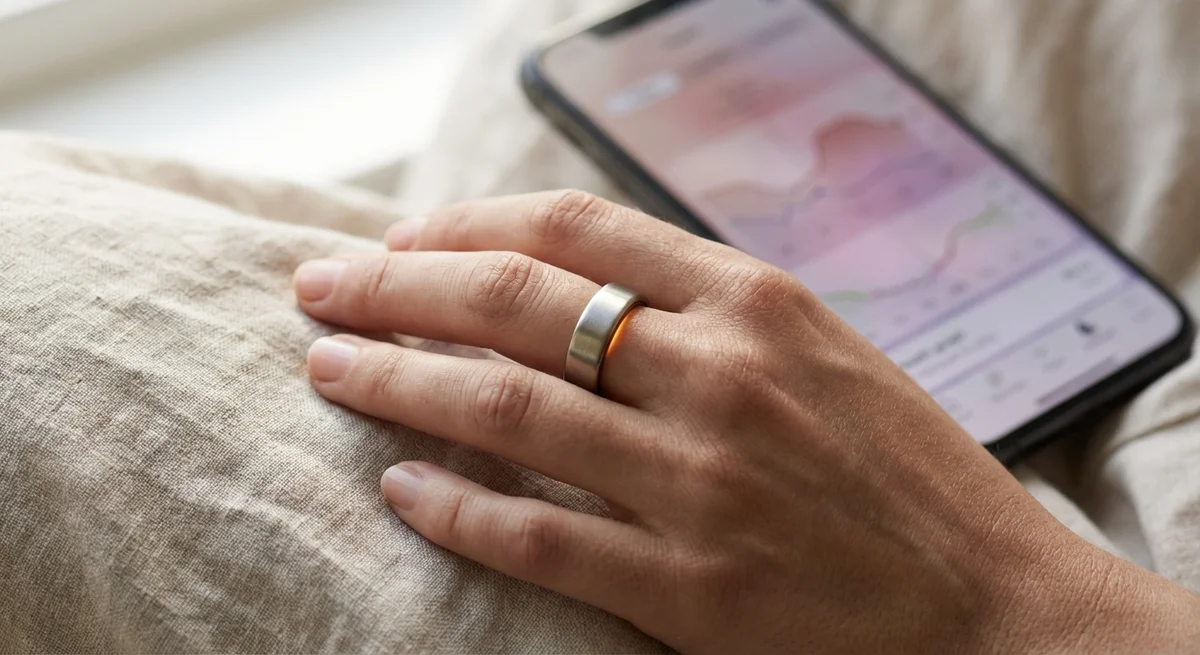
Finnish company Oura, whose smart rings have become one of the most recognizable wearable devices in recent years, has taken an unexpected and ambitious step — launching its own AI model, entirely focused on women's reproductive health. The model is capable of handling questions covering the entire lifecycle of a woman's body: from first menstruation in adolescence through perimenopause and menopause.
To understand the scope of this solution, it's worth recalling the context. The femtech industry — technologies for women's health — has long remained on the periphery of attention from major technology companies. According to McKinsey, women make up half the world's population, but research into their health receives disproportionately little funding. Most medical AI models were trained on data where women's physiological characteristics were underrepresented. Oura appears to have decided to close this gap not with abstract promises, but with a concrete product.
Technically, Oura is in a unique position for such a project. The company's ring continuously collects data on body temperature, heart rate variability, sleep quality, and activity levels. Temperature data proves to be critically important for tracking reproductive health: basal body temperature is one of the key markers of ovulation and hormonal changes. Unlike apps that ask users to manually enter data about how they feel, Oura relies on objective physiological indicators collected passively. This gives the model a significantly more reliable foundation for analysis and recommendations.
Importantly, the company chose the path of a proprietary model rather than integration with existing LLMs like GPT or Gemini. This speaks to several things. First, the seriousness of intentions: developing one's own model requires significant investments in data, expertise, and infrastructure. Second, the desire for control over the quality of answers in a sensitive medical domain, where hallucinations of general language models can be not just inconvenient, but potentially dangerous. Third, privacy — reproductive data belongs to the most sensitive category of personal information, and storing it within one's own ecosystem reduces the risks of leaks through third-party APIs.
The consequences of this launch extend far beyond one company. Oura is essentially setting a new standard for the entire wearables industry. Until now, AI features in wearables have been limited to fairly simple recommendations: "you didn't sleep much," "your stress level is elevated." A specialized model capable of having dialogue about specific aspects of health is a qualitatively different level. If Oura can prove the clinical value of such an approach, competitors — Apple, Samsung, Google — will face pressure to create analogous solutions.
There is also a broader social context. In a number of countries, including the United States, access to information about reproductive health is becoming increasingly politicized. A tool that allows women to get personalized answers to questions about their bodies without a doctor's visit and without fear of judgment has value that is difficult to overestimate. Of course, AI does not replace a doctor, but it can become a first line of support and help women better understand the signals of their own bodies.
Questions remain. How accurate is the model? Has it undergone clinical validation? How will Oura handle borderline cases where the AI should recommend consulting a specialist rather than trying to answer on its own? What data was used to train it and how representative is it for women of different ages, ethnic backgrounds, and health statuses? The answers to these questions will determine whether Oura's product becomes a truly useful tool or remains a beautiful marketing story.
One thing can be said with certainty: the femtech market has just received a powerful signal. Personalized AI for women's health, built on real physiological data, is exactly the type of product capable of changing the industry's relationship with half its audience. And if Oura can deliver on its promises, a ring on a finger could turn out to be a more useful conversation partner than many medical applications on a smartphone.
Want to stop reading about AI and start using it?
AI News is a curated feed of AI/tech news. Hamidun Academy teaches you to use AI systematically in your work.