Waymo enters Texas's largest cities after setback in New York
Waymo, an Alphabet unit, announced the launch of its commercial robotaxi service in Texas's three largest cities — Houston, Dallas, and San Antonio. The company
AI-processed from Bloomberg Tech; edited by Hamidun News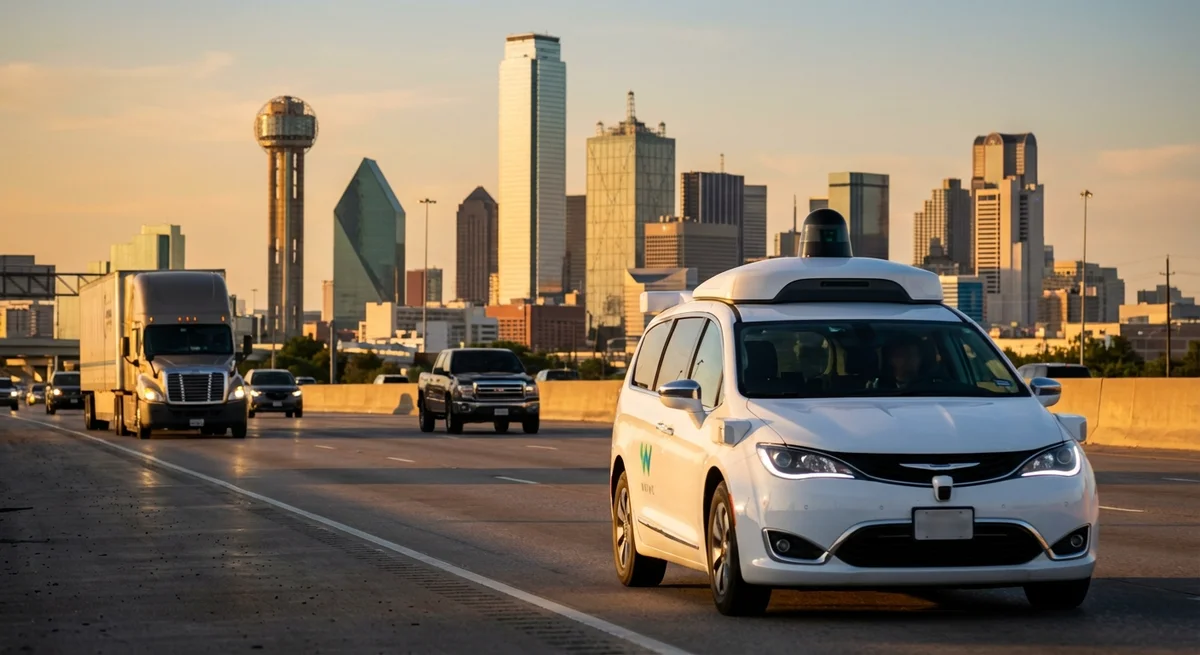
When one door closes, Waymo opens three at once. Alphabet's autonomous vehicle division announced the launch of a commercial robotaxi service in three of Texas's largest cities — Houston, Dallas, and San Antonio. The decision looks like a strategic pivot after the company faced serious regulatory obstacles attempting to enter the New York market.
The New York experience was a cold shower for Waymo. The city that could have been a showcase of technology for the entire world turned out to be a fortress of bureaucratic barriers. New York authorities, taxi driver unions, and public organizations built a multi-layered system of restrictions that effectively blocked a full robotaxi service launch. For a company accustomed to relatively lenient regulation in California and Arizona, this became a painful lesson: technological superiority does not guarantee market access.
Texas is an entirely different story. The state has long positioned itself as a territory of technological freedom and minimal government intervention. Back in 2017, it passed one of the country's most liberal autonomous vehicle laws, which does not require a human driver to be present in the vehicle and does not impose strict limitations on operating zones. Governor Greg Abbott has repeatedly stated his intention to turn Texas into the world capital of autonomous transportation, and Waymo's arrival fits perfectly into this strategy.
But it's not just about the regulatory climate. Texas's megacities possess characteristics that make them an almost ideal environment for robotaxis. Houston, Dallas, and San Antonio are cities built around the automobile. Wide multi-lane highways, enormous distances between districts, chronic shortage of public transportation, and scorching heat where walking is more of a trial than pleasure. Here people spend more time behind the wheel on average than in almost any other region of the country. Demand for convenient transportation solutions is colossal, and road infrastructure is significantly simpler for autonomous systems to navigate than the chaotic streets of Manhattan.
The scale of expansion is impressive. The combined population of the three Texas metropolitan areas exceeds 15 million people. This is Waymo's largest simultaneous geographic expansion in company history. To date, the service has operated primarily in Phoenix, San Francisco, and Los Angeles, gradually building presence neighborhood by neighborhood. The Texas push looks like a fundamentally new approach — an attempt to prove that the technology is ready for rapid scaling, not just cautious pilot projects.
For competitors, this is an alarming signal. Cruise, a General Motors subsidiary, still hasn't recovered from the San Francisco accident scandal and subsequent operational suspension. Chinese players like Baidu Apollo dominate their home market but have no access to American cities. Tesla with its Full Self-Driving program remains a Level 2 autonomy system requiring constant driver control. Waymo, in essence, remains the only player in the US capable of offering fully autonomous commercial transport at the scale of several major cities simultaneously.
However, challenges haven't gone anywhere. Texas heat with temperatures above 40 degrees Celsius creates extreme conditions for sensors and electronics. Torrential floods that regularly paralyze Houston will be a serious test for navigation systems. And local drivers, to put it mildly, are not characterized by conservative driving style — Texas highways are notorious for high speeds and aggressive traffic. Every incident involving a robotaxi will inevitably be under the microscope of public attention.
Waymo's strategy in Texas reveals a broader trend in the autonomous vehicle industry. Companies increasingly choose not the most prestigious, but the most convenient markets — those where the regulatory environment is favorable, infrastructure is suitable, and the population is ready for experiments. New York can wait. The future of autonomous transportation in America, it seems, will begin not on Fifth Avenue, but on Texas freeways — and there is a certain relentless logic to this.
Want to stop reading about AI and start using it?
AI News is a curated feed of AI/tech news. Hamidun Academy teaches you to use AI systematically in your work.