Eight years in the making: China launches WAICA, a world-class academic platform
China has announced the launch of WAICA, its own world-class academic platform in artificial intelligence. Over eight years, the country systematically built th
AI-processed from Jiqizhixin (机器之心); edited by Hamidun News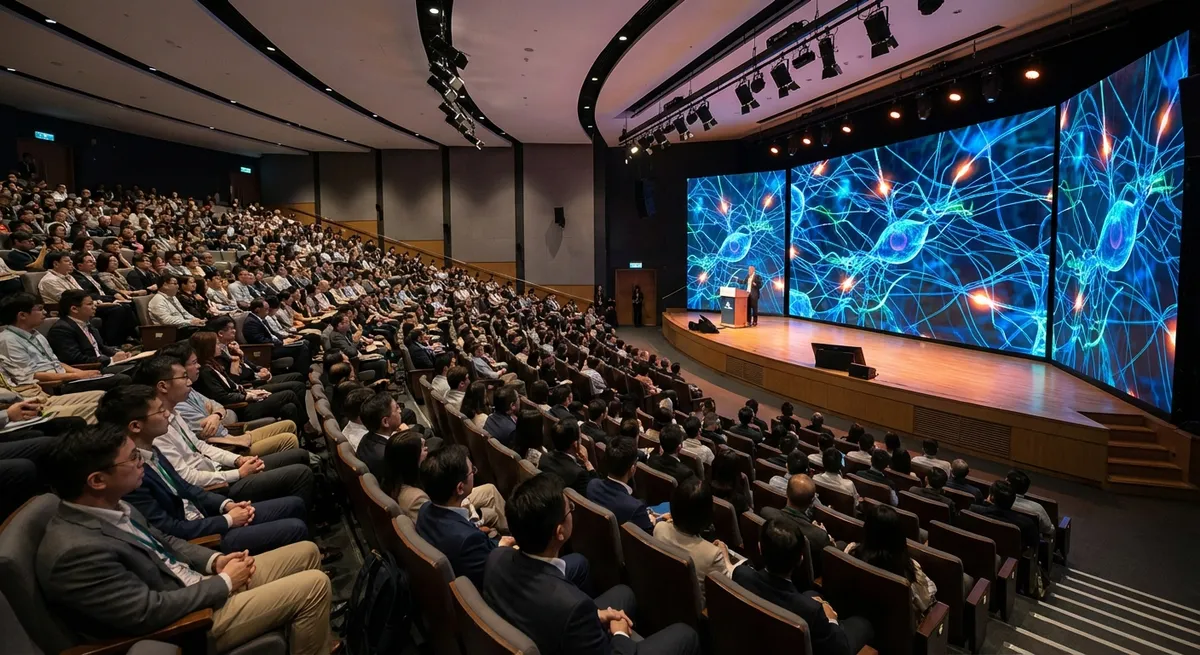
Eight Years of Progress: China Launches Global Academic Platform WAICA
Over the past decade, global artificial intelligence research has developed primarily around Western venues — NeurIPS, ICML, ICLR set the tone, attracted the best researchers, and shaped the entire industry's agenda. Now China declares its intention to change this disposition: the country is launching WAICA — World Artificial Intelligence Conference Academy, its own world-class academic platform that claims the role of an independent center of attraction for AI researchers worldwide.
This step was not a surprise for those following Chinese scientific policy. Back in 2017, Beijing adopted a national program for developing next-generation artificial intelligence, setting the task to achieve leadership in the industry by 2030. The eight years separating that document from today, China has spent not only on commercial development, but also on systematically building scientific infrastructure: financing university laboratories, creating research consortiums, increasing the number of publications in international journals. WAICA is a logical institutional superstructure over this foundation.
It is crucially important to understand what differentiates an academic conference from a technology exhibition. Shanghai's WAIC forum, which China has been conducting since 2018, has long become a showcase of industry achievements — a place for demonstrations, business negotiations, and political statements. WAICA is conceived differently: it is a platform for peer-reviewed scientific work, discussions on methodology, publication of fundamental results. This was precisely the missing link in the Chinese AI ecosystem. Without their own authoritative conference, Chinese researchers were forced to orient themselves toward Western venues as the only marker of academic recognition — a situation that Beijing clearly considered unacceptable.
WAICA's ambitions extend beyond the domestic market. The organizers position the platform as global, counting on attracting researchers from Asia, Africa, Latin America, and other regions that traditionally found themselves on the periphery of the Western-centric academic world. There is strategic logic in this: China offers an alternative pole of scientific attraction precisely to those communities that are least integrated into the existing system. If WAICA manages to win the trust of researchers from these regions, it will gain an organic growth base independent of direct competition with NeurIPS or ICML.
Skeptics, however, will point to real obstacles. The reputation of an academic conference is built over years and is determined above all by the quality of peer review and the independence of editorial decisions. Western venues have been accumulating this trust capital for decades. Moreover, in conditions of increasing technological fragmentation of the world, some researchers may perceive WAICA as a tool of geopolitical positioning rather than a purely scientific initiative. One can overcome this skepticism only in one way — by consistently demonstrating the high quality of accepted papers and openness to international participation regardless of authors' nationality.
For the industry as a whole, the emergence of WAICA means the gradual decentralization of academic AI space. Previously, there was an unspoken hierarchy: publication at NeurIPS or ICML opened doors to leading laboratories and ensured citations, while regional venues remained secondary. If WAICA manages to occupy a comparable place in this hierarchy, researchers will have a real alternative, not just another line in the list of conferences. This will change not only the geography of science but also its agenda: Chinese priorities in AI — efficiency with limited computational resources, multimodality, industrial application — will gain more substantial academic formulation.
Eight years of focused work rarely end with a single announcement. WAICA is a bet on a long game, and its results will become apparent not in months but in years. But the very fact of the platform's launch marks an important moment: China ceases to be a country that participates in someone else's academic game by someone else's rules and declares its readiness to shape its own. How convincing this turns out to be will be shown by what scientists and what work the first full conference cycle gathers.
Want to stop reading about AI and start using it?
AI News is a curated feed of AI/tech news. Hamidun Academy teaches you to use AI systematically in your work.