Oakley Meta smart glasses outperformed Ray-Ban in a field test
Oakley and Meta have released the Vanguard smart glasses, aimed at athletes. Unlike Ray-Ban Meta, the new model keeps Oakley’s signature athletic design and…
AI-processed from ZDNet AI; edited by Hamidun News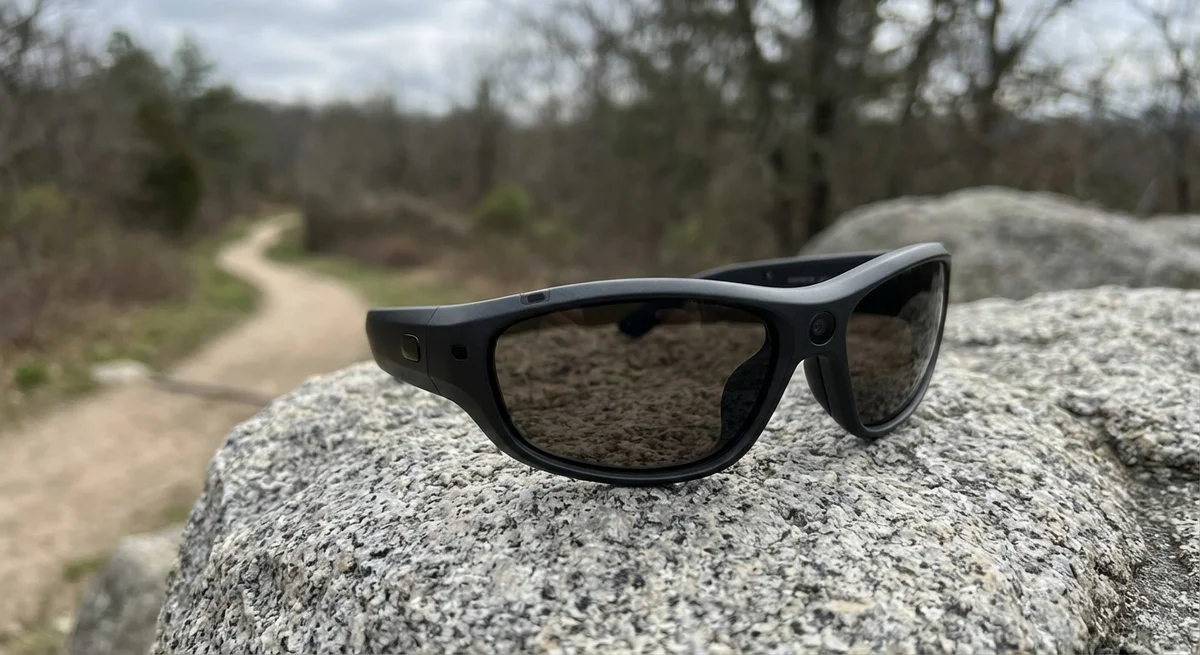
When Meta and Ray-Ban presented their smart glasses several years ago, the wearables industry held its breath in anticipation: here it is, the beginning of a new era. The glasses turned out to be a pretty decent product — compact, stylish, with enough features to attract a discerning consumer. But Ray-Ban Meta had an obvious weakness: they were created for cafes and urban walks, rather than for people whose lives revolve around movement. Now Meta has placed its bet on a different audience, partnering with Oakley — and the result turned out to be convincing.
Oakley Meta Vanguard is not a rebranding or cosmetic update. The company took the DNA of its sports line, worn for decades by cyclists, triathletes and skiers, and embedded it with the full arsenal of AI functions perfected on Ray-Ban. The characteristic aggressive geometry of the frame, wide temples with a snug fit, protection from side light — all of this remained in place. Added to this were built-in microphones, speakers with directional sound, and a voice AI assistant based on Meta's technologies. Externally, Vanguard looks like ordinary Oakley sports optics. And that's precisely the whole point.
A practical test on a five-mile walk set priorities better than any technical specification. Ray-Ban Meta are glasses that look great statically, but during active movement begin to reveal their compromises: the fit is slightly less confident, the shape is universal, which means it's not ideal for anyone in particular. Vanguard, by contrast, sit on the face the way only glasses born for sport can: they don't slide, don't wobble, don't pinch at the temples after the first hour. This is not a trifle — this is a fundamental difference between a gadget that sits in a pocket and a gadget that is actually worn.
The voice AI assistant in Vanguard works more stably than one might expect from a first-generation product. During the walk, it handled navigation requests, answered questions in real time, and didn't require repeated commands even in street noise conditions. Meta clearly transferred accumulated experience from working with Ray-Ban to the new product, refining speech recognition and response logic. For an athlete whose hands are busy — with a bicycle handlebar, trekking poles, or simply the pace — this has practical value, not just marketing value.
Notably, Oakley Meta Vanguard deliberately avoid talking about augmented reality. No projections on the lenses, no visual overlays — only sound, voice, and a minimalist interface. This decision looks conservative against competitors dreaming of full-scale AR, but it's more honest technologically and more sensible in terms of autonomy. The battery isn't spent on a display, heat generation is minimal, and the glasses themselves remain light. In the active lifestyle segment, these factors matter more than any visual special effect.
For the wearables industry, the appearance of Vanguard represents an important shift in positioning logic. Until now, smart glasses were by default viewed as a lifestyle accessory — something between headphones and a fashionable item. Oakley and Meta offer an alternative model: glasses as a functional tool for a specific audience with specific needs. This is a narrower market, but also a more motivated buyer — one willing to pay for real convenience, not a concept.
Vanguard, of course, are not without limitations. Price remains a serious barrier to mass penetration, Meta's ecosystem raises understandable privacy questions for part of the audience, and the smart glasses market itself is still too young to speak of mature standards. But by the totality of criteria — fit, reliability, practical usefulness of AI — Oakley Meta Vanguard convincingly prove: a correctly chosen niche is worth more than universal ambitions. Ray-Ban Meta created a genre. Vanguard shows how this genre can be made truly useful.
Want to stop reading about AI and start using it?
AI News is a curated feed of AI/tech news. Hamidun Academy teaches you to use AI systematically in your work.