Human labor behind humanoid robots is carefully hidden
Nvidia, Tesla, and dozens of startups are competing to showcase humanoid robots, promising a "physical AI" revolution. But an investigation by MIT Technology Re
AI-processed from MIT Technology Review; edited by Hamidun News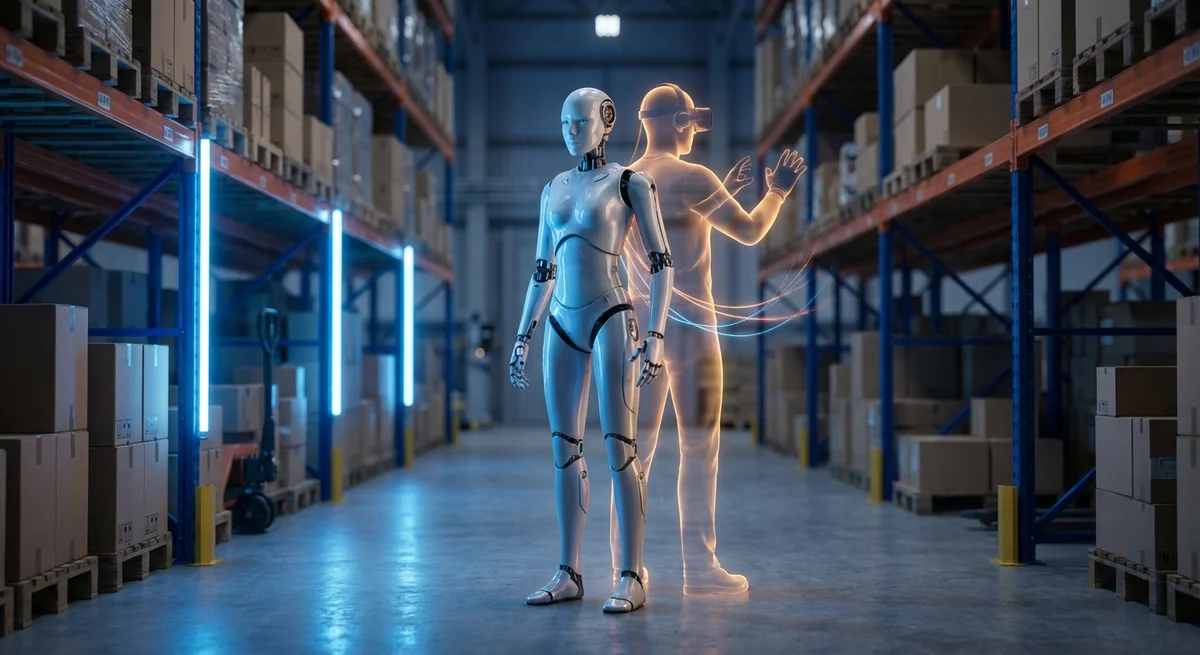
In January 2026, Jensen Huang, the head of Nvidia — the world's most expensive company — ceremoniously announced the advent of the era of physical artificial intelligence. According to him, AI finally transcends language models and chatbots, acquiring a body and the ability to interact with the real world. A beautiful formulation, which, however, conceals an inconvenient truth: a significant portion of what the industry presents as a breakthrough in robotics still runs on human labor.
A material from MIT Technology Review exposes a systemic problem that Silicon Valley prefers not to discuss openly. Dozens of companies — from giants like Tesla and Nvidia to ambitious startups with billion-dollar valuations — regularly publish impressive videos in which humanoid robots fold laundry, sort items in warehouses, perform complex manipulations with objects. Viewers see the future. But off-camera, there is often an operator with a joystick or VR headset controlling each movement of the machine in real time. Or an engineer running a pre-rehearsed sequence of actions, passing it off as autonomous behavior.
This is not fraud in the legal sense — companies do not formally claim that their robots are fully autonomous. They simply omit details. Marketing videos are edited to create the impression of machine independence. Press releases are peppered with phrases like "AI-driven" and "autonomous," but no one reads the fine print. Investors, journalists, and the general public see what they are shown — and draw conclusions that benefit the manufacturers.
The practice of remote-operating robots itself is neither new nor reprehensible. It is an important stage in development: a human operator collects data about movements that are then used to train neural networks. The method is called "learning from demonstrations," and it really does help robots master new skills. The problem arises when the development stage is presented as a finished product. When a demonstration involving a human operator is presented as proof that the robot can already do all this on its own.
The gap between promises and reality in robotics resembles a situation the AI industry has already gone through with language models. Remember how early chatbots were advertised as "understanding" conversationalists, when they simply predicted the next word? Something similar is happening with robots, except the stakes are higher. The physical world is far more complex than the digital world: a robot must account for gravity, friction, fragility of objects, unpredictability of the environment. Each of these variables is a separate engineering challenge that has not yet been solved at a level sufficient for reliable autonomous operation.
The consequences of this gap could be painful. Investors pour billions of dollars into companies whose real capabilities they overestimate. Startups are forced to maintain the illusion because honest demonstration of current technology levels won't secure the next round of funding. A vicious cycle emerges: inflated expectations demand even more impressive demonstrations, which require even more hidden human involvement. Sooner or later, this bubble will collide with reality — and the disappointment could strike the entire industry, including those working honestly.
There is also an ethical aspect that goes beyond investment risks. People who remotely operate robots often work under far-from-ideal conditions: long shifts, monotonous movements, low pay. Their labor is literally invisible — hidden behind a marketing narrative about machines that "can do everything themselves." This is an irony worthy of separate discussion: technology that promises to free humans from routine physical labor is currently creating a new kind of precisely such labor.
All this does not mean that humanoid robots are a sham. Progress in robotics is real, and some systems truly demonstrate impressive learning abilities. But between a laboratory prototype and a reliable commercial product lies a chasm that the industry is currently filling with marketing and human hands. An honest conversation about where we really are would be more useful for everyone — for investors, engineers, and society, which will ultimately have to live alongside these machines. The era of physical AI may indeed be arriving. But it is arriving more slowly than those selling it would like.
Want to stop reading about AI and start using it?
AI News is a curated feed of AI/tech news. Hamidun Academy teaches you to use AI systematically in your work.