Honor enters the humanoid robot market: why a smartphone company needs human-like machines
Honor Device Co., best known as a smartphone maker, will unveil its first humanoid robot this week. The company is entering a rapidly growing sector that has be
AI-processed from Bloomberg Tech; edited by Hamidun News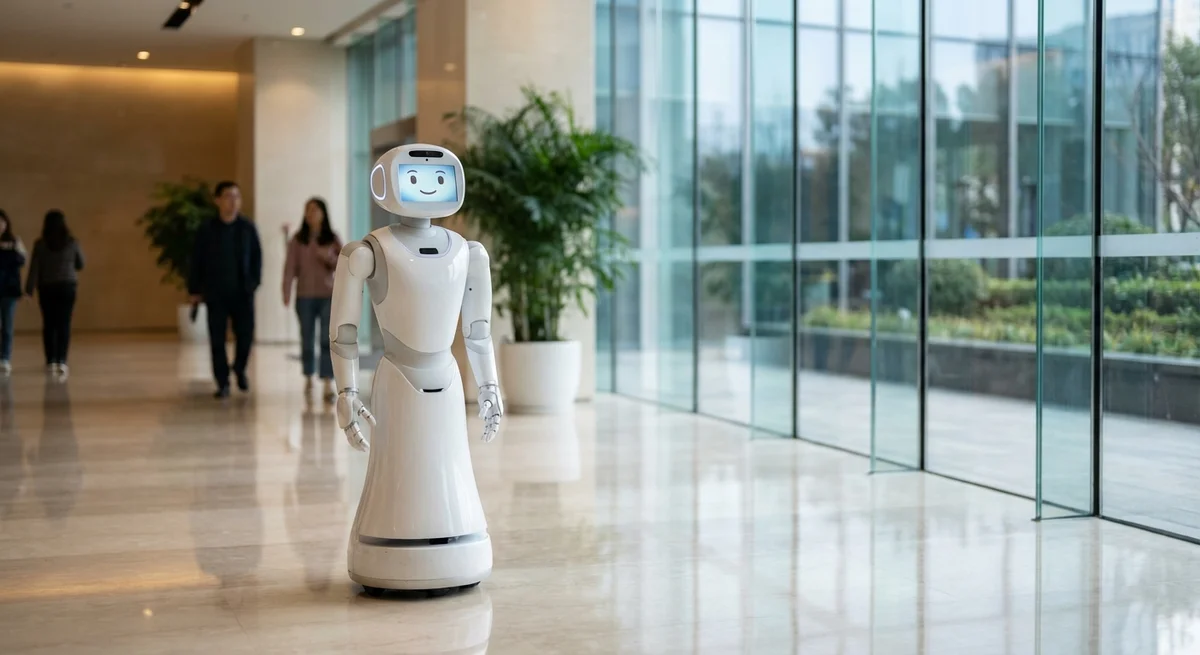
Honor Enters the Humanoid Robot Market: Why a Smartphone Company Needs Human-Like Machines
The company Honor, which most people know as a producer of mid-range and premium smartphones, is preparing for an unexpected turn in its history. This week, the former Huawei subsidiary will present its first humanoid robot—a service machine capable of interacting with people in everyday scenarios. The news, published by Bloomberg, looks like yet another line in an endless stream of announcements from China, but it masks a much larger transformation of the entire technological industry in the country.
To understand the context, it's worth looking back over the past year and a half. China is experiencing a genuine humanoid robotics fever. After the Chinese government included human-like robots in its list of strategic technologies at the end of 2023, investments and new players flooded into the sector. Companies that until recently were developing electric vehicles, household appliances, or software are one by one announcing robot development. BYD, Xiaomi, UBTECH, Fourier Intelligence, Unitree Robotics—the list grows every month. Now Honor joins it, and this suggests that humanoid robotics has ceased to be a niche direction and is becoming a mandatory line in the portfolio of any major Chinese technology brand.
At first glance, the transition from smartphones to robots seems exotic. But upon closer inspection, the logic becomes obvious. A modern humanoid robot is, essentially, a mobile platform packed with the same technologies that determine smartphone competitiveness: advanced processors with neural accelerators, arrays of cameras and sensors, computer vision algorithms, voice interfaces based on large language models. Honor, having inherited serious engineering expertise from Huawei and access to the ecosystem of Chinese chipmakers, possesses all the necessary competencies to enter this game. The company is already actively developing its own AI functions in smartphones, including on-device models, and transferring these developments to a robotics platform appears to be a natural step.
It is important to note that Honor positions its development specifically as a service robot. This is a crucial clarification. Unlike industrial humanoids, which are being developed for factories and warehouses—like those Tesla is testing in its production facilities—service robots are oriented toward interaction with ordinary people. Hotels, shopping centers, airports, hospitals, offices—the potential market is enormous. According to Goldman Sachs estimates, by 2035 the global humanoid robot market could reach 154 billion dollars, with a significant portion falling to the service segment. China, with its giant service sector and growing labor shortage due to demographic crisis, is an ideal testing ground for such solutions.
However, one should maintain healthy skepticism. There is a chasm between an impressive prototype presentation and a truly working product in commercial operation. Humanoid robotics remains one of the most complex engineering challenges of our time. Even industry leaders—Boston Dynamics, Figure AI, Agility Robotics—are still far from mass production of truly autonomous and reliable human-like machines. Many Chinese projects, despite impressive demonstrations, are in early stages and heavily dependent on government subsidies. The question is whether Honor can offer something more than a beautiful concept, or whether its robot will become yet another marketing gesture designed to demonstrate the technological ambitions of the brand.
There is also a geopolitical dimension. The race for humanoid robots is a new front in the technological competition between China and the United States. Washington is closely watching Chinese successes in this area, and it is not unlikely that robotics will become the next sphere after semiconductors where export restrictions will begin to apply. For Honor, which has already undergone a painful process of separation from Huawei, which fell under American sanctions, this factor cannot be overlooked in strategic planning.
Honor's announcement is not simply a corporate news item. It is an indicator that humanoid robotics in China has reached a point where even companies without relevant experience are entering, betting on synergy with existing competencies. If even part of these projects prove viable, the world will get not one or two, but dozens of humanoid robot manufacturers competing for the market and rapidly driving down prices. This is how China has already handled smartphones, electric vehicles, and solar panels. Robots, it seems, are next in line.
Want to stop reading about AI and start using it?
AI News is a curated feed of AI/tech news. Hamidun Academy teaches you to use AI systematically in your work.