Google DeepMind launches AI initiative for science and education in India
Google DeepMind has officially launched the National Partnerships for AI initiative in India, aimed at accelerating scientific discovery and transforming educat
AI-processed from DeepMind Blog; edited by Hamidun News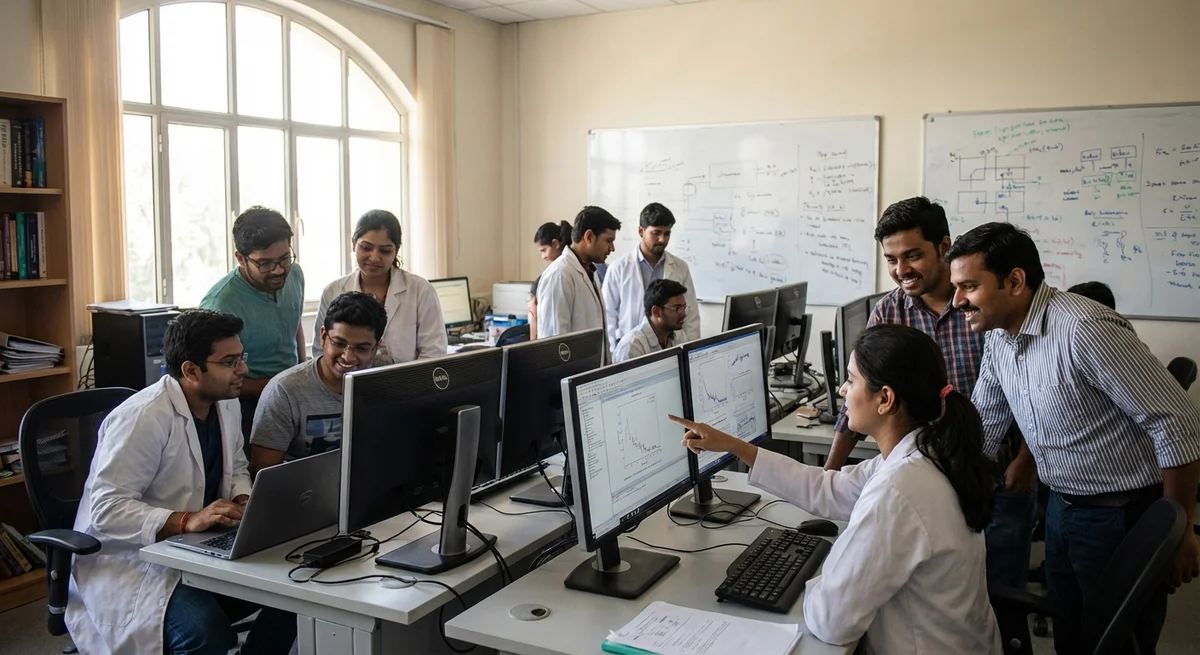
Google DeepMind has announced the launch of the National Partnerships for AI initiative in India—a large-scale program designed to embed artificial intelligence into the fabric of Indian science and higher education. The company positions this step not as a point experiment, but as a systematic long-term commitment to one of the world's largest and fastest-growing technology economies.
India ceased to be merely a supplier of IT specialists to Western companies long ago. Over the past decade, the country has built its own research infrastructure: a network of IIT institutes, IISC, and dozens of state laboratories where hundreds of thousands of scientists and engineers work. It is precisely at this moment that DeepMind enters with an offer that is difficult to refuse—tools, models, and expertise honed by solving world-class problems, from predicting protein structures to climate modeling. The timing is no accident: the Indian government is actively investing in a national AI strategy, and competition for influence over the country's emerging technological sovereignty between American and Chinese players is intensifying.
The National Partnerships for AI program is built around two interconnected directions. The first is accelerating scientific discovery through direct integration of DeepMind's AI tools into the research processes of local institutions. This involves partnerships with academic organizations that will gain access to models and computational resources to solve applied problems in biology, chemistry, materials science, and other fields where machine learning has already proven capable of reducing years of experiments to weeks. The second direction is transforming education: developing curricula, tools for teachers and students that will make AI literacy an integral part of academic training for a new generation of Indian specialists.
It is notable that DeepMind is betting precisely on institutional partnerships rather than the consumer market. This is a fundamentally different strategy compared to how technology giants typically enter developing markets—through applications, advertising, and e-commerce. The bet here is made on becoming an indispensable infrastructure for the scientific community that, in the next ten to fifteen years, will shape the global research agenda. A similar approach has already been tested in other countries, and India becomes another, but particularly significant link in this chain—given the scale of the country and the ambitions of its scientific community.
For Indian researchers, the program opens practical access to tools that have been noticeably out of reach until recently. AlphaFold, which predicts protein structures with unprecedented accuracy, or models for data analysis in astrophysics—all this ceases to be a privilege of laboratories in London or Cambridge. Democratization of access to cutting-edge AI tools can significantly increase publication activity and the competitiveness of Indian science on the global stage. In parallel, the educational component addresses a more fundamental problem: a shortage of specialists capable not only of using ready-made solutions but of developing their own AI systems for local tasks.
At the same time, such initiatives inevitably carry risks of dependency. When a country's research infrastructure is built around the tools of a single corporate player, questions arise about long-term autonomy: what will happen if access conditions change, or if geopolitical circumstances force a reconsideration of partnerships? The Indian government, seemingly, recognizes this balance—the national AI strategy implies developing its own computational resources and open models in parallel with attracting Western expertise.
The launch of National Partnerships for AI in India is not simply corporate philanthropy or a PR move ahead of the next round of regulatory negotiations. DeepMind consistently implements a strategy of deep embedding in the scientific ecosystems of key countries around the world, understanding that influence in the age of AI is measured not only by market share but also by whose tools underlie tomorrow's discoveries. India, with its 1.4 billion people, growing research sector, and governmental will for technological leadership, is too important a point on this map to be left unattended.
Want to stop reading about AI and start using it?
AI News is a curated feed of AI/tech news. Hamidun Academy teaches you to use AI systematically in your work.