Year of the Horse: Zhipu and MiniMax rise 500% since IPO
On the first trading day of the Year of the Horse, shares of Chinese AI companies Zhipu and MiniMax rallied on the Hong Kong stock exchange. Zhipu jumped…
AI-processed from 36Kr (36氪); edited by Hamidun News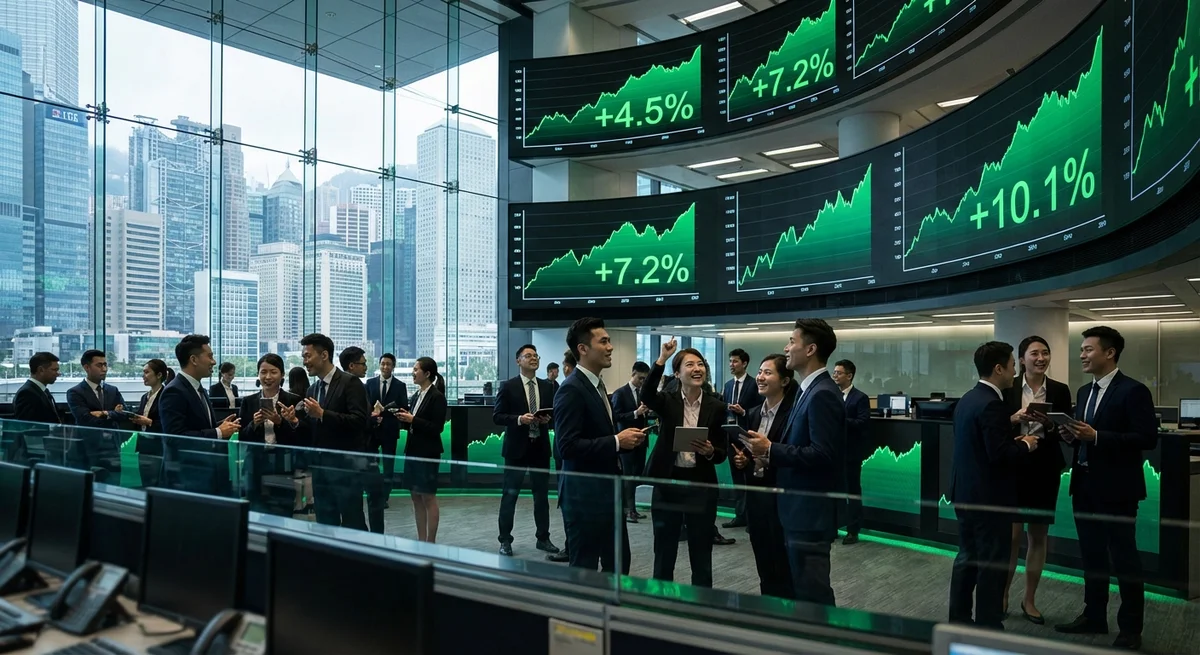
Year of the Horse turned out to be not merely symbolic for the Chinese artificial intelligence market — it became the moment when capital definitively believed that local developers of large language models are capable of competing with global leaders. On the first trading day of the lunar new year, February 20, shares of Zhipu and MiniMax on the Hong Kong Stock Exchange staged a rally that instantly made all financial wires: Zhipu closed at 725 HKD, gaining 42.72% for the session, MiniMax gained over 14%, reaching 970 HKD per share.
The combined market capitalization of the two companies exceeded 300 billion HKD — more than JD.com, one of China's largest internet retailers, operating in the market for over twenty years.
These figures require context. Both companies conducted IPOs only in January 2026 — Zhipu went public on January 8 at an offering price of 116.2 HKD, MiniMax followed the next day with a price of 165 HKD. From the start, the market welcomed them with enthusiasm: Zhipu received 1160 times oversubscription during the public offering stage, MiniMax soared more than 109% on the first day of trading. However, what happened over the following six weeks exceeded any scenario — since the IPO, shares of both companies grew more than 500%.
The catalysts for the February acceleration were specific technological events. Early in the month, information about a certain anonymous model called Pony Alpha began circulating in foreign AI communities, which observers linked to Zhipu's upcoming release. On February 12, the company officially opened access to GLM-5 — the new flagship of its series, simultaneously announcing a price increase for the GLM Coding Plan subscription by at least 30%.
The market perceived this not as a sign of greed, but as a signal of confidence: the company is raising prices because the product allows it. On the next trading day, shares rose another 20.65%.
A similar role for MiniMax was played by the release of the text model MiniMax M2.5 — the February 13 release pushed quotations to another jump, and over ten trading days the company's shares gained about 90%.
For the industry, this episode means something more than just the stock market success of two startups. Zhipu grew out of the knowledge engineering laboratory of Tsinghua University, founded back in 1996; its key scientist Tang Jie participated in the creation of the Chinese multimodal model "Wudao 2.0" with a trillion parameters. MiniMax was founded in 2022 by Yan Junzhe — a former vice president of SenseTime, who left for his own project literally on the eve of his former company's IPO. Both projects embody the "scientist-entrepreneur" model that the Chinese venture ecosystem has learned to value particularly highly in the sphere of fundamental AI.
The financial results for early investors are no less impressive than the dynamics of quotations. CASSTAR fund invested 40 million yuan in Zhipu back in 2019 at a company valuation of 375 million yuan. Today its stake is worth over 4.
3 billion HKD — a hundredfold return in absolute terms. Early investors in MiniMax — Hillhouse, IDG, Sequoia, Gaorong and others — are also fixing three-digit returns on paper. At the same time, both companies have not yet exited the lock-up period, and the real "harvest" for institutional investors is ahead.
Noteworthy is also the internal story: under the conditions of employee stock participation programs, at Zhipu employees own 51.2% of shares, at MiniMax participation in ownership is practically universal. At current prices, a significant portion of the teams of both companies have already achieved financial independence.
What is happening in the public market accompanies activity in the venture sector. At the end of December 2025, Moonshot AI closed round C at 500 million dollars at a valuation of 4.3 billion dollars. In January 2026, StepFun announced attracting over 50 billion yuan in the B+ round. According to available information, Moonshot AI is close to closing a new round at more than 700 million dollars with a valuation of over 10 billion dollars. The Chinese market for large language models has entered a phase where investors are massively revising the fair value of assets upwards.
The question, however, is not whether the growth will continue — but how long it will last. As competition among Chinese AI companies intensifies, and global players are not going to surrender their positions, capital will inevitably begin to concentrate around two or three leaders. The Year of the Horse gave the starting signal to this race — but the finish line is still very far away.
Want to stop reading about AI and start using it?
AI News is a curated feed of AI/tech news. Hamidun Academy teaches you to use AI systematically in your work.