OpenAI quietly rewrote its mission: “benefiting all of humanity” and safety disappeared
OpenAI quietly rewrote its corporate mission. Key phrases about “benefiting all of humanity” and a commitment to safety disappeared from the wording — the very
AI-processed from Jiqizhixin (机器之心); edited by Hamidun News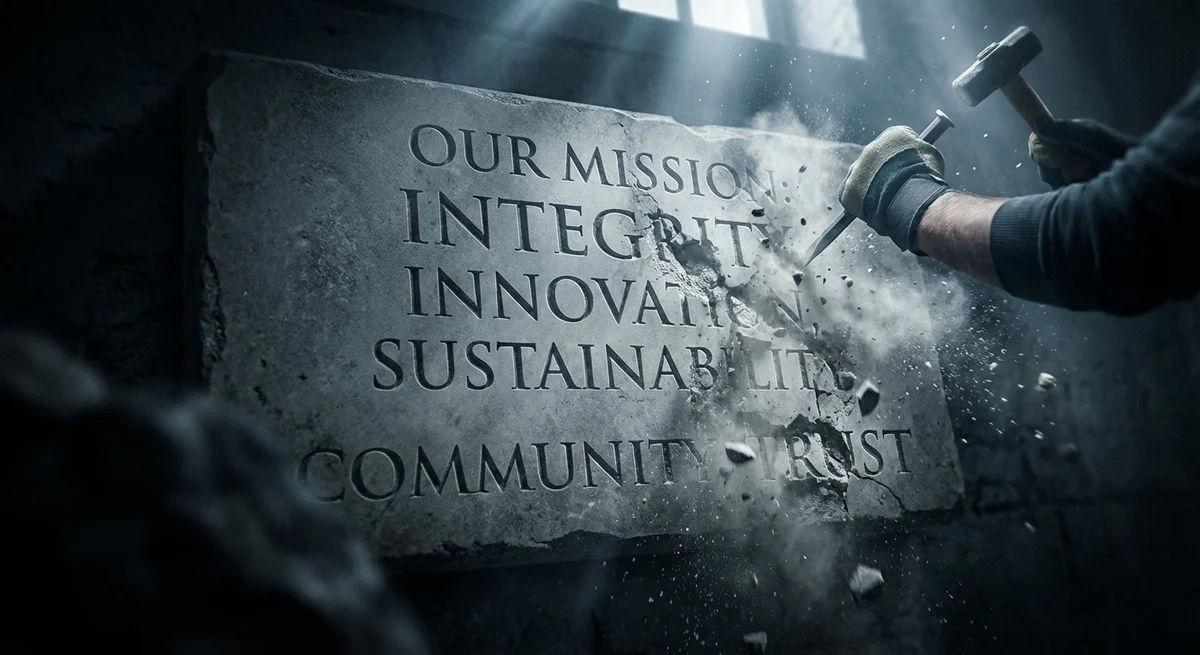
When a company that creates the most powerful artificial intelligence systems on the planet quietly crosses out words about safety and human welfare from its mission, this is not an editorial correction. This is a manifesto.
OpenAI has updated its corporate mission statement, and careful observers — particularly Chinese publication Jiqizhixin (机器之心) — have noticed that two key elements have disappeared from the text. First, the famous promise to create artificial general intelligence (AGI) "for the benefit of all of humanity" — benefit all of humanity — is gone. Second, the mission removed direct mentions of commitment to safety, which since the company's founding in 2015 had been its calling card. The changes were made without a press release, without public explanation — just new text on the website instead of the old.
To understand the scale of this shift, you need to remember where OpenAI came from. The company was founded by Sam Altman, Elon Musk, and a group of researchers as a nonprofit organization with a radically altruistic goal: to ensure that superintelligent AI would serve all people, not a handful of corporations. Safety was at the center of everything — OpenAI positioned itself as a counterweight to an AI arms race, as an organization that would sooner abandon profits than release dangerous technology. This mission attracted the world's best researchers, provided the company with moral authority and, importantly, public trust.
But over the past two years, OpenAI has undergone a transformation that many critics call a metamorphosis. The company has effectively ceased to be a nonprofit — first a "capped-profit" structure appeared, then conversations began about complete reorganization into a for-profit corporation. The company's valuation has soared into the hundreds of billions of dollars. Key figures responsible for safety have left OpenAI: Ilya Sutskever, co-founder and chief scientist, left the company after a dramatic conflict surrounding Altman's firing and return. Jan Leike, who led the Superalignment team — a special division ensuring the safety of superintelligent AI — left for Anthropic, publicly stating that at OpenAI, "safety culture gave way to product culture." The Superalignment team was essentially disbanded.
Against this backdrop, the quiet editing of the mission looks not like a coincidence, but as a formalization of what has already happened in practice. OpenAI today is a company that releases products at a dizzying speed, competes with Google, Anthropic, and Meta for market share, attracts investment on terms unthinkable for a nonprofit, and increasingly resembles a for-profit enterprise rather than a research lab concerned with humanity's fate.
Supporters of the company may argue that a mission is just words, and the real safety work continues inside. And indeed, OpenAI still publishes model testing reports, conducts red-teaming, and formally follows safety protocols. But words in a mission are not just words. They are a public commitment, a legal and cultural reference point that employees, regulators, and society rely on. When a company removes safety from its mission, it sends a signal — both inward and outward — that priorities have shifted.
For the industry, this is a troubling precedent. OpenAI was long a moral compass — imperfect though it was, contradictory though it was, a compass nonetheless. If even it abandons the language of responsibility, what does that say about the rest? Anthropic, which builds its identity around safety, may win in the short term by attracting disillusioned researchers and partners. But in the long term, the weakening of the safety norm at the market leader lowers the bar for everyone.
Regulators too cannot ignore this signal. In Europe, the AI Act is already taking effect, in the US the administration wavers between supporting innovation and managing risks, China is building its own regulatory system. When the world's largest AI developer demonstrates that safety is a variable, not a constant, the arguments for strict external regulation become significantly stronger.
Ultimately, the story of OpenAI is a story of how good intentions collide with the realities of venture capital, market competition, and human ambition. The company created to save humanity from dangerous AI increasingly becomes the very player it promised to protect us from. And the quiet disappearance of words about safety from the mission is not the beginning of this transformation. It is its official acknowledgment.
Want to stop reading about AI and start using it?
AI News is a curated feed of AI/tech news. Hamidun Academy teaches you to use AI systematically in your work.