Trump lifts environmental restrictions on coal power plants for AI data centers
The Trump administration scrapped the Mercury and Air Toxics Standards (MATS), which limited emissions of mercury and other toxic substances from coal power pla
AI-processed from The Verge; edited by Hamidun News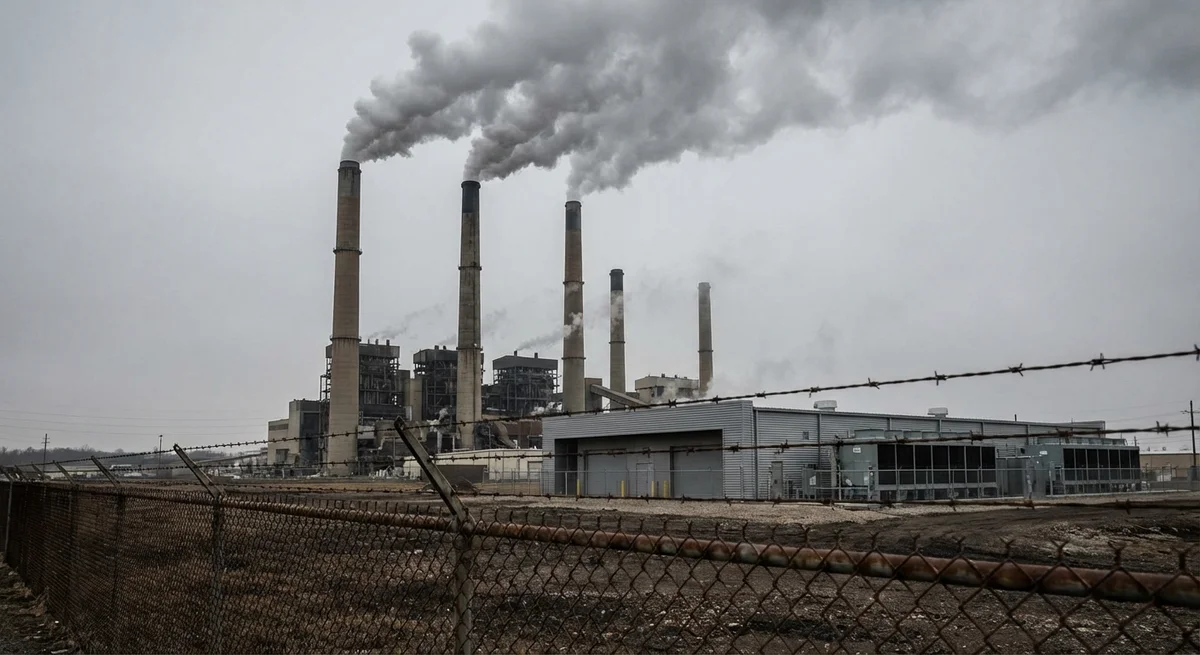
The energy hunger of artificial intelligence is beginning to reshape not only the electricity market but also the environmental policy of the world's largest economy. The Donald Trump administration announced the repeal of Mercury and Air Toxics Standards — a set of restrictions from the Obama and Biden era that regulated emissions of mercury and other toxic pollutants from coal-fired power plants. The decision comes at a time when electricity demand in the United States is experiencing unprecedented growth, with the main driver of this growth being the construction of massive data centers for training and running artificial intelligence models.
To understand the scale of the problem, it's worth recalling the context. MATS standards were introduced under Obama and tightened under Biden. Their goal was to limit emissions of mercury, lead, arsenic and other heavy metals that coal-fired power plants release into the atmosphere. Coal generation in the US accounts for approximately half of all mercury emissions in the country. Mercury is a powerful neurotoxin: even relatively small doses with chronic exposure are linked to birth defects, cognitive development disorders in children, and damage to the kidneys and nervous system. These standards, according to environmentalists' estimates, saved thousands of lives and prevented tens of thousands of disease cases.
But the Trump administration has different logic. The large-scale wave of deregulation being conducted by the current White House is aimed at one goal — to increase energy capacity as quickly as possible. The reason is simple: technology giants — Microsoft, Google, Amazon, Meta, Elon Musk's xAI — have announced the construction of data centers with a combined capacity of dozens of gigawatts.
Each major cluster for training language models consumes electricity equivalent to a small city. The existing US energy infrastructure cannot handle this demand, and building new capacity — from nuclear stations to solar farms — takes years. Coal stations, many of which were planned to be shut down, have found themselves in an unexpectedly favorable position: they already exist, are connected to the grid, and can quickly increase output.
This is where economic pragmatism collides with public health. The repeal of MATS effectively gives coal station operators free rein: they will be able to operate at full capacity without expensive filtration and emissions treatment systems. For energy companies, this means lower costs and the ability to sell more electricity to data centers at attractive prices. For residents of areas around coal stations — an increase in the concentration of toxic substances in the air and water. A telling example is Kingston Fossil Plant in Tennessee — a 1.4 gigawatt coal station located on the shores of Watts Bar Lake. Such facilities will be the first beneficiaries of deregulation and simultaneously the main sources of pollution.
For the artificial intelligence industry, this situation creates a serious reputation problem. Technology companies have spent years building a narrative of sustainable development, carbon neutrality and green energy. Google and Microsoft publish reports on their environmental footprint, Amazon invests in renewable sources. But the reality is that rapid growth in energy consumption for AI has already led to an increase in the carbon footprint of these companies, and now threatens to cause an increase in toxic emissions. When a model that generates text or images runs on electricity from a coal station without filters — the corporations' green promises sound like empty words.
There is also a geopolitical dimension. The race for AI leadership between the US and China is turning into a race for energy resources. The Trump administration is openly betting on speed: build faster, launch faster, train the next generation of models faster. Environmental standards in this logic are an obstacle, a bureaucratic barrier that slows progress. This way of thinking is not new, but the scale of consequences is unprecedented. Previously, deregulation concerned individual industries, now it is directly linked to a technology that is called defining for the 21st century.
Critics of the decision point out an obvious paradox: artificial intelligence is positioned as a tool for solving global problems, including environmental ones. But its development in its current form exacerbates the very problems it is supposedly meant to solve. Mercury in water and air will not become less toxic because it was released for the sake of training another language model.
However, it would be an oversimplification to reduce the situation to a conflict between "AI versus ecology." The real problem lies in the absence of a long-term energy strategy that would combine technological growth with protection of public health. Nuclear energy, geothermal sources, new energy storage technologies — all of this could provide data centers with clean electricity, but requires time and investment. The repeal of MATS is a choice in favor of a quick and dirty solution. And for this choice, not technology corporations will pay, but people living near coal stations.
Want to stop reading about AI and start using it?
AI News is a curated feed of AI/tech news. Hamidun Academy teaches you to use AI systematically in your work.