G42 and Cerebras deploy 8 exaflops of compute power in India
Abu Dhabi-based G42 and US chipmaker Cerebras announced a partnership to deploy an 8-exaflop computing system in India. It is one of the largest AI infrastructu
AI-processed from TechCrunch; edited by Hamidun News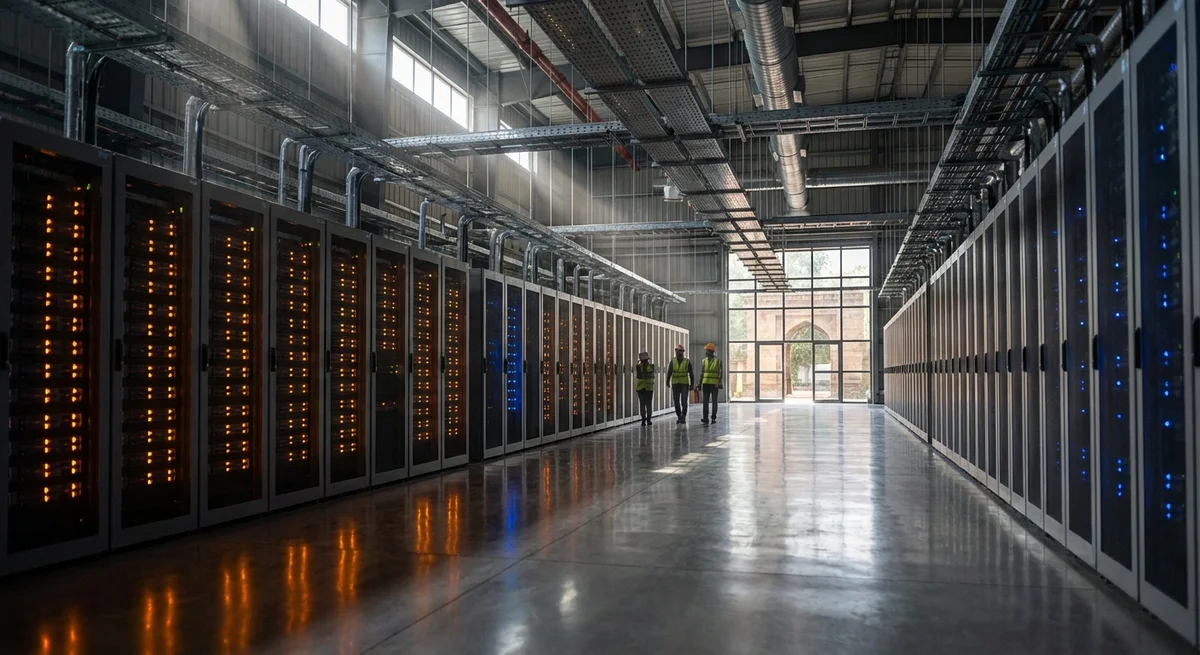
Eight exaflops. To understand the scale of this figure, it is enough to recall that just a few years ago achieving one exaflop was considered a historic milestone in supercomputing. Now the Abu Dhabi-based technology company G42 and American chip manufacturer Cerebras intend to deploy a system with eight times this threshold — and not somewhere in Silicon Valley, but in India.
The partnership between the two companies, announced in February 2026, is more than just another infrastructure deal. It is a geopolitical signal that simultaneously addresses three key vectors: the Middle East's ambitions as a global technology hub, India's desire not to fall behind in the AI revolution, and Cerebras's attempt to seriously challenge NVIDIA's dominance in AI computing.
G42 is a company that over recent years has transformed from a little-known Emirati player into one of the most active investors in global AI infrastructure. Backed by Abu Dhabi's sovereign capital and closely linked to the ecosystem around the national AI champion Technology Innovation Institute, G42 has already attracted Washington's attention — and not always positively. In 2024, the company was forced to shut down a number of projects with Chinese partners under pressure from the American side, after which Microsoft invested one and a half billion dollars in it, effectively anchoring it within the Western technology bloc.
The partnership with Cerebras, an American company, fits logically into this strategy: G42 demonstrates loyalty to Western technology standards while simultaneously expanding its own influence.
Cerebras, in turn, gets what it critically needs from this deal — scale. The Sunnyvale company is known for its radical approach to AI chip architecture: instead of traditional GPUs, it produces so-called wafer processors — giant chips the size of an entire silicon wafer, each containing hundreds of thousands of compute cores. The technology is impressive, but to date Cerebras has remained a niche player, unable to compete with NVIDIA in deployment volumes. The 8-exaflop project in India is a proposition of an entirely different caliber. If the system is successfully deployed, it will become one of Cerebras's largest installations in the world and proof that wafer architecture can operate at the scale of national-level data centers.
India in this triangle plays the role of not merely a server hosting platform. A country with a population of 1.4 billion and a rapidly growing technology sector acutely needs its own computational infrastructure for AI. The government of Narendra Modi has consistently promoted the "India as an AI Nation" strategy, but until now the country has been critically dependent on cloud resources from Western hyperscalers. Its own exaflop-class infrastructure fundamentally changes the situation: Indian companies, research institutes, and state structures gain the ability to train and deploy large AI models without having to send data abroad. For a country where digital sovereignty concerns are becoming increasingly acute, this is an argument no less weighty than pure computational power.
It is important to understand the broader context as well. The world has entered an era when computational power for AI is becoming a strategic resource — on par with oil or rare earth metals. Countries and corporations are ramping up data center investments at an unprecedented pace, and access to cutting-edge chips is increasingly regulated at the export control level. In these circumstances, the role of intermediaries — countries and companies capable of redistributing computational resources between regions — becomes key. G42 deliberately occupies this niche, and the India project is a vivid illustration of this strategy.
The question of implementation remains. Deploying 8 exaflops is a colossal task not only in terms of hardware, but also in terms of power supply, cooling, and engineering infrastructure. India, for all its ambitions, faces chronic problems in the energy sector, and ensuring stable power for a data center of this scale will require separate investments. Neither G42 nor Cerebras has yet disclosed details about the timeline, location, and financial parameters of the project, which leaves room for healthy skepticism.
Nevertheless, the very fact of this partnership marks an important shift. The global map of AI computing is ceasing to be a bipolar story about the US and China. The Middle East, India, and other regions are actively entering the race, forming new alliances and supply chains. And if this project comes to fruition, it will become one of the most vivid examples of how AI infrastructure transforms into a tool of geopolitical influence.
Want to stop reading about AI and start using it?
AI News is a curated feed of AI/tech news. Hamidun Academy teaches you to use AI systematically in your work.