OpenAI moves into hardware: its first device will be a smart speaker with a camera
OpenAI is preparing to release its first physical product — a $200–300 smart speaker. According to The Information, the device will have a built-in camera with
AI-processed from 3DNews AI; edited by Hamidun News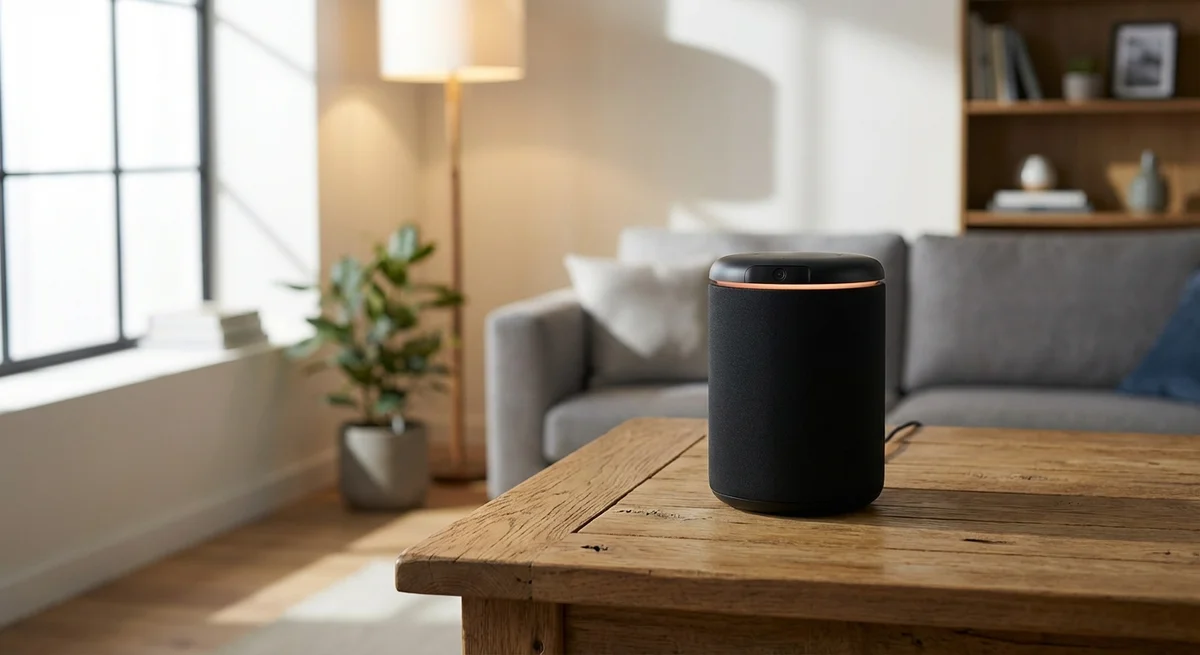
The company that changed our understanding of artificial intelligence's capabilities now wants to settle into your home — literally. OpenAI is preparing to release its first hardware product: a smart speaker with a camera, priced between $200 and $300. This is reported by The Information, citing sources familiar with the company's plans.
At first glance, this sounds like yet another attempt to enter a market where Amazon Echo and Google Nest have long been firmly entrenched. But the devil, as always, is in the details. OpenAI's device is not simply a speaker with a voice assistant. The speaker will feature a built-in camera and will be able to recognize its surroundings: see objects on a table, understand the context of nearby conversations, and — particularly noteworthy — recognize its owner by face. The latter function, according to sources, is primarily needed for purchase authorization, which immediately transforms the device from a mere entertainment gadget into a full-fledged commercial terminal.
To understand why this step matters, it's worth looking back. OpenAI has consistently moved from research laboratory to product company. First came the API for developers, then ChatGPT for the mass user, then subscription tiers and enterprise solutions. But all these products existed exclusively in digital space — on smartphone and computer screens. The entry into the physical world is a qualitatively new stage that fundamentally changes the nature of human interaction with AI. Instead of opening an app and typing a query, the user simply talks to a device that can also see what they see.
Technically, this became possible thanks to the multimodal capabilities of the latest generation of GPT models. ChatGPT already knows how to analyze images and conduct voice conversations — the speaker essentially becomes the physical embodiment of these capabilities. But the camera is what makes the device truly interesting. When AI not only hears you but also sees your surroundings, a fundamentally different level of contextual understanding emerges. You can ask "what plant is this?" while pointing to a flower, or ask for help with a recipe by showing what's in your refrigerator. Face recognition adds another layer — personalization. The device knows who is talking to it and can adapt responses, settings, and recommendations to specific family members.
However, this is precisely where serious questions begin. A camera with face recognition in a residential space is a topic that will inevitably spark discussions about privacy. Amazon already went through similar scandals with Echo Show and Ring, and Google faced a wave of criticism after integrating cameras into its Nest devices.
OpenAI, which is already under close scrutiny from regulators worldwide, risks ending up at the center of a new round of debates about the boundaries of permissible surveillance. How exactly will biometric data be stored and processed? Will the video stream be transmitted to company servers or analyzed locally?
These questions remain unanswered for now, but they largely determine whether consumers will accept the new gadget or reject it.
The $200–$300 price range also deserves attention. It's noticeably more expensive than basic Echo and Nest models, but comparable to their premium versions. OpenAI is clearly not targeting the budget segment, but rather an audience willing to pay for a smarter device. Given that the company has already trained millions of users to pay $20 a month for ChatGPT Plus, it has a loyal base that will likely be interested in a physical product. The question is whether the speaker will require a separate subscription to work fully — and if so, which one.
For the industry as a whole, this announcement signals the beginning of a new round of competition. Amazon and Google have dominated the smart speaker market for years, but their Alexa and Google Assistant assistants are increasingly perceived as outdated compared to the capabilities of modern language models. The arrival of a device from OpenAI may force both giants to accelerate the integration of cutting-edge AI models into their products. Apple, which still can't decide what to do with Siri, will also come under pressure.
OpenAI is making a bet that could define the company's future for years to come. If the speaker turns out to be successful, it will open the door to an entire ecosystem of physical devices with integrated AI — from home assistants to wearable electronics. If it fails, it will be an expensive lesson about the fact that creating hardware and creating software are two fundamentally different skills. One thing can be said for certain: the era when AI existed only on a screen is coming to an end.
Want to stop reading about AI and start using it?
AI News is a curated feed of AI/tech news. Hamidun Academy teaches you to use AI systematically in your work.