India gathers global AI leaders at a four-day summit
India is hosting the four-day India AI Impact Summit on artificial intelligence. The event has brought together top executives from leading technology companies
AI-processed from TechCrunch; edited by Hamidun News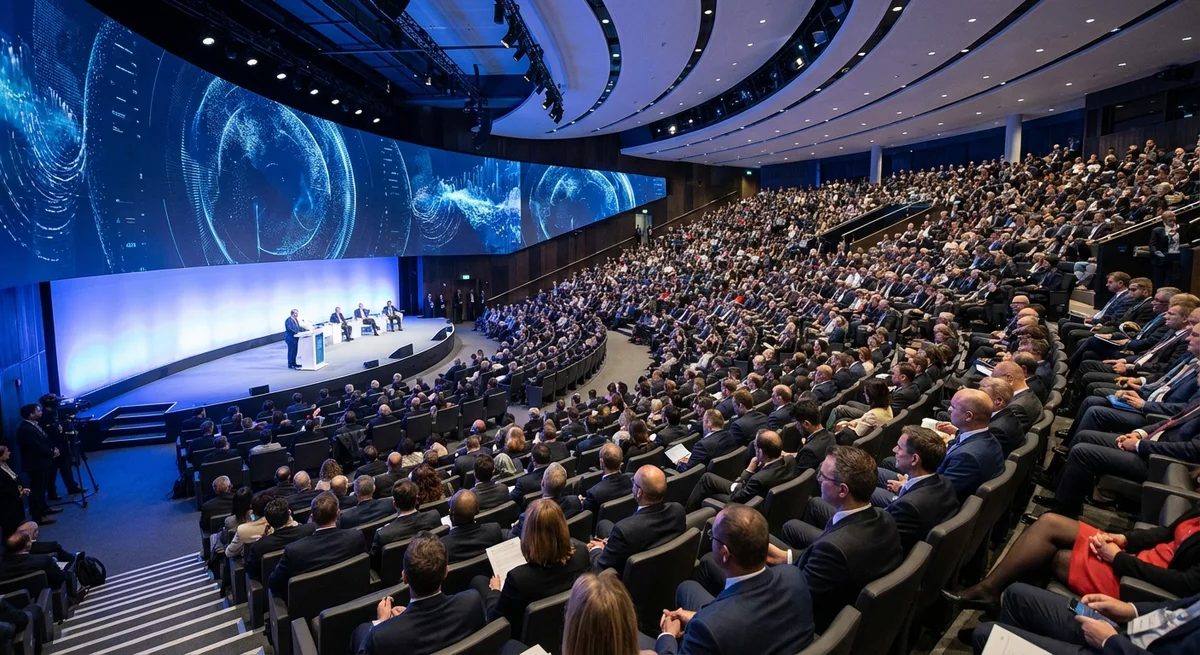
India hosted the most representative technology gathering of the year: the four-day India AI Impact Summit brought together under one roof the leaders of the world's largest artificial intelligence companies and heads of state. OpenAI, Anthropic, Nvidia, Microsoft, Google, Cloudflare — this list reads like a registry of companies shaping the face of the digital era. The fact that they all found themselves in India at the same time speaks volumes.
India has long claimed a special role in the global technology economy, but it is precisely now that these claims are taking concrete shape. A country with a population of more than 1.4 billion people, a rapidly growing middle class, and a vast pool of engineering talent is transforming itself into a strategically important market for any company betting on scale. At the same time, India does not want to remain merely a consumer of Western technologies — it is consistently building its own AI infrastructure and legal framework, claiming a place at the table where global decisions are made.
The summit covers a wide range of topics: from the economic impact of artificial intelligence on labor markets to questions of international cooperation in regulation. The presence of top managers from several competing companies on the same platform is itself remarkable. OpenAI and Anthropic are direct competitors in the race for dominance in the large language models market. Nvidia de facto controls the supply of computational resources without which AI development is impossible. Microsoft and Google are waging their own battle for corporate clients. Nevertheless, they all found common ground for dialogue — and that common ground is India.
The key context of what is happening is a shift in the center of gravity of the global AI discussion. For a long time it concentrated on three poles: the United States, the European Union, and China. Washington set the pace for technological development, Brussels — the regulatory agenda, Beijing — an alternative model of state capitalism in the AI sphere. The rest of the world remained an observer. The India AI Impact Summit signals that this configuration is changing. India is deliberately forming its own narrative: a country capable not only of adapting others' solutions, but of proposing its own approaches to managing technologies at the global level.
The practical dimension of the summit is no less important than the symbolic one. India has already launched a state initiative IndiaAI with a budget of several hundred million dollars, aimed at creating computational infrastructure, supporting startups, and training specialists. In parallel, the country is working on a national data strategy — a resource critical for training language models. For Western companies, all of this means not an abstract interest in a "promising market," but quite specific opportunities for partnership, localization, and joint research.
The presence of heads of state gives the forum the character not merely of an industry conference, but of a diplomatic platform. AI issues have definitively moved into the realm of big politics: technological sovereignty, export controls over chips, safety standards — all of this requires interstate dialogue. India skillfully uses its geopolitical status as a "neutral" major power maintaining relations with both Washington and other centers of power, to position itself as a possible mediator in developing global norms.
For the industry as a whole, the India AI Impact Summit marks an important shift: the era when the future of artificial intelligence was determined in Silicon Valley and European regulatory corridors is coming to an end. On the horizon a more complex, multipolar architecture is forming — with several centers of decision-making, competing standards, and different visions of what AI should be. India is not merely inviting world leaders to a meeting — it is announcing its intention to become one of the architects of this new architecture. How successful it will be in this is not a question for the four days of the summit, but for the decisions that follow.
Want to stop reading about AI and start using it?
AI News is a curated feed of AI/tech news. Hamidun Academy teaches you to use AI systematically in your work.