YouTube brings conversational AI to TV screens
YouTube has launched an experiment to bring conversational AI into its smart TV app. The new tool lets viewers ask questions about the content they are watching
AI-processed from TechCrunch; edited by Hamidun News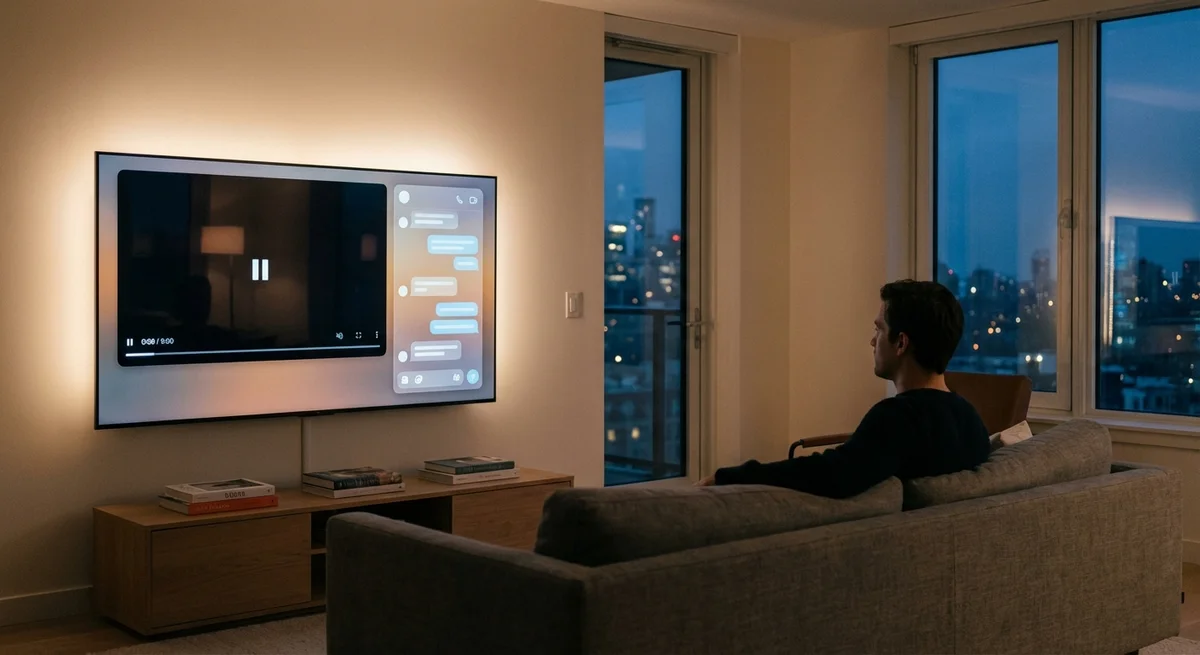
YouTube didn't wait for users to reach for their smartphone to search for something while watching a series. The company is testing a conversational AI assistant directly in the app for smart TVs — now you can ask a question about a video without taking your eyes off the big screen. This is not just a convenient update: it's about how Google is methodically embedding generative AI at every point in its ecosystem.
The conversational AI feature on YouTube didn't appear yesterday — mobile users tested it back in 2023. The principle is simple: while watching a video, you can open a chat panel, ask a question about the video's content, and get an answer without leaving the app. The assistant can summarize what was said, explain terms, provide additional context, or suggest similar materials. Until recently, all of this worked exclusively on smartphones and tablets — televisions were left out. Now YouTube is filling this gap.
The decision to move the tool specifically to TV platforms is explained not only by the logic of audience reach, but also by changes in the very nature of content consumption. Television has long ceased to be a passive screen: smart TVs with internet connectivity, voice control, and streaming services have become full-fledged media centers. According to YouTube itself, smart TVs are one of the fastest-growing segments in terms of hours watched. People watch more and longer, which means they have more questions. Previously, answering those questions required reaching for a phone — now the AI is right where it's needed.
Technically, integrating the assistant into the TV interface is a non-trivial task. Control on a television is fundamentally different from a touchscreen: remote navigation, no keyboard at hand, different screen proportions, and different interaction logic. YouTube will need to adapt the chat interface so that entering queries doesn't become a chore. Most likely, the focus will be on voice input through the remote's microphone or a built-in TV microphone — especially since Google Assistant and integrations with other voice assistants have already become standard for Android TV and Google TV. In this sense, the appearance of conversational AI on TV looks like an organic continuation of already existing infrastructure.
For Google, this is not an isolated experiment — it's part of a broader strategy. The company is consistently implementing generative AI across all its products: the search engine received AI Overviews, Gmail got smart email composition features, Google Docs got a Gemini assistant. YouTube in this logic is not an exception, but one of the key testing grounds. A video platform with over two billion monthly active users is an ideal environment for training models on real usage scenarios: what questions do people ask about cooking videos, news clips, sports matches. Every query is data that helps make the assistant more accurate.
For viewers, the consequences may prove deeper than they appear at first glance. On one hand, there's obvious convenience: fewer device switches, quick access to context without interrupting viewing. On the other hand, there's potentially a new way of interacting with video content as a whole. If the assistant learns not just to answer questions, but to offer precise recommendations based on what the person is watching right now, YouTube gains a tool for audience retention at an entirely new level. Algorithmic recommendations worked behind the scenes — conversational AI makes this process visible and interactive.
For now, the feature is in the experimental stage, and YouTube is not revealing either the geography of testing or the timeline for a full launch. This is typical for the company's caution: new tools live for years in "experimental" status before reaching the entire audience — if they reach it at all. But the very fact of moving conversational AI to the television platform suggests that Google sees in this format not a temporary novelty, but a serious vector of development. The big screen is becoming the next frontier in the battle for user attention — and artificial intelligence is already taking its place there.
Want to stop reading about AI and start using it?
AI News is a curated feed of AI/tech news. Hamidun Academy teaches you to use AI systematically in your work.