Nvidia and Meta change the rules: the end of the era of standalone chips
Nvidia and Meta's collaboration marks a fundamental shift in the high-tech industry. The days when tech giants bought discrete components are coming to an end.
AI-processed from Wired; edited by Hamidun News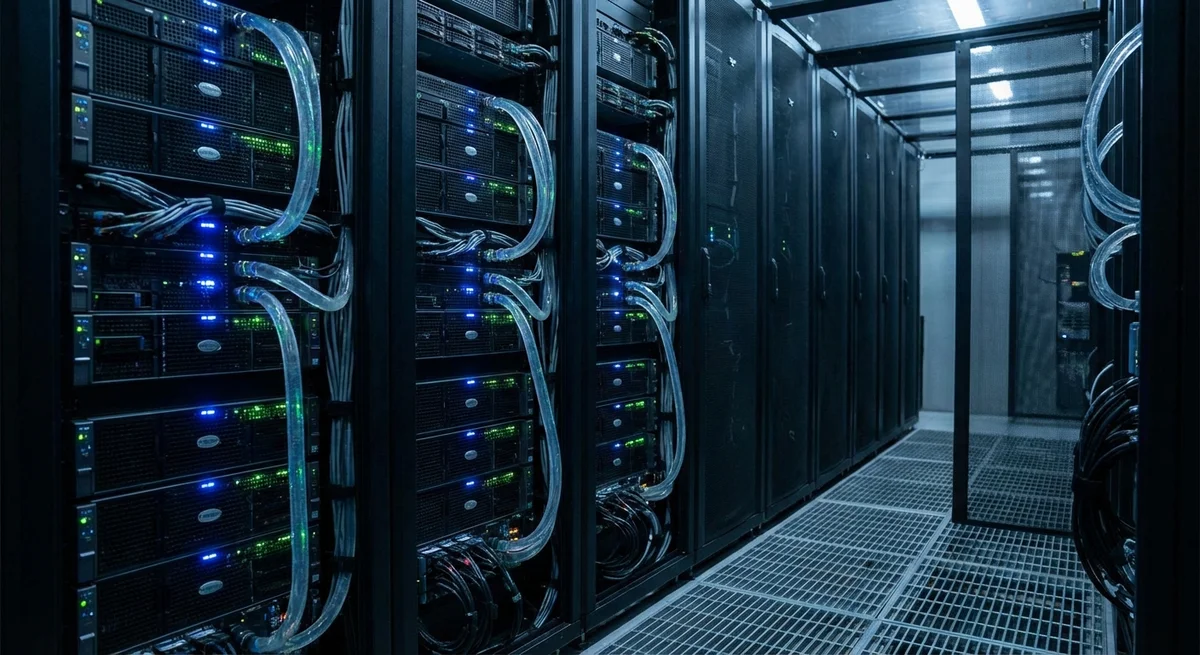
Nvidia and
Meta Change the Rules of the Game: The End of the Era of Discrete Chips
The collaboration between technology giants Nvidia and Meta, announced recently, marks not just another partnership, but a fundamental shift in the high-tech industry. This alliance signals the twilight of an era when leading companies could simply purchase discrete components, such as individual graphics processing units (GPUs), for their needs. Today's tasks related to training and deploying advanced neural networks require a far more comprehensive approach that goes beyond traditional hardware procurement.
Historically, companies seeking cutting-edge computing power relied on purchasing individual GPUs, which were then integrated into their own server solutions. This approach allowed them to maintain flexibility and adapt their infrastructure to specific tasks. However, the exponential growth in the complexity of artificial intelligence models and the volumes of data needed to train them exposed the limitations of this approach. Modern AI systems require not just powerful accelerators, but deep integration of the entire computing stack. We are talking about synergy between GPUs, central processing units (CPUs), high-speed network infrastructure, and specialized accelerators that must work as a single whole – a unified computing node.
A deeper dive into the nature of the changes occurring shows that Nvidia and Meta are precisely following this path. Rather than simply supplying Meta with their famous GPUs, Nvidia is apparently offering a more comprehensive solution. This could include optimized server designs, integrated network solutions, cluster management software, and possibly even specialized chips developed in close collaboration.
The goal of such an approach is to minimize performance bottlenecks that inevitably arise when integrating disparate components. When it comes to training giant language models or complex computer vision systems, the performance of the entire system, not just individual accelerators, becomes a critical factor. This means that architecture, network connectivity, and the efficiency of interaction between all elements play a crucial role.
The consequences of this shift are quite significant. For Nvidia, it means transitioning from the status of a component supplier to the role of a supplier of comprehensive AI platforms and ecosystems. The company will not only need to sell chips, but also offer ready-made solutions that will facilitate large-scale computing for its clients.
For Meta and other technology giants, this means they become more dependent on their suppliers in terms of their entire computing infrastructure. However, this could also lead to significant acceleration in the development and deployment of new AI technologies, since they will no longer need to spend enormous resources on creating and optimizing their own hardware base from scratch. The arms race in artificial intelligence will now depend not only on innovations in chip design, but also on the ability of vendors to deliver cohesive, scalable, and high-performance ecosystems.
In conclusion, the partnership between Nvidia and Meta is a clear indicator that the high-tech industry is entering a new era. The era of discrete, individual chips is coming to an end, giving way to comprehensive, integrated computing systems. Success in the future will be determined not so much by the characteristics of individual components, but by the ability to create and deliver complete, optimized ecosystems for solving the most complex artificial intelligence tasks. This transition promises to accelerate progress in the field of AI, but also requires all market participants to reconsider their strategies and supply chains.
Want to stop reading about AI and start using it?
AI News is a curated feed of AI/tech news. Hamidun Academy teaches you to use AI systematically in your work.