Battle for AI: India convenes leaders from Silicon Valley and the Global South
A major AI Impact Summit organized by Prime Minister Narendra Modi has opened in India. The event has brought together leaders of major technology giants such a
AI-processed from Guardian; edited by Hamidun News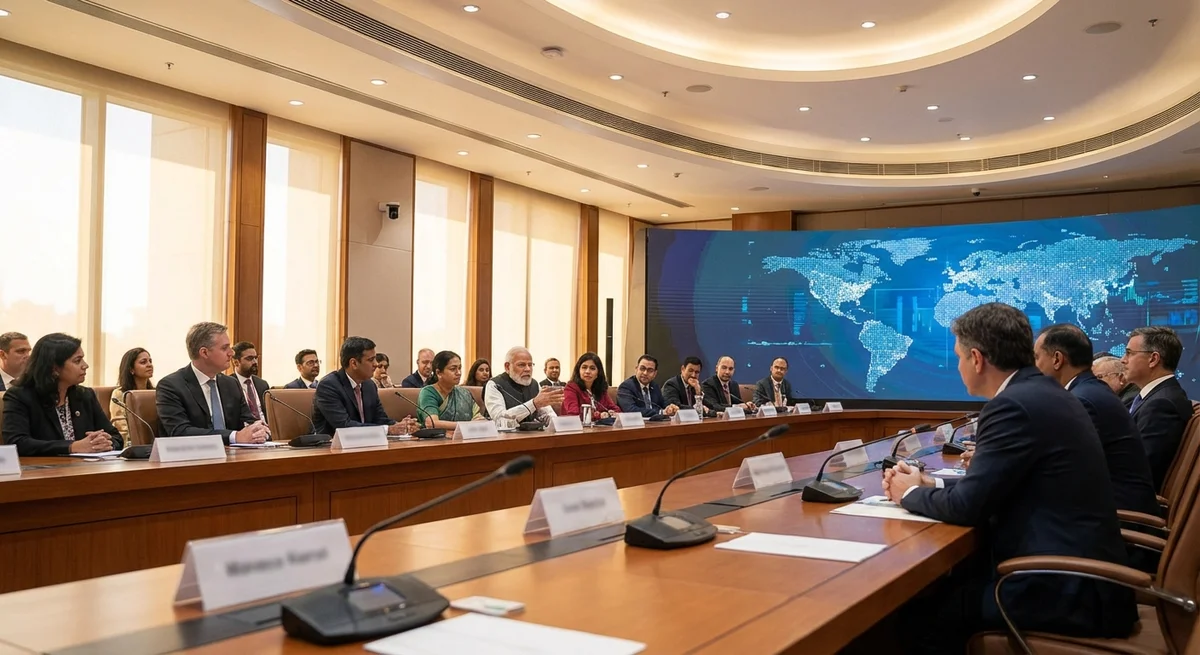
Battle for AI: India Gathers Leaders of Silicon Valley and the Global South
In the heart of the rapidly evolving world of artificial intelligence, a new geopolitical drama is unfolding, with India at its center. Prime Minister Narendra Modi opened a large-scale AI Impact Summit, an ambitious event designed not only to showcase achievements in artificial intelligence, but also to serve as a platform for dialogue about the future of this transformative technology. The summit brought together under one roof titans of Silicon Valley—leaders of giants such as Google, Anthropic, and OpenAI—and representatives of Global South countries seeking to claim their place in a new technological era.
At the center of attention is a complex struggle for control over AI and a desperate attempt to narrow the yawning technological gap between the developed economies of the West and emerging markets represented by countries such as Kenya and Indonesia.
The context of this summit cannot be underestimated. Artificial intelligence is no longer simply a futuristic concept; it is becoming the driving force of the global economy, transforming industries, creating new opportunities, and simultaneously raising urgent questions about security, ethics, and justice. While technology giants from Silicon Valley continue to dominate research and development, their influence on global development is becoming increasingly tangible.
However, Global South countries, facing unique challenges and possessing enormous, yet often unrealized potential, feel the need to actively participate in shaping the future of AI. They see in this technology not only a threat, but also a chance for accelerated development, overcoming backwardness, and improving the lives of their citizens. India, aware of its growing role on the world stage and seeking to become a bridge between different economic poles, has taken the initiative to organize this meeting.
Delving into the essence of the AI Impact Summit, it becomes clear that this is more than just a technology exhibition. This is an arena for strategic negotiations and alliance-building. On one hand, the largest technology companies, whose market capitalization is measured in trillions of dollars, aim not only to showcase their latest developments, but also to secure government support on issues of regulation and product implementation.
They are interested in access to new markets and talent. On the other hand, leaders of Global South countries, such as Kenya and Indonesia, where average annual income often barely exceeds a thousand dollars, came with a clear agenda: to ensure that AI development benefits everyone, not just the wealthiest. They are concerned about possible increases in inequality, job loss, and the need to adapt their economies to the new reality.
India, for its part, positions itself as a key mediator, seeking to find a balance between the interests of developed and developing countries, advocating for the necessity of an inclusive approach to AI development and implementation.
The consequences of such dialogue could be far-reaching. The success of the summit could lead to the formation of new global standards in AI regulation that will take into account the needs and capabilities of all countries. This could promote a more equitable distribution of AI benefits and help developing countries avoid the trap of technological dependence.
India, acting as a leader, could strengthen its position as one of the key players in shaping the future of global technology policy. However, there are also risks: if the dialogue does not lead to real agreements, the gap between technologically advanced countries and the rest of the world may only increase, creating new forms of inequality and tension. It is important that the promises made at the summit are backed by concrete actions and investments.
In conclusion, the AI Impact Summit in Delhi is a landmark event reflecting the growing awareness that the future of artificial intelligence must be a common endeavor. India, acting as the organizer, demonstrates ambitions and a desire to play a central role in global technological architecture. The battle for control over AI, for its fair development and implementation, is only beginning. The outcome of this battle will determine whether artificial intelligence becomes a tool for universal prosperity or will exacerbate existing global imbalances. The summit in Delhi is an important step toward finding answers to these critically important questions.
Want to stop reading about AI and start using it?
AI News is a curated feed of AI/tech news. Hamidun Academy teaches you to use AI systematically in your work.