SpaceX veterans raise $50 million for optical communications for AI
Mesh, a company founded by former SpaceX engineers, has raised $50 million in a Series A round. The startup focuses on building high-performance optical…
AI-processed from TechCrunch; edited by Hamidun News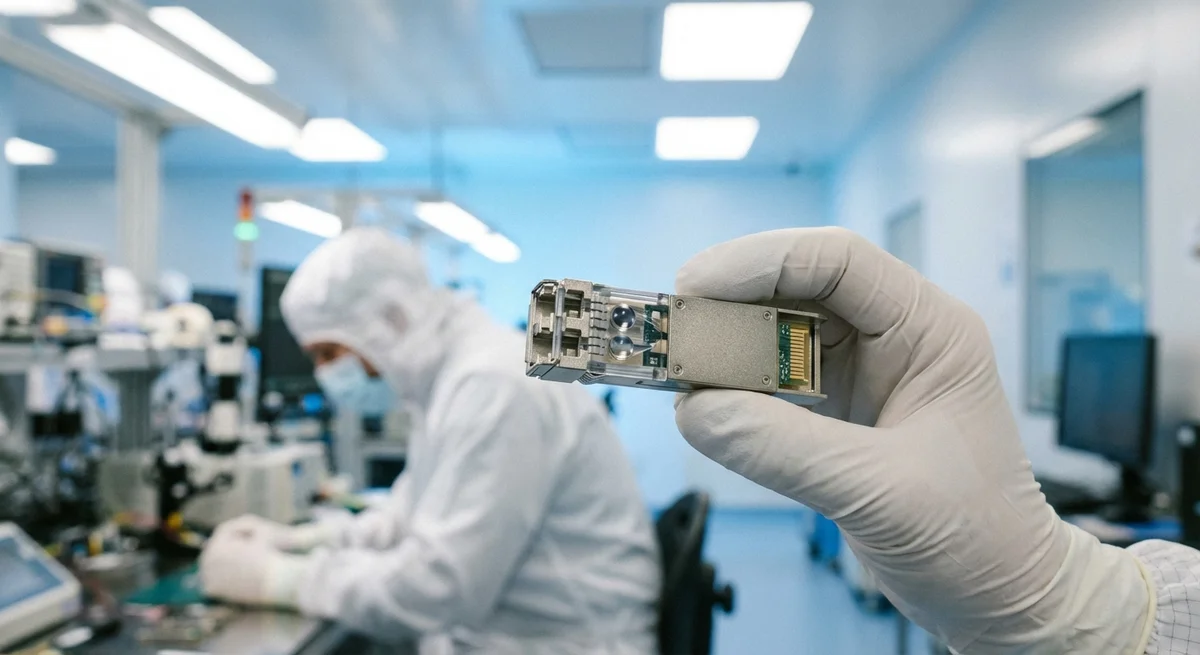
SpaceX
Veterans Raised 50 Million Dollars for Optical Communications for AI
In the rapidly evolving world of artificial intelligence, where computational power grows exponentially, network bandwidth becomes critically important. A team of engineers who previously worked on ambitious projects at SpaceX founded the startup Mesh and successfully raised 50 million dollars in a Series A funding round. These funds will be directed toward the development and mass production of high-performance optical transceivers, designed to solve one of the key problems facing modern data centers serving AI workloads.
The Context of Rapid AI Growth
The past several years have witnessed a true boom in artificial intelligence, especially in the large language models (LLM) segment. Training such models requires colossal computational resources, including thousands of graphics processors (GPU) working in unison. However, the existing network infrastructure of data centers often cannot cope with the volume of data that needs to be transmitted between these GPUs. Bandwidth deficit becomes a "bottleneck" that slows down training processes and limits scaling capabilities. This is precisely the problem the Mesh startup aims to solve.
Deep Dive into Mesh's Solution
Mesh focuses on creating optical transceivers — devices that convert electrical signals into optical ones and vice versa, allowing data to be transmitted over fiber optics at high speeds. The distinctive feature of Mesh's solutions lies in their ability to provide unprecedented bandwidth and low latency, which is extremely important for synchronizing thousands of GPUs involved in training AI models. The company offers a scalable solution that allows efficient integration of a large number of computing nodes into a single high-performance network. This means that AI developers will be able to create larger and more complex models, as well as accelerate their training process, which directly impacts the speed of innovation in this field.
Consequences for the Industry
The attracted investment of 50 million dollars will allow Mesh to transition to the mass production stage of its components. This, in turn, can significantly impact the entire AI ecosystem. Ensuring seamless operation of computational clusters and eliminating network limitations will open new horizons for researchers and developers. Companies engaged in AI development will have the opportunity to build more powerful and efficient infrastructures, leading to the creation of more advanced AI systems capable of solving tasks that previously seemed impossible. Additionally, Mesh's success can stimulate further innovations in data center network technologies, as demand for high-performance solutions will only grow.
Conclusion
The Mesh story is a striking example of how experience gained at leading technology companies can be successfully applied to solve current industry problems. Attracting significant investment testifies to the company's high potential and investors' confidence in its ability to change the landscape of AI data centers. As the need for computational power for artificial intelligence continues to grow, solutions like those offered by Mesh will become an integral part of future infrastructure, providing the necessary speed and scalability for the next generation of AI innovations.
Want to stop reading about AI and start using it?
AI News is a curated feed of AI/tech news. Hamidun Academy teaches you to use AI systematically in your work.