Battle for nature: how AI expansion threatens British farms
Residents of the small British town of Potters Bar have entered into a standoff with tech giants over the rapid expansion of AI infrastructure. Global demand…
AI-processed from Wired; edited by Hamidun News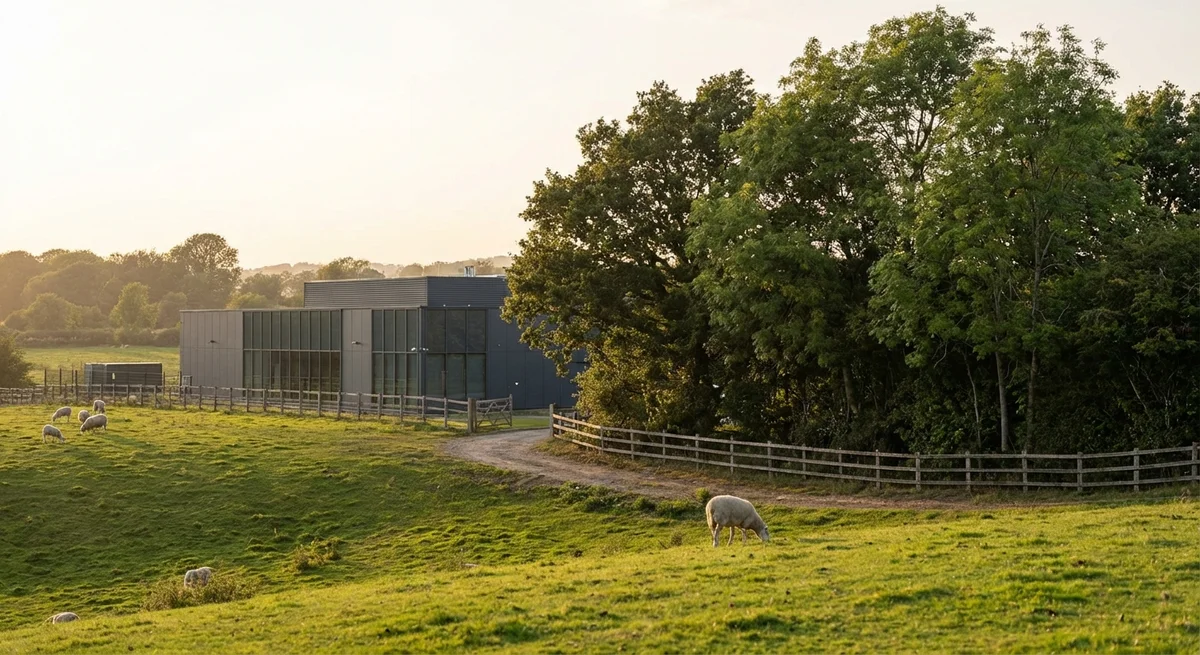
Battle for Nature: How AI Expansion Threatens British Farms
In a small British town of Potter's Bar, a real battle is unfolding, where on one side stands the desire for technological progress, and on the other – the protection of the environment and the customary way of life. The townspeople found themselves at the epicenter of a global confrontation between technology giants and a local community trying to defend their land from the expansion of artificial intelligence infrastructure. The rapid growth in demand for computational power, fueled by the AI boom, requires the construction of new, large-scale data centers.
These gigantic complexes, necessary for processing and storing vast volumes of data, are planned to be placed on the territory of London's so-called "green belt" – picturesque agricultural lands, forests and meadows, which until now have served as a buffer between the capital and rural areas.
The context of this conflict lies in the very nature of the modern technological revolution. Artificial intelligence, despite its potential benefits, possesses a colossal "physical" component. For it to function, it requires not only complex algorithms and software, but also enormous physical spaces for server placement, as well as colossal amounts of electrical energy for their power supply and cooling.
As companies worldwide expand their AI capabilities, so does their need for constructing new data centers. London's "green belt," with its relatively low land costs and proximity to major urban centers, becomes an attractive yet highly controversial location for such projects. For local residents, whose lives are closely tied to agriculture and nature, the prospect of their idyllic landscapes being transformed into industrial zones seems catastrophic.
A deep dive into the issue shows that this is not simply a local dispute. It is a vivid illustration of the reverse side of the AI boom, which often remains hidden from view. While we marvel at the capabilities of chatbots or breakthroughs in medicine driven by AI, we overlook the enormous resources consumed by this technology.
Data centers are not simply buildings with computers; they are complex engineering structures requiring significant land plots, massive electrical and water supply systems, and creating noise and thermal pollution. In the case of Potter's Bar, potential developers seek to purchase or lease substantial territories currently used for farming and part of natural ecosystems. Local farmers fear that land loss will not only undermine their business but also destroy the fragile ecological balance they have maintained for decades.
The struggle to preserve the "green belt" becomes a struggle to preserve biodiversity, clean water bodies, and the traditional British landscape.
The consequences of this conflict could be far-reaching. On one hand, if technology companies prevail, this could accelerate the development of AI infrastructure in Great Britain, promoting economic growth and innovation. However, the price of such progress may prove too high – irreversible destruction of valuable natural territories and disruption of local people's lives.
On the other hand, if the local community succeeds in defending their land, this could set a precedent for other regions facing similar problems and force the technology industry to seek more sustainable and less invasive solutions for placing its infrastructure, perhaps in less sensitive zones or using more environmentally friendly technologies. This case underscores the growing need for careful planning and regulation of AI development to balance technological progress with environmental responsibility and social well-being.
In conclusion, the battle for nature in Potter's Bar is not simply a struggle for a piece of land. It is a symbol of the broader challenge facing humanity: how to manage the rapid development of artificial intelligence in a way that benefits rather than harms our planet and our society. The fate of the English countryside, its farmlands and forests, now depends on the outcome of this technological arms race, where the stakes are extraordinarily high – the future of our environment and our way of life.
Want to stop reading about AI and start using it?
AI News is a curated feed of AI/tech news. Hamidun Academy teaches you to use AI systematically in your work.