SpaceX and xAI to develop autonomous drone swarm for the Pentagon
SpaceX and its subsidiary xAI have entered the race for a secret Pentagon contract to develop autonomous drone swarm technology. The project aims to create voic
AI-processed from Bloomberg Tech; edited by Hamidun News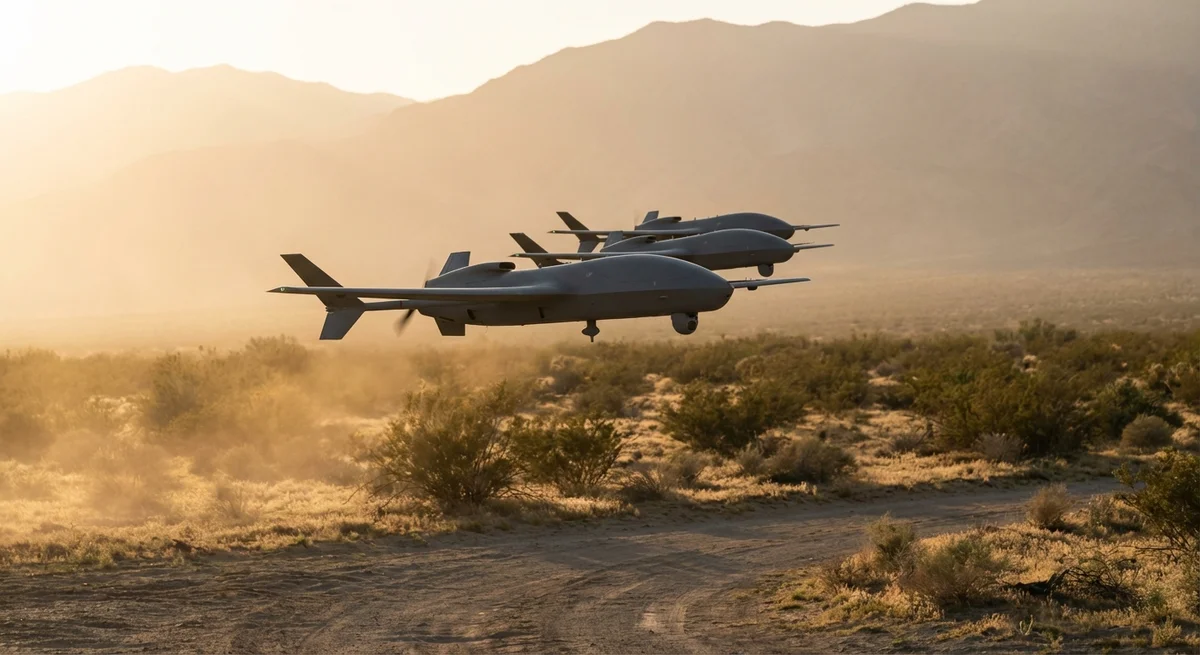
SpaceX and xAI: A New Frontier in Pentagon Defense Technologies
The American company SpaceX, renowned for its revolutionary achievements in space exploration, together with its subsidiary xAI, focused on artificial intelligence development, has entered into fierce competition for a secret U.S. Department of Defense contract. The subject of the contract is the creation of advanced autonomous drone swarm systems capable of being controlled through voice commands. This initiative marks an important step in the integration of civilian AI technologies into the military sphere and underscores the United States' determination to accelerate battlefield automation using the most cutting-edge developments.
The context of this project is rooted in the growing recognition by military agencies of artificial intelligence's potential to transform combat tactics and strategy. Traditional command and control systems for troops and equipment often rely on complex hierarchies of commands and communication channels, which can be vulnerable in modern conflict conditions. The development of voice-controlled drone swarms promises to significantly enhance operational efficiency and responsiveness, allowing commanders to issue orders intuitively without the need for specialized interfaces or extensive personnel training.
SpaceX's participation, a company with extensive experience in complex engineering solutions and space technologies, combined with xAI's expertise in large language models, creates a powerful synergistic effect. This partnership demonstrates the readiness of leading technology giants to apply their civilian developments to national security tasks, which was less common previously.
A deeper dive into the project's essence reveals the ambition of the tasks at hand. It is not simply about controlling individual drones, but about creating entire swarms capable of acting coordinately and autonomously. Voice control implies the integration of sophisticated language models that must not only understand human commands but also interpret context, adapt to changing circumstances, and possibly even forecast adversary actions.
This requires AI to possess the ability to learn in real time, make decisions under uncertainty, and ensure reliability even during partial system failures. The Pentagon clearly seeks to leverage the latest advances in generative AI, which have demonstrated impressive successes in natural language processing and solving complex problems. The integration of such systems into military equipment opens the door to unprecedented levels of automation, where machines can perform tasks previously requiring direct human involvement, while maintaining a high degree of command control.
The consequences of such development are multifaceted. On one hand, this could lead to significant improvements in military operations efficiency, reduced risk to personnel, and faster threat response. Autonomous drone swarms can be used for reconnaissance, surveillance, targeting, as well as for executing strike tasks, acting as a single, coordinated organism.
On the other hand, serious ethical and technical questions arise. The reliability of such systems in combat conditions, questions of accountability in case of unforeseen consequences, and the potential arms race in autonomous systems – all of this requires careful consideration and international regulation. The involvement of civilian companies, such as SpaceX and xAI, in defense technology development also raises questions about the balance between commercial interests and national security.
In conclusion, the competition between SpaceX and xAI for the Pentagon contract to develop autonomous drone swarms with voice control is a vivid indicator of a new era in military technology development. The use of advanced civilian AI developments for defense needs promises to accelerate battlefield automation and increase armed forces efficiency. However, alongside potential benefits, this trend carries significant challenges that require careful consideration at both national and international levels to ensure responsible and safe implementation of these powerful technologies.
Want to stop reading about AI and start using it?
AI News is a curated feed of AI/tech news. Hamidun Academy teaches you to use AI systematically in your work.