Low-altitude economy in China's agriculture shows growth
China's Ministry of Agriculture and Rural Affairs announced significant progress in the development of low-altitude economy in the agricultural sector. The…
AI-processed from 36Kr (36氪); edited by Hamidun News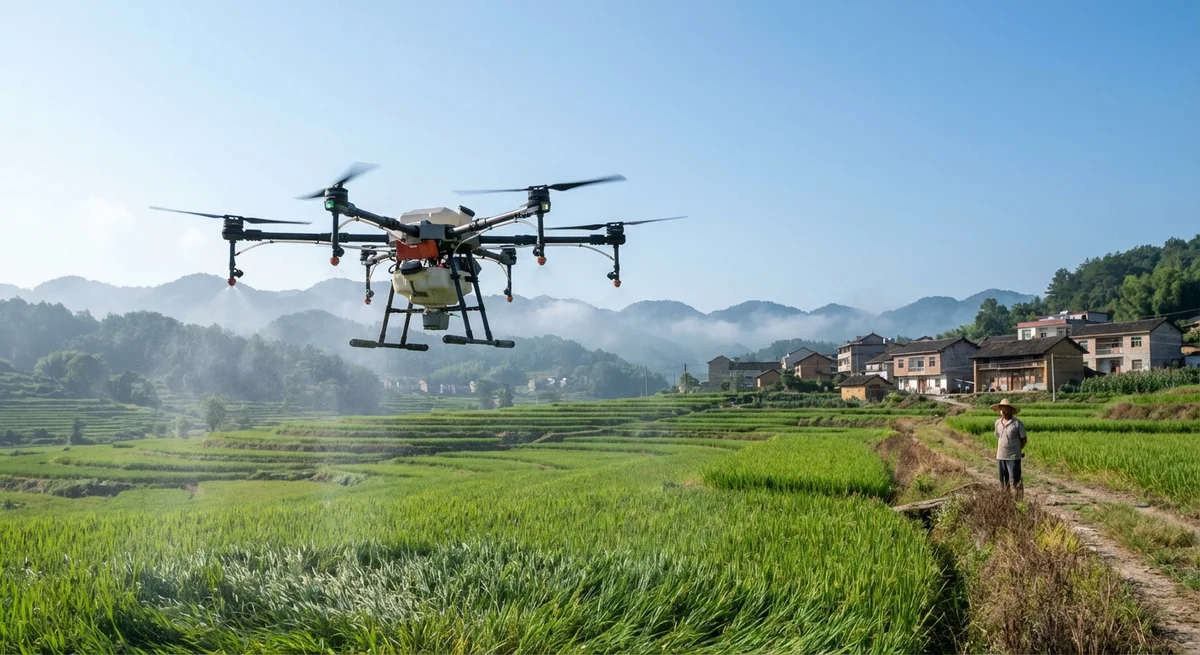
China's Ministry of Agriculture and Rural Affairs announced significant progress in the development of low-altitude economy in the agricultural sector. The statement was made by Deputy Minister Zhang Xinwan at a press conference at China's State Council. This refers to the use of unmanned aerial vehicles (UAVs) and other technologies operating at low altitudes to increase efficiency and productivity in agriculture.
The context of this statement is important: China is actively investing in the modernization of agriculture, seeking to ensure food security and increase the competitiveness of the sector. The use of drones for field spraying, crop monitoring, and other tasks is becoming increasingly common. This allows reducing costs, increasing yield, and reducing environmental impact.
According to ministry data, the number of agricultural drones in China has already exceeded 300,000 units. The annual area of land treated using drones exceeds 460 million mu – a Chinese unit of measurement equal to approximately 667 square meters. By 2025, it is planned to achieve 76.
7% mechanization level of agricultural work. This includes not only the use of drones, but also the implementation of other types of agricultural machinery and automated systems. The development of low-altitude economy in agriculture has far-reaching consequences.
First, it contributes to increased labor productivity and reduced production costs. Second, it allows more efficient use of resources such as water and fertilizers. Third, it opens new opportunities for the development of rural territories and creation of new jobs.
Furthermore, it corresponds to the "smart agriculture" strategy aimed at integrating information technologies into the agricultural sector. However, there are certain challenges. It is necessary to develop a regulatory and legal framework for regulating the use of drones in agriculture, ensure flight safety and protection of personal data.
It is also important to train farmers to work with new technologies and provide them with access to financing. Solving these tasks will allow fully realizing the potential of low-altitude economy in agriculture. In conclusion, the active development of low-altitude economy in Chinese agriculture is an important step towards the modernization of the agricultural sector and ensuring food security.
The use of drones and other advanced technologies allows increasing production efficiency, reducing costs, and improving environmental sustainability. This experience could be useful for other countries seeking to develop "smart agriculture".
Want to stop reading about AI and start using it?
AI News is a curated feed of AI/tech news. Hamidun Academy teaches you to use AI systematically in your work.