Forecasts for the emergence of superintelligence and the saving “human factor” in the AI era
The new Import AI review examines the timeline for reaching the technological singularity and new methods for evaluating machine learning. An important achievem
AI-processed from Import AI; edited by Hamidun News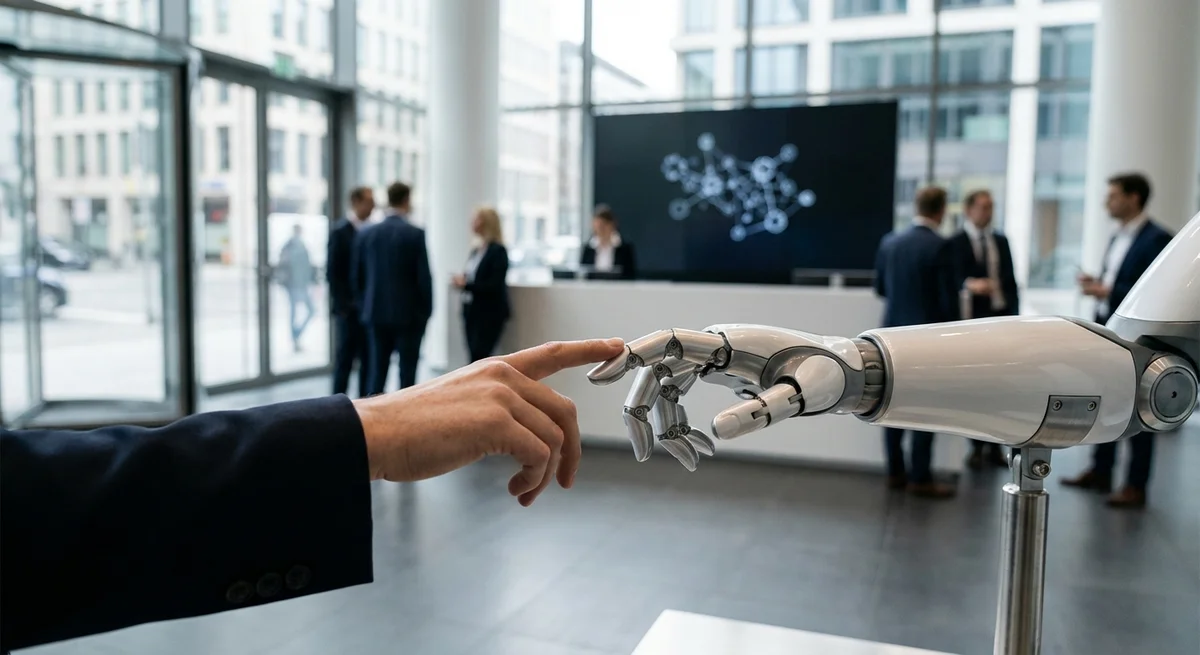
In the rapidly evolving world of artificial intelligence (AI), two opposing yet equally important trends occupy the minds of researchers and the public. On one hand, increasingly bold predictions emerge about achieving technological singularity – a hypothetical moment when AI will surpass human intelligence, potentially leading to unpredictable consequences. On the other hand, economic and social analysts offer a more reassuring perspective, emphasizing the enduring value of the 'human factor' amid growing automation.
The latest Import AI review, dedicated to cutting-edge achievements in AI, addresses both the timeline for so-called technological singularity and new, more precise methods for assessing progress in machine learning. Among the most impressive successes highlighted in the review are AI's achievements in proving advanced mathematical theorems. This is not merely an academic curiosity; such successes demonstrate the capability of AI models not only to process vast amounts of data but also to conduct complex logical reasoning, thereby expanding the boundaries of their potential applications far beyond current tasks.
Meanwhile, the authoritative publication The Economist seeks to ease concerns about mass unemployment caused by AI. According to their analysis, even as automation becomes increasingly sophisticated, it will not necessarily lead to the complete displacement of human labor. The key factor restraining this trend is the persistent high demand for a 'human touch.' Consumers continue to value personal contact, empathy, and intuition, which cannot yet be fully replicated by algorithms, even if the latter offer flawless precision. This 'human factor' becomes a natural barrier to the complete replacement of humans by machines, particularly in sectors involving customer service, creative professions, and those areas where interpersonal interaction plays a decisive role.
Thus, we observe a paradoxical situation. On one hand, AI is rapidly approaching levels of intellectual power that once seemed like science fiction, questioning the very concept of human uniqueness. On the other hand, precisely these human qualities – the capacity for empathy, creativity, ethical judgment – are becoming increasingly valuable in conditions where machines can perform routine and even complex tasks with high efficiency. This creates a new field for human-machine interaction, where AI can become a powerful tool complementing, rather than replacing, human capabilities.
In conclusion, a future in which AI achieves superintelligence remains a subject of speculation and active research. However, even in this hypothetical scenario, and certainly in current reality, the value of human contribution, its unique perspective, and the capacity for genuine connection will likely continue to play a defining role. Understanding and developing these human qualities, as well as seeking synergy between human and machine, represent key tasks for shaping a sustainable and flourishing future in the age of artificial intelligence.
Want to stop reading about AI and start using it?
AI News is a curated feed of AI/tech news. Hamidun Academy teaches you to use AI systematically in your work.