Elon Musk relaunches the Dojo3 chip project for computing in space
Elon Musk announced the resumption of Dojo3 development — the third generation of Tesla's specialized AI chips, a project that had previously been paused. The k
AI-processed from TechCrunch; edited by Hamidun News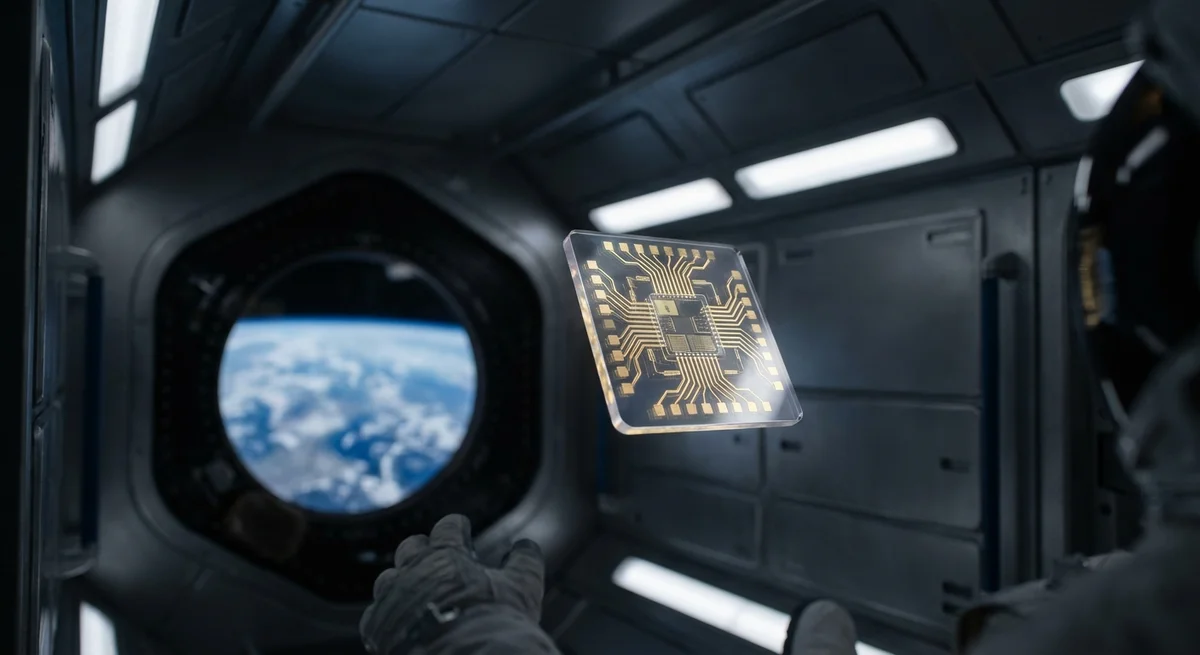
Elon Musk, known for his ambitious projects in space and artificial intelligence, has once again captured public attention by announcing the restart of Dojo3 development—the third generation of specialized AI chips created by Tesla. This project, previously suspended, is acquiring a new, even more futuristic dimension: instead of its original goal of training autonomous driving algorithms on Earth, Dojo3 will now be oriented toward "space AI computing." This decision testifies to a strategic shift in Musk's plans, aimed at integrating Tesla's cutting-edge technologies with orbital infrastructure, opening exciting prospects for the future of space exploration.
Initially, the Dojo chips were developed by Tesla to solve the complex task of training neural networks that underlie autopilot systems. The process of training such models requires enormous computational power, and Dojo was designed to provide it in the most efficient format. However, apparently the company faced certain difficulties or reconsidered its priorities, which led to a temporary suspension of the project. The return to Dojo3 with a new, space-oriented focus suggests that Musk's vision extends far beyond terrestrial applications.
The key distinction of the new Dojo3 iteration lies in its intended purpose. "Space AI computing" is a concept that currently lacks a clear definition, but its potential is enormous. It can be assumed that these chips will be used to process data coming from Starlink satellites, the global satellite internet system that also belongs to Musk.
Processing information directly in orbit could significantly accelerate data transmission and reduce the load on ground stations. Additionally, Dojo3 could become the foundation for ensuring the autonomy of future SpaceX missions. Imagine spacecraft or research apparatus capable of making complex decisions in real time, analyzing received data, and adapting to changing conditions without constant control from Earth.
This is critically important for long interplanetary flights or research in conditions of limited communication.
The consequences of such a step could be quite significant. Deploying powerful computational nodes in space could be a true breakthrough. This will not only accelerate scientific research and the development of space technologies, but will also open new possibilities for commercial use of orbital space. It is possible that in the future we will see entire orbital data centers operating on the basis of specialized AI chips, capable of solving the most diverse tasks—from Earth monitoring to complex astrophysical calculations. Dojo3, thus, could become the foundation for creating a new, decentralized computational infrastructure beyond Earth's atmosphere.
In conclusion, the restart of the Dojo3 project with a focus on space AI computing is a vivid testament to Elon Musk's relentless ingenuity and his drive to push the boundaries of the possible. This step not only demonstrates synergy among Musk's various companies and projects, but also hints at a future where artificial intelligence and space technologies will be inextricably linked, opening new horizons of knowledge and space exploration for humanity.
Want to stop reading about AI and start using it?
AI News is a curated feed of AI/tech news. Hamidun Academy teaches you to use AI systematically in your work.