From "invisibility cloaks" to AI: Neurophos creates ultra-efficient optical chips
Startup Neurophos has raised $110 million to develop innovative optical processors for AI inference. The technology is based on composite metamaterials that mak
AI-processed from TechCrunch; edited by Hamidun News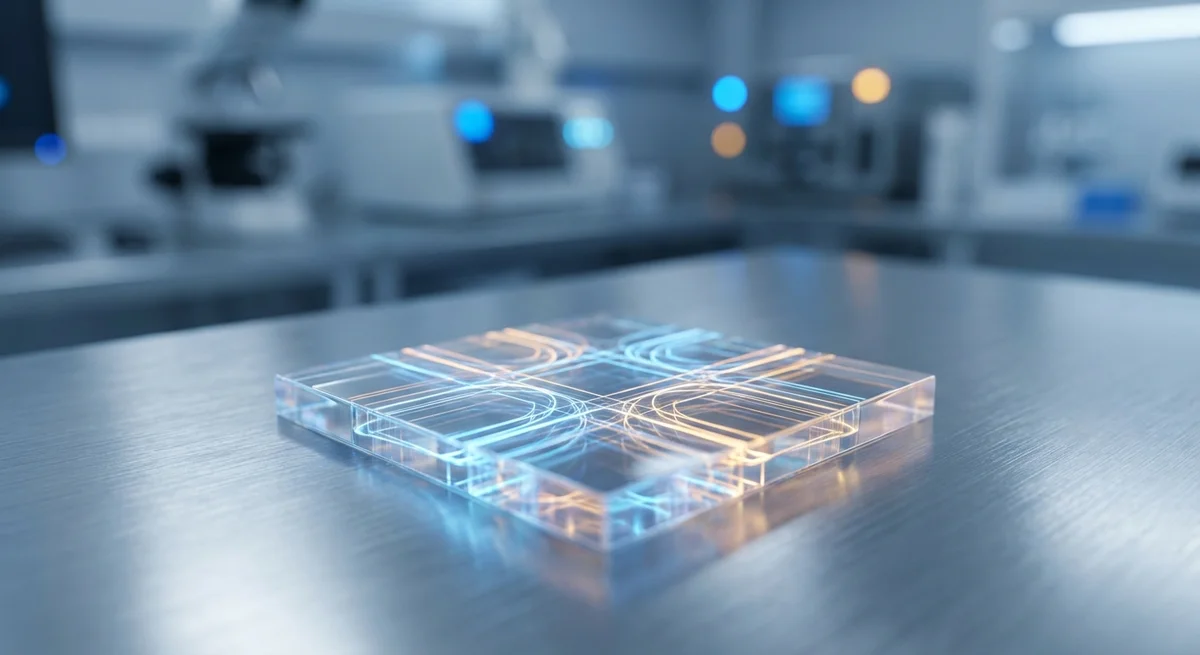
Headline: From “invisibility cloaks” to AI: Neurophos is creating ultra-efficient optical chips
In the world of rapidly advancing artificial intelligence technologies, where the energy consumption of data centers is becoming one of the main challenges, startup Neurophos has announced that it has raised an impressive $110 million. These funds are intended for the development and commercialization of revolutionary optical processors designed to radically increase the efficiency of neural network inference. Neurophos’s technology, based on the use of advanced composite metamaterials, promises a breakthrough by enabling computation with light instead of traditional electricity. This approach opens new horizons for creating more powerful and energy-efficient artificial intelligence systems.
The historical context of the metamaterials that underpin Neurophos’s development is quite interesting. Initially, such materials were actively studied in the context of creating so-called “invisibility cloaks” — devices capable of controlling the propagation of light in such a way that an object inside would become invisible to an observer. These early experiments demonstrated the unique properties of metamaterials in manipulating electromagnetic waves.
Neurophos managed to adapt these fundamental discoveries to solve a completely different, but no less pressing, task — accelerating computation for artificial intelligence. Instead of hiding objects, light will now be used to perform the complex mathematical operations that underlie neural networks, particularly at the inference stage, when models have already been trained and are being applied to solve specific tasks.
A deeper look into Neurophos’s technology shows that it is built on specially designed composite metamaterials. These materials have unique optical properties that allow them to interact with light at the nanoscale. Unlike traditional silicon chips, which process information by moving electrons, Neurophos optical processors use photons — particles of light.
Light can travel at enormous speed and with virtually no energy loss, making it an ideal carrier of information for high-performance computing. The architecture of Neurophos chips is designed to make the most of these advantages. It makes it possible to perform complex matrix multiplications and other operations critical for neural network inference with unprecedented speed and energy efficiency.
In essence, computation occurs as light passes through a specially structured metamaterial, eliminating the need for numerous electronic switches and minimizing latency.
The consequences of deploying such optical chips could be truly revolutionary. First, this concerns the energy consumption of data centers, which today accounts for a significant share of global electricity use. Neurophos optical processors promise to reduce this consumption by an order of magnitude, which would lead to substantial resource savings and a lower carbon footprint.
Second, Neurophos’s technology makes it possible to bypass the fundamental physical limitations faced by traditional silicon solutions, such as Moore’s law. Shrinking transistor sizes and increasing their density is becoming ever more difficult and expensive. Optical chips offer an alternative path to exponential performance growth that is not tied to the miniaturization of silicon components.
This opens the door to creating more powerful and affordable artificial intelligence systems capable of processing huge volumes of data in real time, which is critically important for fields such as autonomous driving, medical diagnostics, and scientific research.
In conclusion, Neurophos’s $110 million raise is a vivid sign of investors’ belief in the potential of optical computing to solve the urgent problems of the artificial intelligence industry. The transition from fundamental metamaterials research, once associated with the фантастical idea of “invisibility cloaks,” to the creation of ultra-efficient optical chips for AI is an impressive leap. The investment will allow Neurophos to accelerate the commercialization of its unique architecture, which promises not only to speed up the most demanding neural networks, but also to make this process significantly more energy-efficient.
If the technology lives up to expectations, it could become one of the key drivers of the next wave of artificial intelligence development, making it more accessible, powerful, and sustainable.
Want to stop reading about AI and start using it?
AI News is a curated feed of AI/tech news. Hamidun Academy teaches you to use AI systematically in your work.