Roland Busch's mission: how Siemens is automating the real world with AI
Siemens CEO Roland Busch outlined a strategy to turn the company into a unified technology platform. The main focus is on “industrial AI agents” trained on prop
AI-processed from The Verge; edited by Hamidun News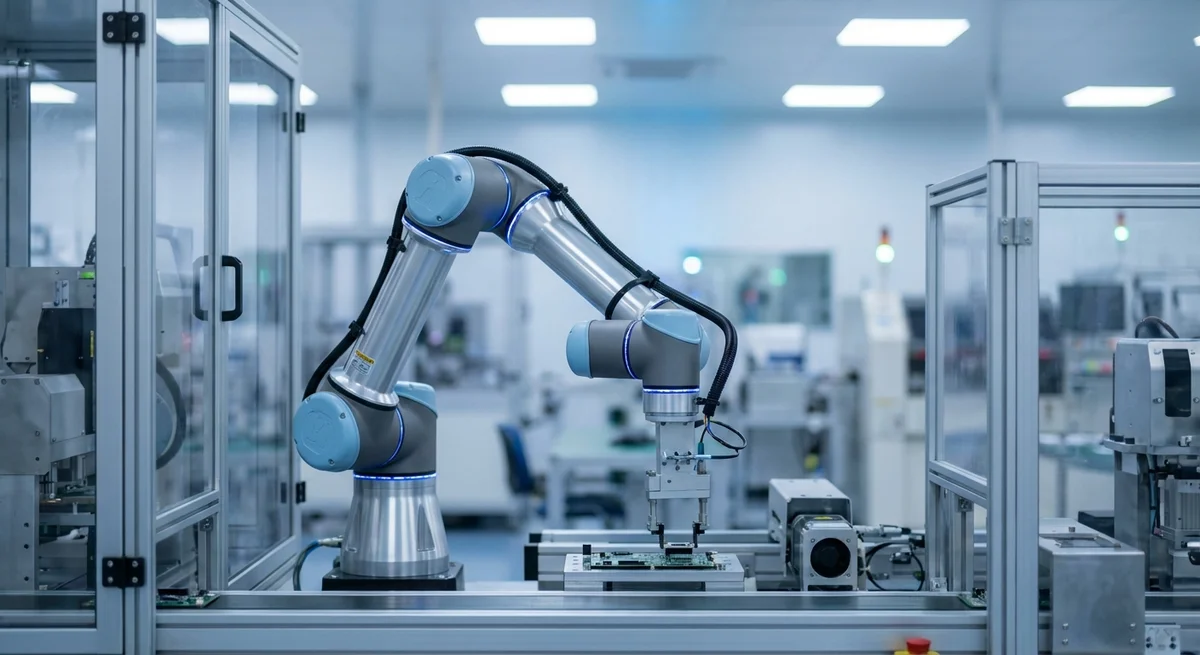
Roland Bush's Mission: How Siemens Automates the Real World with AI
Roland Bush, CEO of Siemens, presented an ambitious strategy aimed at transforming the giant into a unified technology platform oriented toward deep integration of artificial intelligence into industrial processes. The key element of this transformation is "industrial AI agents" which, trained on proprietary and specialized data, are capable of managing production facilities without the risk of misinformation or "hallucinations" inherent in more general AI models. Siemens actively uses photorealistic digital twins and cutting-edge technologies from NVIDIA to train robots and systems in a virtual environment before they are deployed into real production chains, which minimizes risks and accelerates the adaptation process.
In the context of a global demographic crisis characterized by an aging population and a shortage of skilled workers, Roland Bush sees total automation as the only viable answer. This strategy is aimed not only at optimizing existing production facilities, but also at creating new, more efficient and sustainable models of industrial operation. Despite ongoing geopolitical tensions and trade barriers, Siemens seeks to maintain its global reach, actively adapting its software and solutions to meet the specific requirements and regulatory standards of key markets, including the United States, China, and Europe. The company demonstrates a commitment to principles of globalization, adapting to a changing world.
Siemens, as one of the world leaders in industrial automation and digitalization, has long gone beyond traditional equipment manufacturing. The company provides comprehensive solutions covering all aspects of enterprise operations — from design and engineering to production process management and logistics. The integration of AI into this ecosystem opens new horizons for increasing productivity, reducing costs, and improving product quality.
"Industrial AI agents" represent the next step in the evolution of automation, shifting it from the realm of routine task execution to the domain of complex management decision-making. Training these agents on confidential data of client companies ensures that they will act in strict accordance with production needs and constraints, while avoiding errors associated with insufficient awareness or incorrect information interpretation.
The use of digital twins created using NVIDIA technologies allows Siemens to model and test various scenarios of production system operation in a virtual environment. This gives engineers the ability to debug control algorithms, optimize workflows, and train AI agents under conditions as close to real-world as possible, but without the risk of production downtime or damage to expensive equipment. This approach accelerates the implementation of innovations and reduces costs at the testing and launch stages of new technologies. Bush emphasizes that it is precisely this ability to quickly adapt and learn that makes AI a key tool for overcoming challenges related to workforce shortages.
Bush's vision for the future of industry is not without contradictions. On the one hand, it promises "smooth, seamless, optimal operation" — a utopian scenario where all processes are perfectly synchronized. On the other hand, this vision inevitably raises questions about the future of human labor. Total automation, in his view, is a necessity, but it could also lead to significant changes in the labor market, potentially reducing the need for certain categories of workers and transforming the nature of work for those who remain. Nevertheless, the company seeks to adapt its solutions for different markets, taking into account their unique economic and social conditions, as well as geopolitical realities.
Siemens, being an important player in the global economy and, among other things, a contractor in the defense sector, is forced to take into account the complex geopolitical situation. Issues related to possible weakening of international alliances directly affect the strategies of companies whose activities are closely tied to globalization and free international cooperation. Siemens demonstrates flexibility by adapting its software solutions for local markets to continue its operations and support clients in the context of a changing world order. Roland Bush's mission is not just the implementation of new technologies, but a rethinking of the role of industry in the 21st century, where AI and automation become key factors in sustainable development and overcoming global challenges.
Want to stop reading about AI and start using it?
AI News is a curated feed of AI/tech news. Hamidun Academy teaches you to use AI systematically in your work.