Hands-on: how to build the Xiaozhi robot from readily available components
The Xiaozhi project is drawing attention from the robotics hobbyist community thanks to its accessibility and ease of implementation. The author shares the expe
AI-processed from Habr AI; edited by Hamidun News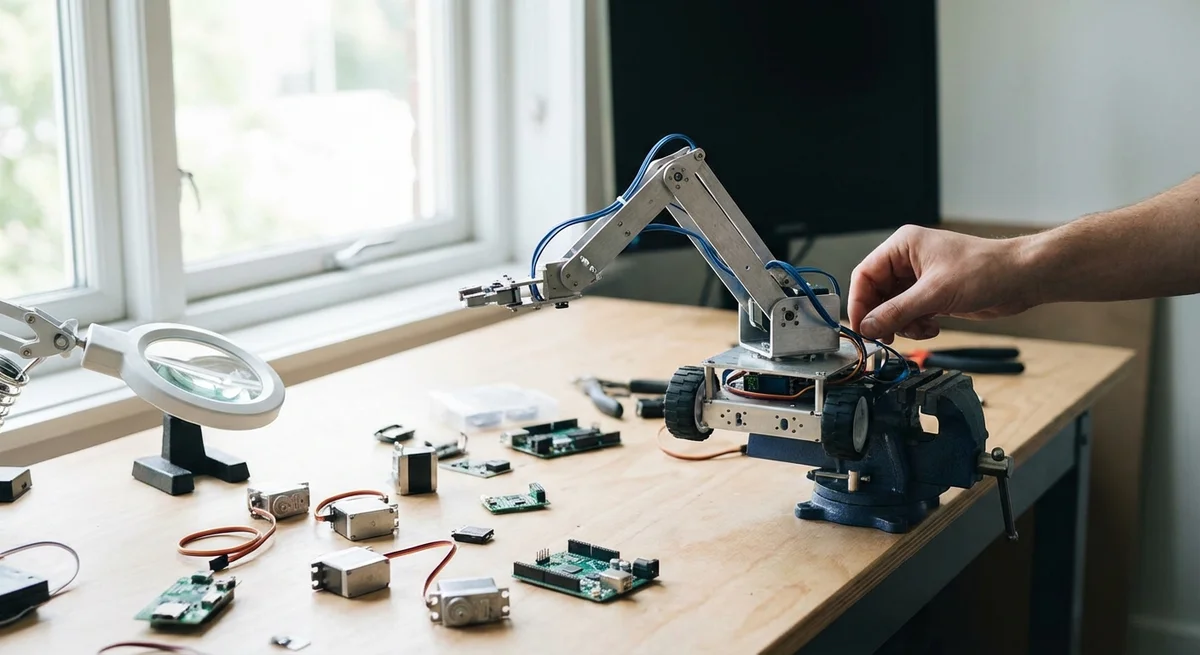
DIY: How to Build a Xiaozhi Robot from Available Components
The Xiaozhi project, conceived as a platform for communication between two robots, is rapidly gaining popularity in the robotics enthusiast community. Its appeal lies not only in the concept but also in its exceptional accessibility and ease of implementation. The author shares his experience of independently assembling this unique device, emphasizing that the process of ordering necessary components and subsequent assembly do not present serious technical or organizational difficulties. This case is a striking example of a global trend toward the democratization of technology, where complex robotic systems are no longer the exclusive domain of large research laboratories and corporations.
The modern world is moving toward open architectures and accessible components, which makes the creation of personal robots a reality for home developers and enthusiasts. The Xiaozhi project illustrates this trend perfectly. Initially conceived as a means of demonstrating interaction between autonomous agents, it turned out to be surprisingly easy to assemble.
The author notes that finding and ordering the necessary parts, which are often standard components widely available on the market, did not take much time. According to him, the assembly process does not require specialized skills or expensive equipment, making it accessible to a wide range of enthusiasts, even those just beginning their journey in robotics. This stimulates innovation in the consumer robotics segment, allowing more people to experiment and create their own unique projects.
Delving into the assembly details, it can be noted that the Xiaozhi robot is based on relatively inexpensive and widely available electronic components. These can be microcontrollers like Arduino or Raspberry Pi, servo drives for movement, sensors for spatial orientation, and of course, housing elements that can often be manufactured using 3D printing. The openness of the project implies the availability of detailed documentation, schematics, and source code, which significantly simplifies the assembly and configuration process.
The author emphasizes that even when questions arise, the Xiaozhi user community is ready to help, sharing experience and solutions. This approach facilitates the rapid dissemination of knowledge and project development, as each new participant can contribute and improve the existing design. The ability to modify and expand the robot's functionality makes it an attractive platform for learning and experimentation.
The consequences of this trend for the industry and society as a whole are quite significant. The democratization of robotics means that innovations can come not only from large market players but also from small teams or even individual enthusiasts. This can lead to new, unexpected applications of robots in everyday life, from personal assistants to educational tools.
The Xiaozhi project, being accessible and understandable, serves as an excellent example of how technology can become closer to people. It opens the door for those who have always dreamed of creating their own robot but did not have access to expensive components or complex knowledge. This contributes to the formation of a new generation of engineers and inventors who will advance the development of robotics.
In conclusion, the Xiaozhi project demonstrates that creating a functional robot is more accessible than ever today. The simplicity of assembly, the low cost of components, and the support of an open community make it an ideal choice for anyone who wants to touch the world of robotics. This example inspires and shows that the future, where robots are an integral part of our lives, is being built not only in laboratories but also on the desks of enthusiasts around the world, literally, with their own hands.
Want to stop reading about AI and start using it?
AI News is a curated feed of AI/tech news. Hamidun Academy teaches you to use AI systematically in your work.