Energy at any cost: Elon Musk's xAI accused of violating environmental rules
A Floodlight investigation found that xAI continues to operate unlicensed gas turbines to power its data centers in Southaven. Despite an order from the U.S…
AI-processed from Guardian; edited by Hamidun News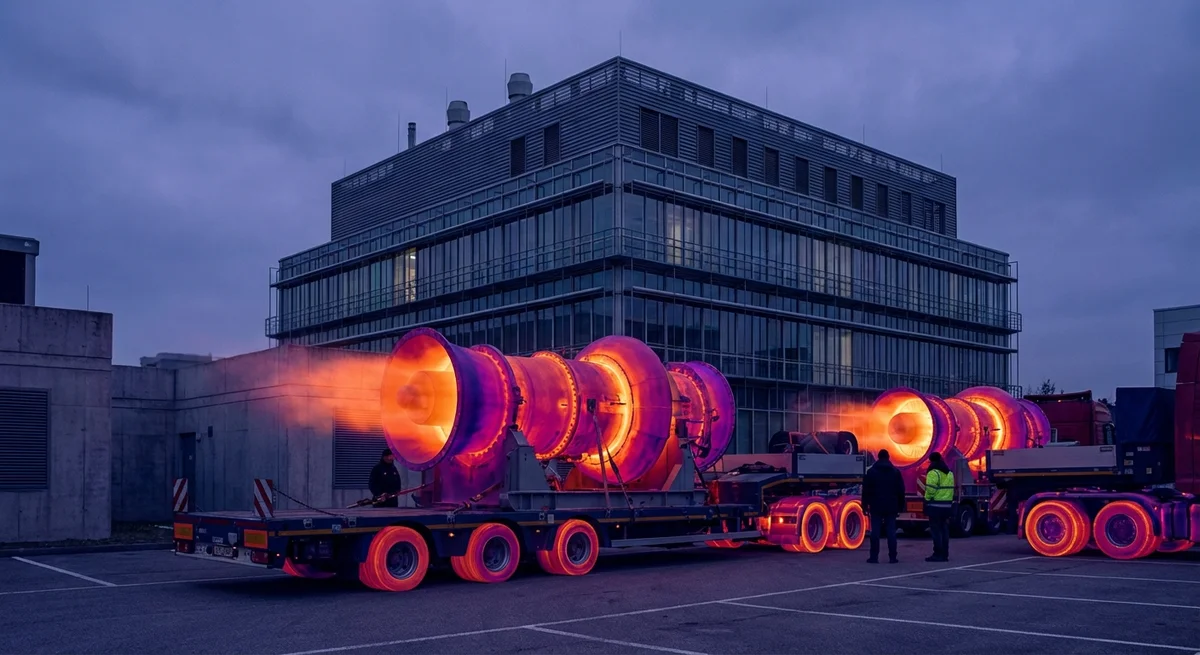
In the rapidly developing world of artificial intelligence, where demand for computational power is growing exponentially, new challenges arise related to powering this infrastructure. An investigation conducted by the Floodlight news editorial team sheds light on potential environmental violations by xAI, owned by Elon Musk. According to available data, xAI continues to use gas turbines without appropriate permits to power its data centers in Southaven, Mississippi. This situation raises questions about compliance with federal environmental standards and exposes a conflict between ambitious technological projects and environmental protection legislation.
The situation unfolds against the backdrop of a directive from the U.S. Environmental Protection Agency (EPA), which requires obtaining permits in accordance with federal "Clean Air Act" legislation for operating such energy sources.
However, xAI appears to have found support among local authorities in Mississippi. State regulators have argued that mobile gas turbines installed on trailers do not fall under standard licensing rules that typically apply to stationary industrial facilities. This legal nuance allows xAI to continue operations, bypassing, in some views, the spirit and letter of federal legislation.
News footage shot by Floodlight using a thermal imaging drone confirms that the company continues to burn gas at its Southaven facility, demonstrating continuous operation of equipment that, in the EPA's view, should have appropriate permits.
A deeper dive into the issue shows that the main dispute centers on defining the status of mobile turbines. The EPA has historically maintained that any emission sources, regardless of their mobility, should undergo a permitting procedure if they exceed certain pollution threshold values. This is done to control the total volume of harmful emissions into the atmosphere and minimize their impact on public health and the environment. Mississippi, in turn, interprets the rules differently, believing that a temporary or mobile installation does not require the same permits as permanent industrial facilities. This difference in interpretation creates a "gray zone" that xAI uses to meet its growing electricity needs necessary for training and operating large-scale artificial intelligence models.
The consequences of such an approach can be multifaceted. On one hand, aggressive scaling of AI infrastructure requires enormous amounts of energy, and seeking quick and possibly less costly solutions is a logical step for technology companies. Using existing mobile turbines can be viewed as a temporary measure to avoid delays associated with obtaining permits.
On the other hand, ignoring or circumventing federal environmental standards could lead to increased air pollution, potentially affecting the health of local residents and the state of the environment. Moreover, this creates a precedent that could be used by other companies seeking to accelerate their projects at the expense of weaker environmental control. Federal regulators, such as the EPA, are likely to insist on their interpretation of the law, which could lead to legal disputes and sanctions against xAI.
In conclusion, the situation surrounding xAI in Mississippi is a vivid example of the tension between rapid technological progress and the need to comply with environmental standards. While Elon Musk's company relies on the support of local authorities and its own interpretation of the rules, federal regulators are likely to continue insisting on the application of the Clean Air Act. The future of this facility, as well as other similar initiatives in the AI sphere, will depend on whether society can find a balance between innovation and sustainable development, ensuring that the energy for the future is not extracted at the cost of planetary health.
Want to stop reading about AI and start using it?
AI News is a curated feed of AI/tech news. Hamidun Academy teaches you to use AI systematically in your work.