The Age of Digital Illusion: How Neural Networks Erased the Boundaries of Reality in Three Years
Over the past three to four years, the field of generative AI has evolved from experimental images to video content that is almost impossible to distinguish fro
AI-processed from Habr AI; edited by Hamidun News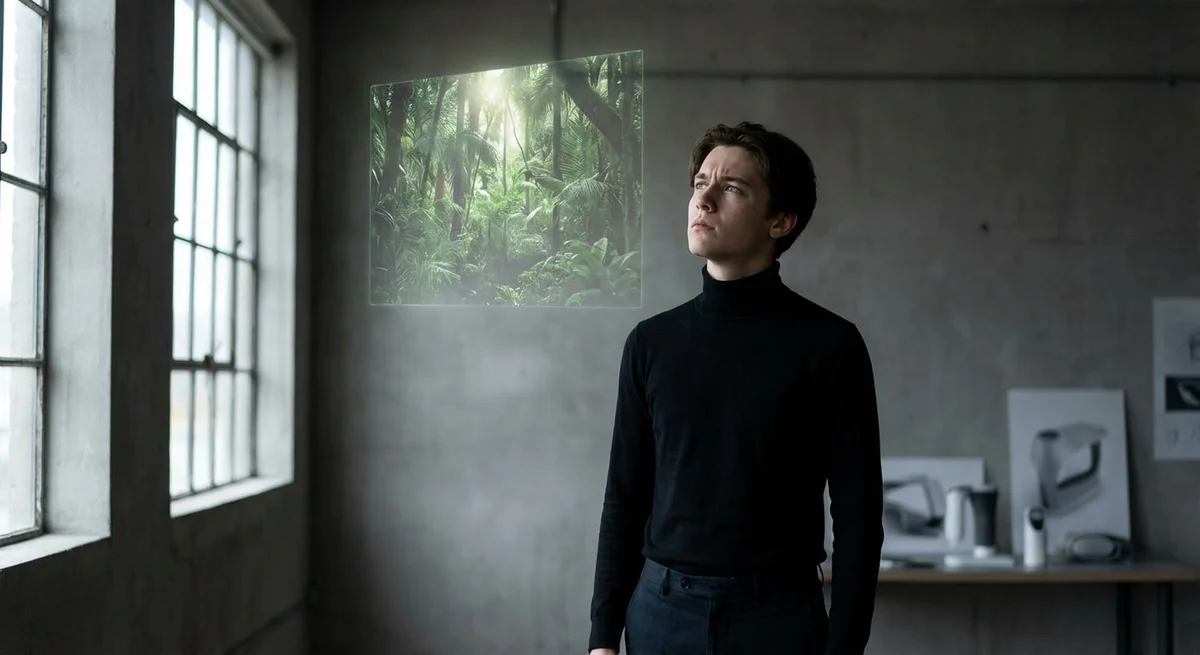
# The Era of Digital Illusion: How Neural Networks Erased the Boundaries of Reality in Three Years
Three years ago, the idea of creating photorealistic video with neural networks seemed like science fiction. Today, tools like NanoBanana, Suno, and Kling are flooding social networks with content that is indistinguishable from camera footage. This is not a gradual evolution of technology, but a leap that happened so quickly that society simply hasn't had time to comprehend the scale of the changes. If we were admiring generated images in Midjourney just recently, now we face a far more serious challenge: the impossibility of precisely determining whether we're watching a recording of reality or a digital simulation.
The pace of generative AI development exceeds technological predictions. When experts discussed the future of video synthesis a year ago, no one anticipated such rapid improvement in algorithms. Today you see a video of a talking head, and the first thought is: is this a real person or an avatar? Does the voice correspond to the lip movement or is it the product of a separate Suno neural network? Does the location in the frame exist in reality or is it completely synthesized? These questions have ceased to be hypothetical and have become practical reality that millions of social media users face daily.
The technical basis of this breakthrough lies in the improvement of diffusion methods and transformers. Where generative AI previously required enormous computing resources and produced noticeable artifacts, algorithms now learned to work quickly and imperceptibly. Tools distributed tasks so that video is created from a set of components — face, voice, background, movements — each of which is generated or synthesized with high precision. The result is assembled into a single whole that looks convincing enough for the average viewer. What is particularly alarming is the accessibility: these tools are already in open access and don't require expert knowledge to use.
The consequences of this development extend far beyond the entertainment industry. If it's difficult today to determine the reality of a video recording, tomorrow it could lead to a crisis of trust in media, politics, and justice. Fakes will become not just a problem for social media moderators, but a challenge to the very concept of visual evidence. Banks, government agencies, and corporations will face the need to develop new methods of identity verification. Criminal investigations will become more complicated when video materials cease to be a reliable source of evidence. And for the average user, trust in information will become an even scarcer resource than it is now.
The question that haunts analysts and politicians seems almost rhetorical: what will happen in a couple of years? If technology develops at such a pace, soon the distinction between real and generated content will require special detection tools. But even such tools will lag behind the ability of neural networks to improve and bypass checks. We are on the threshold of an era when sight will no longer be sufficient basis for the statement "I saw it." Society will be forced either to develop new ways of content verification or to accept that the boundary between reality and illusion is permanently blurred. For now, we are only watching as this boundary is erased.
Want to stop reading about AI and start using it?
AI News is a curated feed of AI/tech news. Hamidun Academy teaches you to use AI systematically in your work.