Meta invests more than $10 billion in building a giant AI campus in Indiana
Meta Platforms has announced the construction of one of its largest facilities — a campus of data centers in Lebanon, Indiana. Investment in the project will ex
AI-processed from Bloomberg Tech; edited by Hamidun News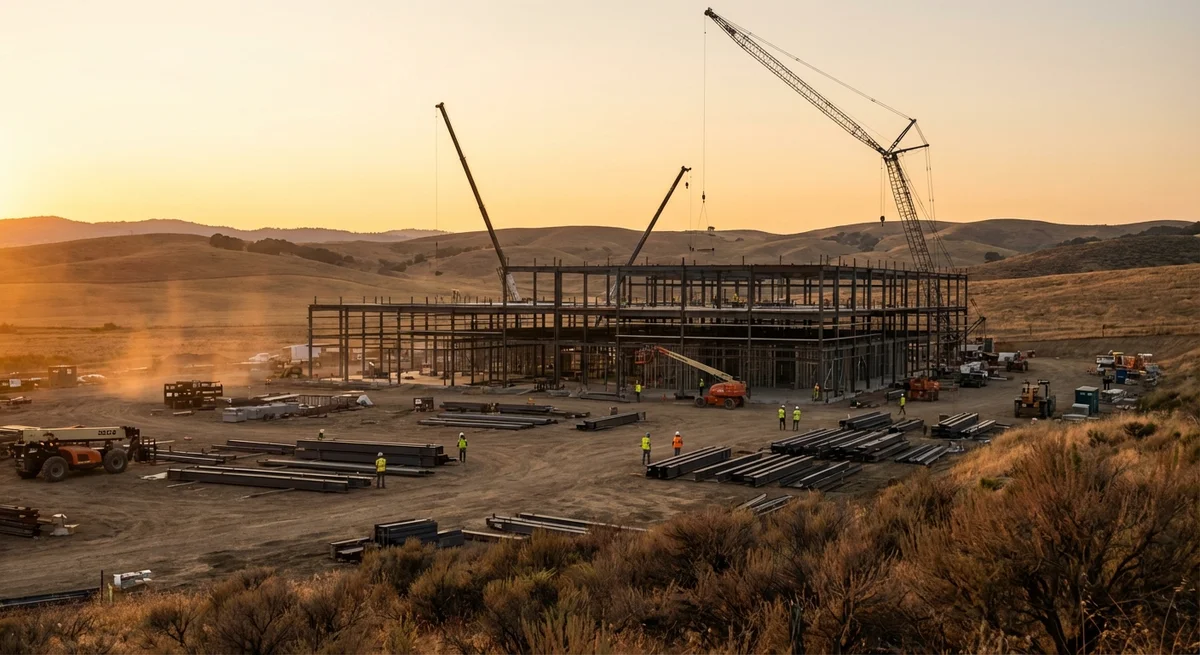
# Meta Invests Over $10 Billion in Building a Gigantic AI Campus in Indiana
Meta has announced a grandiose investment project that will elevate its stake in artificial intelligence to a new category. The company will build in Lebanon, Indiana, a massive data center campus with a budget exceeding $10 billion. This is one of Meta's largest infrastructure initiatives in history, and it clearly demonstrates how far the company is willing to go to compete with OpenAI, Google, and other leaders in the AI industry.
Meta's decision to build in Indiana rather than in well-known technology hubs like California is calculated for good reason. The state has offered generous tax incentives, and the geographic location will provide access to the necessary electricity and workforce. Moreover, it is a logistical move: expanding computational capacity at physically remote locations from the main offices allows Meta to scale without overloading existing infrastructure. In the context of the current situation in the technology sector, when every major company is frantically increasing GPU and TPU capacity to train increasingly demanding models, such a project becomes less of an option and more of a necessity.
The scale of investments speaks volumes about Meta's priorities. Ten billion dollars is a sum comparable to the annual budget of many countries on education or healthcare. For comparison, OpenAI recently announced its own ambitious plans to build a supercluster for model training, and Google is investing in Magnolia, its own AI infrastructure development project. Meta is not just following the trend — it is setting it. The new campus will simultaneously serve as a platform for training and deploying Llama models, Meta's open-source AI project, which is designed to challenge the closed ecosystems of OpenAI and Google.
The strategic meaning of the project goes far beyond simple capacity expansion. Meta positions itself as a proponent of open source in AI, and for this it needs colossal computational resources to compete with giants in model quality. Without its own powerful infrastructure, the company would be tied to cloud providers like AWS, which would limit its independence and competitiveness. By building its own campus, Meta gains complete control over the value creation chain in AI, from model training to their deployment in products.
The consequences of this decision will be felt far beyond Meta. Investments of this scale put pressure on the entire AI infrastructure sector. NVIDIA, the manufacturer of GPUs, which are critical for neural network training, will be purchasing enormous volumes of chips. Power producers will face growing demand for capacity. Regions where data centers are located will receive an economic boost, but will also face questions about environmental sustainability. For users, this could mean more powerful and accessible AI models integrated into Facebook, Instagram, and other Meta products.
Meta's investment in the Indiana campus is not simply a business move. It is a signal of how the technology industry is being reshuffled. A company that a decade ago built its power on social networks is now fiercely making its way into the age of AI through sheer infrastructural power. The question is whether Meta will manage to harness this enormous productive capacity before competitors find more efficient ways to train and deploy models. The stakes are high, and the stakes are very material.
Want to stop reading about AI and start using it?
AI News is a curated feed of AI/tech news. Hamidun Academy teaches you to use AI systematically in your work.