AI economics in orbit: why space data centers cost three times as much as ground-based ones
The idea of moving AI computing into orbit is colliding with harsh reality. Building a 1 GW data center in space would cost about $42.4 billion. That is…
AI-processed from TechCrunch; edited by Hamidun News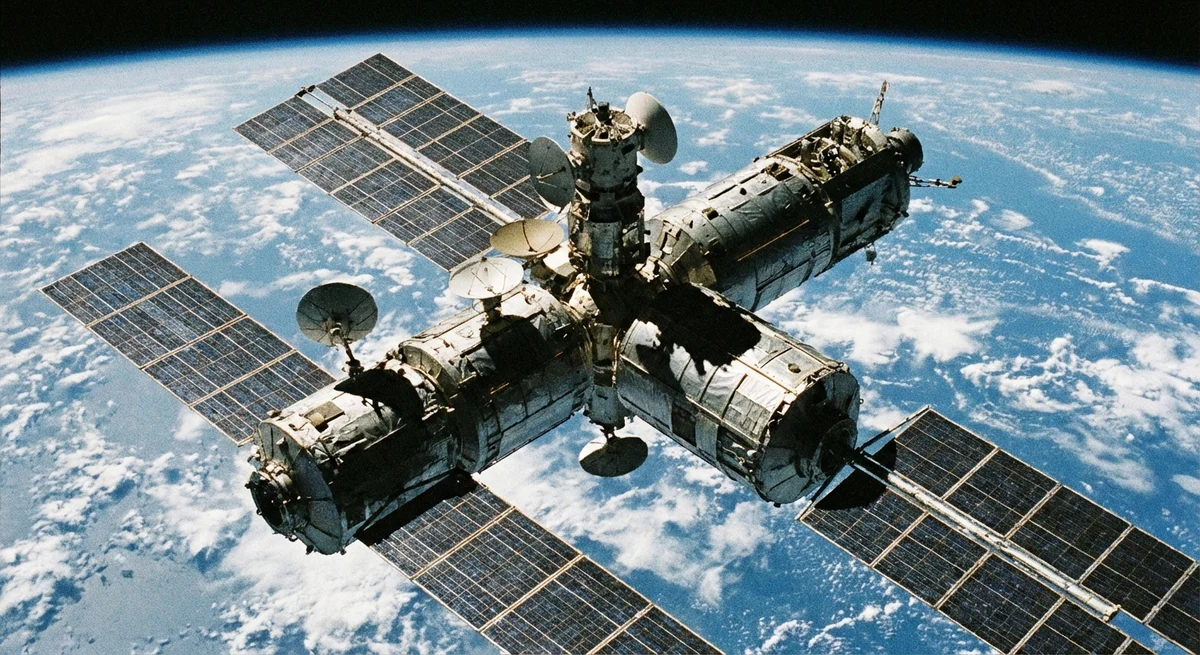
# The Economics of AI in Space: Why Orbital Data Centers Cost Three Times More Than Earth-Based Ones
The perspective of moving artificial intelligence computations beyond Earth's atmosphere sounds attractive: limitless solar energy, ideal conditions for equipment cooling, absence of land conflicts. But when engineers do the calculations, the romantic idea collides with the cold mathematics of economics. Building an orbital data center with a capacity of 1 gigawatt will cost approximately 42.4 billion dollars — almost three times more than its terrestrial counterpart. These figures call into question the very feasibility of space-based AI infrastructure and explain why leading technology companies continue to invest trillions in land-based capacity.
The logistics of space are ruthless. Delivering equipment to orbit is a task of an entirely different order than building a data center in the Nevada desert. Every kilogram of equipment requires a rocket, fuel, and hours of launch time. Current commercial rockets like Falcon Heavy cost around 62 million dollars per launch, and the payload does not exceed 60 tons. Even if we assume that delivery costs will fall in the future, logistics alone will constitute a substantial part of the budget. Add to this the need for frequent repair missions, replacement of failed equipment, and constant supply of additional components — and you'll understand why the estimate grows exponentially.
The engineering challenges of space require not just expensive, but extraordinarily expensive solutions to every problem. Vacuum and extreme radiation degrade electronics much faster than on Earth. Servers need additional shielding and protection, which increases their weight and cost. The cooling system, although it does not require water like terrestrial data centers, needs expensive radiators and thermal control to dissipate heat into a vacuum. Every screw, wire, and microchip must be tested for resistance to space conditions — this increases component costs several times over. Furthermore, backup systems and safety systems become critical when you cannot simply send a technician for quick repairs.
Even the presumed advantages of orbit look less attractive upon detailed analysis. Yes, solar panels in orbit receive an almost constant flow of energy, but solar batteries in space degrade due to radiation. Cooling is indeed simpler thanks to radiation into a vacuum, but the amount of heat that needs to be dissipated from supercomputer-level power is so large that the advantages disappear. Meanwhile, terrestrial data centers are becoming increasingly efficient. Companies have already achieved energy consumption of 1.2 kilowatts per processor, and innovations in liquid cooling and materials continue to improve performance.
Terrestrial alternatives develop faster and cheaper. Building an earth-based data center of the same capacity will cost approximately 14 billion dollars, and this figure could fall due to scaling and competition. Companies can place servers in countries with cheap electricity, cheap labor, and favorable climate for cooling. Iceland, Norway, Canada, and Middle Eastern countries with excess electricity — this is where real investments are growing.
The idea of orbital AI infrastructure will remain attractive for textbooks and scientific papers, but in the foreseeable future, economics simply will not allow companies to turn it into reality. Earth is still much cheaper than space.
Want to stop reading about AI and start using it?
AI News is a curated feed of AI/tech news. Hamidun Academy teaches you to use AI systematically in your work.