Deli's evolution: how a stationery manufacturer is capturing the high-tech market
Deli Group is transforming from a traditional office-supplies manufacturer into a technology holding company. The company has successfully overcome the…
AI-processed from 36Kr (36氪); edited by Hamidun News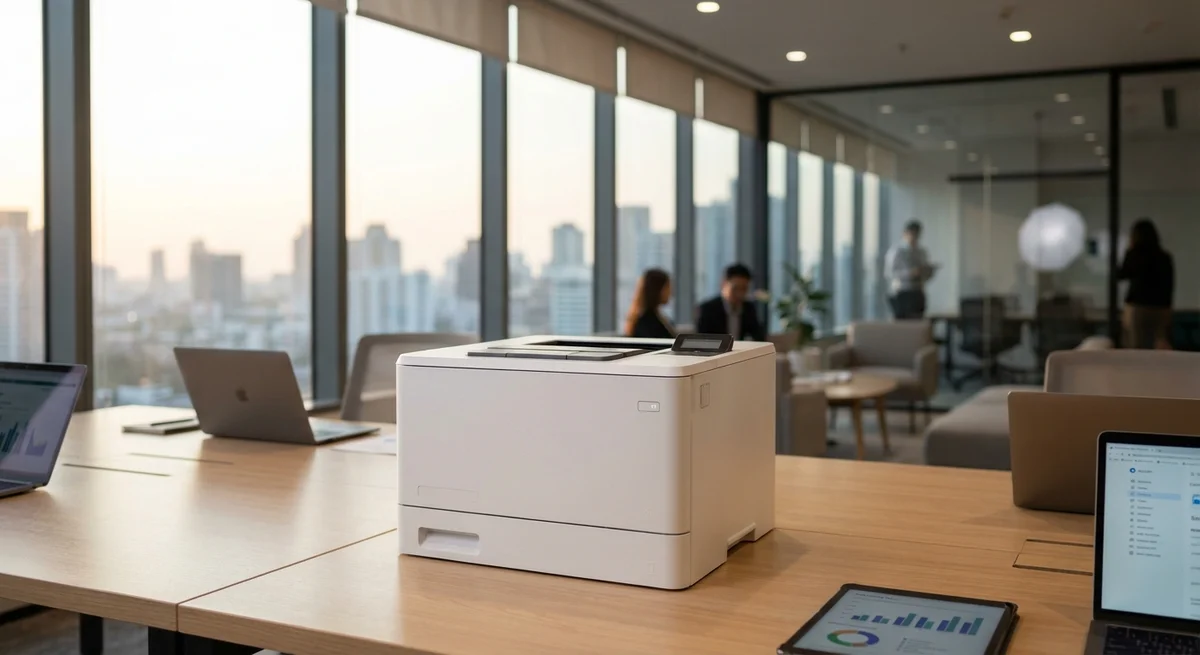
# The Evolution of Deli: How an Office Supplies Manufacturer Conquers the High-Tech Market
When it comes to technology companies, names like Apple, Tesla, or Huawei come to mind. But while the world watches the race for artificial intelligence and electric vehicles, the Chinese group Deli is undergoing its own digital revolution—though it begins not with processors, but with ballpoint pens. Over four decades, the company has transformed from a modest manufacturer of office supplies into a full-fledged technology holding, breaking the stereotype that there is nothing to innovate in the stationery business.
For a long time, the sector where Deli reigns has been considered technologically primitive. Small product size, low unit cost, high output—all of this created the impression of no technical barriers whatsoever. But this was a profound misconception. Behind the simplicity of a ballpoint pen lies an entire world of engineering challenges: ink chemistry, transmission mechanics, materials science, micrometer-level precision in manufacturing. For years, China said the country was incapable of creating a quality writing tip—a paradox for the world's largest factory. Deli set out to prove otherwise, investing decades of research and creating its own laboratory where around a hundred specialists in inks and pen heads work.
The breakthrough came in the form of a three-ball system. The traditional single-ball construction suffered from uneven ink output and excessive friction during writing. First, Deli developed a two-ball system, but the team did not stop. Three years were spent solving the task of synchronizing three millimeter spheres on a single axis so that they would rotate stably and evenly under pen pressure. The result exceeded expectations: writing smoothness increased by 25 percent, ink now flows uniformly, and schoolchildren and office workers experience less fatigue during prolonged writing. This is not a marketing trick—it is a solution to a real pain point for millions of people who work with a pen in hand for hours.
But Deli did not rest on its laurels. In 2015, the company made a strategic leap, moving from writing supplies to printer manufacturing—a sector protected by hundreds of thousands of patents and decades of dominance by foreign giants. The logic of the move seemed simple yet ambitious: avoid dependence on expensive consumables, ensure information security for government and corporate clients, and finally—create an ecosystem for complete workplace digitization. Instead of buying licenses and embedding third-party technologies, Deli chose the path of independent development, rejecting the convenience of a quick solution in favor of long-term control over the value chain.
This decision reflects a broader strategy of import substitution and technological independence. Deli integrates its own Loongson series processors, develops its own software and cloud platforms. The company understands that in a world of growing geopolitical tensions and sanctions, managing key components becomes not just a competitive advantage, but a matter of survival for large government sector clients.
Looking forward, Deli plans to implement artificial intelligence and cloud solutions for automating home and office processes. This means that in the near future, users will be able to manage printing, scanning, and other operations through an intelligent interface, synchronized with cloud storage and managing expenses based on usage analytics. This transformation shows that Deli sees itself not simply as a supplier of hardware and ink, but as the creator of a complete smart office ecosystem.
The story of Deli is a story of how a company, beginning with the struggle for the right to create its own pen, gradually built a vertically integrated holding, competing with international corporations. It is a reminder that innovation can hide in the most unexpected places—it does not require big names and giant advertising investments. Sometimes it simply means the desire to make people's lives a little more comfortable, listening to what they say, and not stopping when the first result is achieved.
Want to stop reading about AI and start using it?
AI News is a curated feed of AI/tech news. Hamidun Academy teaches you to use AI systematically in your work.