Shanghai rolls out a global maritime strategy: new port hub development plan
Shanghai has published a strategic plan for developing its international shipping center during the 15th Five-Year Plan. The main focus is on expanding…
AI-processed from 36Kr (36氪); edited by Hamidun News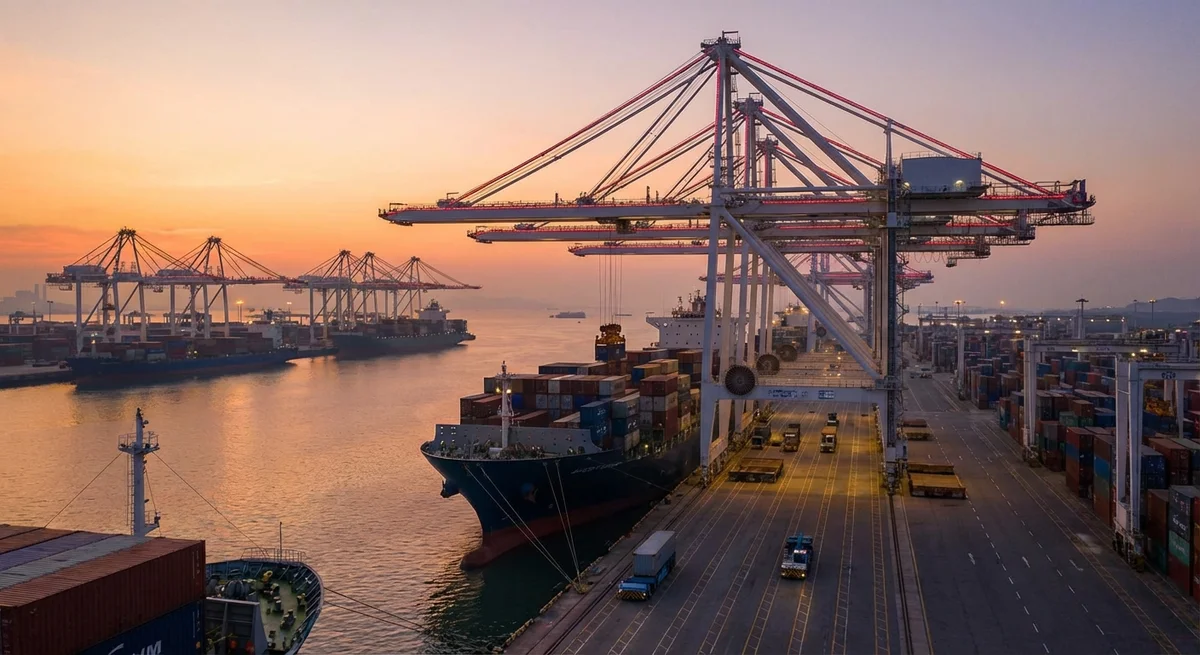
# Shanghai Deploys an Ambitious Plan: How It Becomes an Impenetrable Port Giant
Shanghai is preparing a large-scale transformation of its port infrastructure. Port authorities have published a long-term development strategy covering the five-year plan period, which aims to strengthen Shanghai's position as the most advanced and reliable maritime hub in the world. The plan encompasses container terminal expansion, inland waterway modernization, and the creation of an innovative transport network that will unite the entire Yangtze River region into a single logistics ecosystem.
Key investments are concentrated in two strategic zones: the northern part of Xiaoyangsshan and the Luojing port. Phased expansion work of container capacity will be deployed here, allowing the port complex to handle even greater cargo flows. In parallel, the second phase of the Luojing terminal reconstruction will be completed. This is not simply an expansion of old wharves—it is about creating an entirely new generation of port infrastructure designed for an era when container ships become increasingly larger and delivery times increasingly shorter.
But the essence of the strategy extends far beyond the port itself. Shanghai has conceived of building a multimodal transport hub that will transform the entire Yangtze region into a single economic organism. Imagine a system where a container seamlessly transitions from a seagoing vessel to a barge, then to a railway and a truck—all synchronized through a common digital platform. This requires not only considerable engineering expertise, but also close coordination among different regions and transport operators. Shanghai authorities intend to ensure infrastructure compatibility, unify standards, and create mechanisms of mutual trust among various logistics players.
The technological component of this plan is equally ambitious. It concerns the implementation of digital solutions that will make the supply chain more resilient and predictable. In conditions where global trade flows remain vulnerable to disruptions and geopolitical shocks, ports need tools for rapid response and optimization. Innovative technologies will allow Shanghai not simply to process cargo, but also to forecast bottlenecks, manage risks, and guarantee supply stability for global manufacturers.
Considerable attention is also paid to the development of inland waterways. Shanghai plans to complete work on deepening and widening critically important channels—the Southern Canal Navigation system, several key arteries and ports on inland waterways. The task is ambitious: to create a highly efficient network of channels that will allow vessels with a capacity of more than a thousand tons to reach unimpeded deep into the country along the Yangtze and beyond, thus providing direct delivery from the Pacific Ocean thousands of kilometers upriver.
This strategic decision has profound significance. Shanghai seeks to transform its role: from simply a port city, it becomes a logistics brain that coordinates commodity flows not only for China, but for all of Asia. Strengthening the resilience of global supply chains is an objective necessity following the pandemic and growing instability in global markets. A port that today is ready to respond to crises faster and more effectively than competitors will tomorrow become critical infrastructure for world trade.
Want to stop reading about AI and start using it?
AI News is a curated feed of AI/tech news. Hamidun Academy teaches you to use AI systematically in your work.