AI5 Chip Ready: Is Musk's Dojo 3 Making a Comeback?
Tesla преодолела трудности с чипом AI5 и возобновляет разработку суперкомпьютера Dojo 3, предназначенного для обучения нейросетей автопилота. Это важный шаг для
AI-processed from Jiqizhixin (机器之心); edited by Hamidun News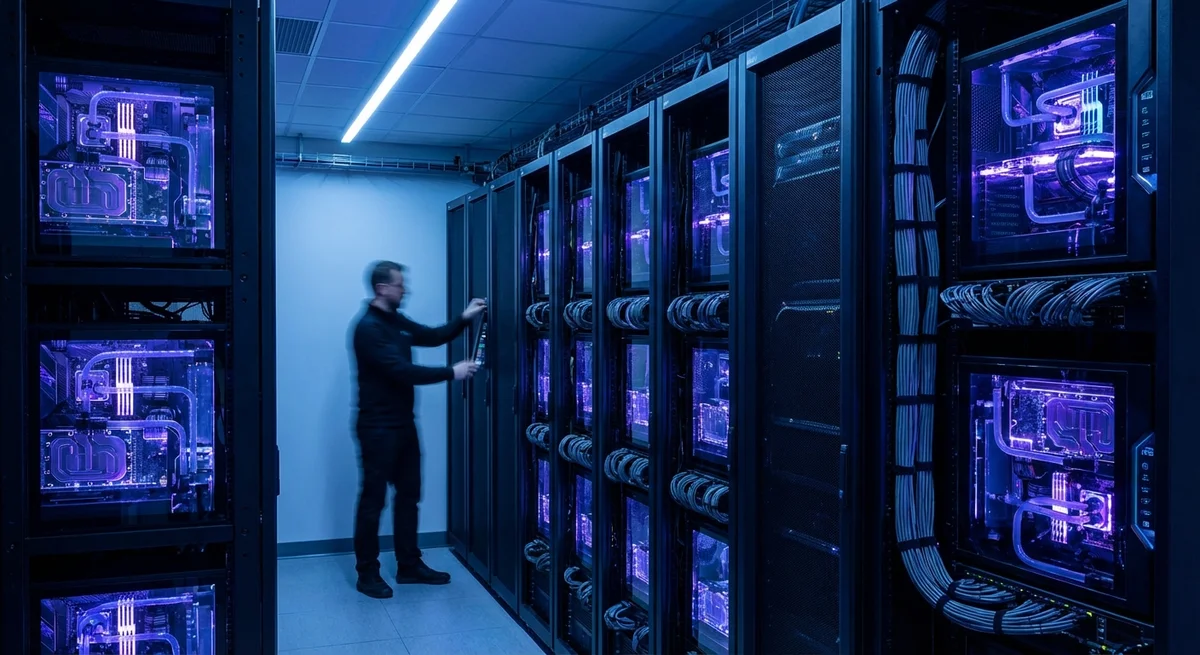
News about the resumption of development of Tesla's Dojo 3 supercomputer, equipped with the new AI5 chip, has sparked considerable interest in the technology community. After a period of uncertainty linked to technical challenges, Elon Musk's company appears to have returned to implementing an ambitious project that could fundamentally transform the future of autopilot and Tesla as a whole.
Dojo is not simply a computing machine, but a complex system developed by Tesla for training neural networks at the core of their autonomous driving technology. Dojo is designed to process vast volumes of data collected by Tesla's fleet worldwide, enabling continuous improvement of autopilot algorithms.
The Dojo 3 project represents the next stage in the evolution of this system and entails a significant increase in computational power compared to previous versions. The key element of Dojo 3 is the AI5 chip, a specialized processor developed by Tesla for machine learning tasks. It was precisely the development of this chip that encountered difficulties, temporarily stalling the project.
The importance of Dojo to Tesla cannot be overstated. The company views full autonomy as a key competitive advantage that will allow it to stand out among other electric vehicle manufacturers and traditional automakers. Unlike many competitors who rely on off-the-shelf autopilot solutions, Tesla develops its own technologies, giving it complete control over the process and allowing it to optimize the system for its specific needs. Dojo is the central element of this strategy, providing the computational power necessary for training complex neural networks.
The resumption of Dojo 3 development with the AI5 chip indicates that Tesla has managed to overcome the technical problems that arose and has advanced in creating its own machine learning infrastructure. This could lead to accelerated development of new autopilot features, improved reliability and safety. In the longer term, this could also enable Tesla to enter new markets, such as robotaxis and autonomous delivery.
However, it is worth noting that competition in autonomous driving is constantly growing. Many companies, including Waymo, Cruise, and others, are also actively developing their own technologies and investing in powerful computing systems. Tesla's success in this field will depend not only on the technical implementation of Dojo, but also on the company's ability to effectively utilize the data obtained and rapidly deploy new developments to its vehicles.
Thus, the news about the return of the Dojo 3 project is an important signal for the entire industry. It confirms Tesla's commitment to leadership in autonomous driving and its willingness to invest significant resources in developing its own technologies. In the coming years, we will likely see substantial acceleration in Tesla's autopilot development, which could have a significant impact on the future of the automotive industry and transportation in general.
Want to stop reading about AI and start using it?
AI News is a curated feed of AI/tech news. Hamidun Academy teaches you to use AI systematically in your work.