Medical SAM3: Revolution in Medical Image Segmentation with Text Prompts
Представлена Medical SAM3, первая модель для сегментации медицинских изображений, управляемая исключительно текстовыми подсказками. Это упрощает процесс анализа
AI-processed from Jiqizhixin (机器之心); edited by Hamidun News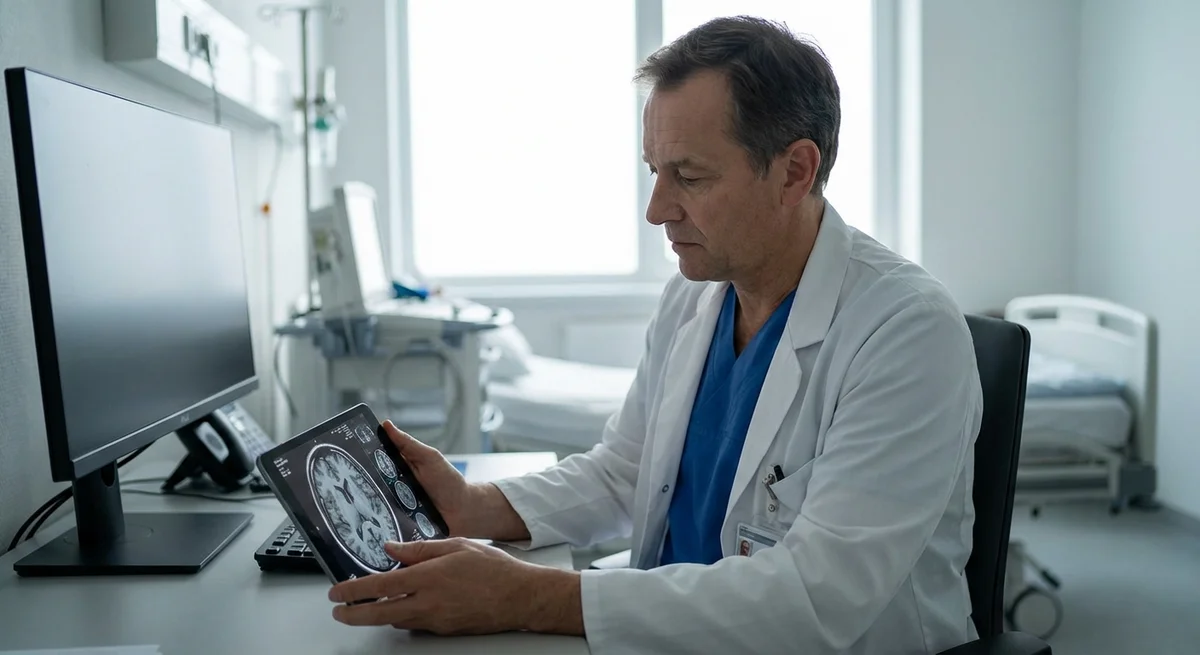
In the world of medical imaging, a new era has begun thanks to Medical SAM3, the first model capable of performing segmentation of medical images based solely on text prompts. This represents a significant departure from traditional methods that require manual annotation and complex algorithms. Medical SAM3, developed by a group of researchers, offers a more intuitive and efficient way to analyze medical images, which could significantly accelerate the diagnostic process and improve patient treatment outcomes.
Traditionally, medical image segmentation, which is critical for identifying tumors, injuries, and other pathologies, has required painstaking manual work by specialists. This process is not only time-consuming but also prone to human error. Existing automated methods, while offering some assistance, often require complex configuration and adaptation to specific image types and tasks.
Medical SAM3 addresses these issues by providing a universal solution capable of handling various types of medical images, such as X-rays, CT scans, and MRI, using simple text queries.
A key feature of Medical SAM3 is its ability to interpret text prompts to identify areas of interest in an image. For example, a physician can simply enter "tumor in the left lung," and the model will automatically highlight the corresponding region on an X-ray. This functionality is based on advanced natural language processing (NLP) and computer vision techniques that enable the model to understand and match text queries with the visual characteristics of the image.
The model's architecture includes a pre-trained language model that processes text prompts and an image segmentation module that generates a segmentation mask based on the information received.
The implementation of Medical SAM3 has far-reaching implications for the medical industry. First, it significantly reduces the time required for medical image segmentation, freeing physicians and radiologists for more important tasks such as diagnosis and treatment planning. Second, it reduces dependence on manual annotation, which minimizes the likelihood of errors and improves the accuracy of analysis. Third, Medical SAM3 opens new possibilities for research, allowing scientists to quickly and efficiently analyze large volumes of medical data to identify patterns and develop new treatment methods.
Despite promising results, Medical SAM3 is still in the development stage and requires further validation and optimization. Additional research is needed to evaluate the model's performance on various image types and tasks, as well as to ensure its reliability and safety in clinical applications. Nevertheless, Medical SAM3 represents a significant step forward in medical imaging and demonstrates the enormous potential of artificial intelligence to improve healthcare.
In conclusion, Medical SAM3 is a revolutionary development that can change the way medical images are analyzed and interpreted. The transition to text-prompt-based segmentation promises to make diagnosis faster, more accurate, and more accessible, opening new horizons for research and improving patient treatment outcomes.
Want to stop reading about AI and start using it?
AI News is a curated feed of AI/tech news. Hamidun Academy teaches you to use AI systematically in your work.