EU launches NanoIC: pilot production line for next-generation chips
The European Union is making a serious commitment to strengthen its position in the global semiconductor industry. On February 9, the European Commission…
AI-processed from 36Kr (36氪); edited by Hamidun News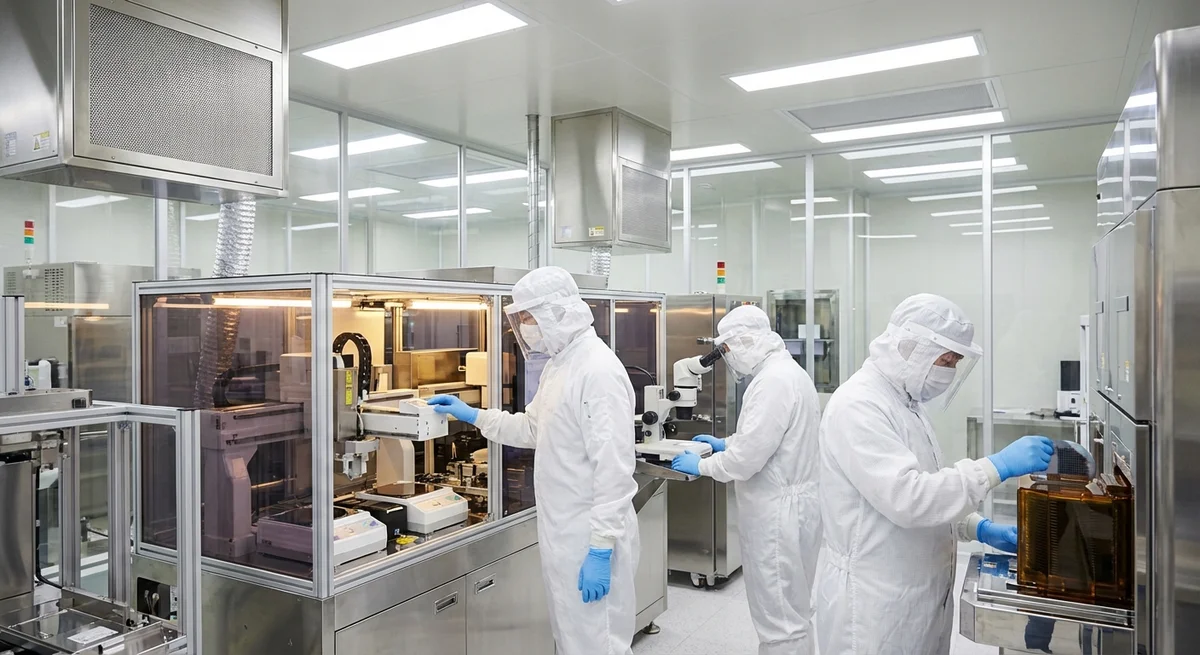
The European Union is making a serious commitment to strengthen its position in the global semiconductor industry. On February 9, the European Commission announced the launch of NanoIC, a large-scale pilot production facility located at the IMEC research center in Belgium. This project, financed under the European Chips Act, is designed to become a key element in the development of European microelectronics and reduce dependence on Asian manufacturers.
The total investment volume for NanoIC is an impressive 2.5 billion euros. A significant portion of this amount, 700 million euros, was allocated by the European Union. Another 700 million euros came from governments of various countries and regions. The remaining funds were provided by industrial partners, including the Dutch company ASML, a leader in lithography equipment manufacturing. ASML plays a crucial role in the project, as NanoIC will be the first facility in Europe where the most advanced extreme ultraviolet (EUV) lithography equipment will be installed.
The main task of NanoIC is the development and production of chips using advanced processes with standards below 2 nanometers. This opens up possibilities for creating more powerful and energy-efficient microchips that will find application in various fields: from mobile devices and computers to the automotive industry and artificial intelligence systems. The placement of NanoIC at IMEC is not accidental. IMEC is one of the world's leading research centers in microelectronics, possessing enormous experience and expertise.
The launch of NanoIC has far-reaching consequences for European economy and technological independence. In recent years, Europe has faced a serious shortage of semiconductors, which has negatively impacted many industrial sectors. Creating its own manufacturing capacity will allow Europe to reduce its dependence on semiconductor imports from Asia and strengthen its competitiveness in the global market. Moreover, NanoIC will become a center of attraction for talented engineers and scientists, which will promote innovation in microelectronics.
However, the success of NanoIC is not guaranteed. Competition in the semiconductor industry is very high, and Europe will have to make significant efforts to catch up with market leaders such as TSMC and Samsung. Additionally, it is necessary to ensure stable funding for the project and create favorable conditions to attract investment. Nevertheless, the launch of NanoIC is an important step in the right direction, which could change the landscape of European microelectronics.
In conclusion, the launch of the NanoIC pilot production line marks a significant step forward in Europe's efforts to become a key player in the global semiconductor industry. Investment in advanced technologies and the development of its own manufacturing capacity are necessary conditions for ensuring technological independence and strengthening the economy. The success of NanoIC will depend on continued support from the state and industry, as well as on Europe's ability to attract and retain talented specialists.
Want to stop reading about AI and start using it?
AI News is a curated feed of AI/tech news. Hamidun Academy teaches you to use AI systematically in your work.