Tea Millions from Qianwen: The Story of Alibaba's AI Experiment
February 6 became a day of unexpected frenzy for tea brand owners connected to Alibaba's instant purchase system. From the morning, their sales systems were…
AI-processed from 36Kr (36氪); edited by Hamidun News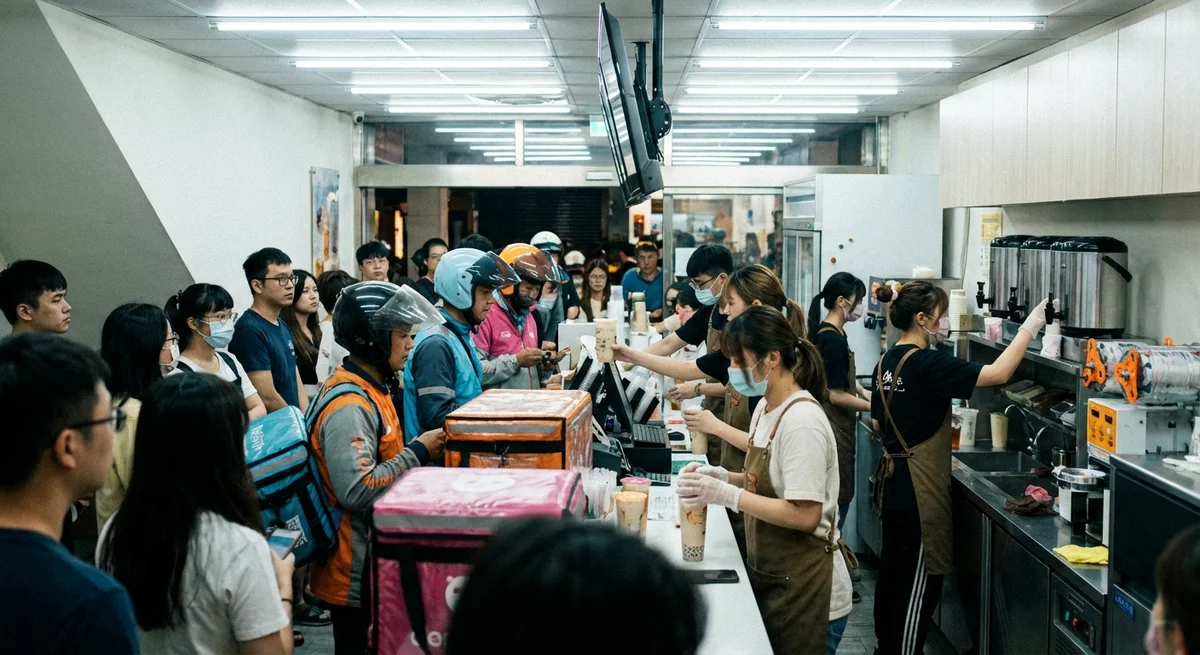
February 6 became a day of unexpected frenzy for tea brand owners connected to Alibaba's instant purchase system. From the morning, their sales systems were flooded with a wave of orders for free tea placed through the AI assistant Qianwen. By noon, the number of orders had peaked, filling all the space around the cashiers with ready-made packages and forcing some establishments to temporarily suspend online orders.
Regular users faced a different side of the coin: having received links to free tea from friends, many discovered that the Qianwen system was working unstably. Application pages loaded slowly, and then displayed a message saying that "a large language model does not have physical hands and feet, and cannot connect to real payment systems and delivery platforms." Users were offered to place orders independently through Meituan or Taobao.
The cause of the failures was an avalanche of orders exceeding 2 million. Experts explain this by the fact that AI agents require enormous computing power to process requests, analyze needs, compare prices and process payments. Existing server resources were not prepared for such a load. Moreover, unlike sales such as "Double 11," effective traffic distribution models have not yet been developed for AI marketing. The servers were initially designed for only one-third of the predicted peak, which led to system collapse.
Despite the chaos, on the same day Qianwen reported more than 10 million orders under the campaign "3 billion yuan in free gifts for the Chinese New Year." Some major tea brands reported an increase in daily sales of more than 200%. Alibaba seeks to integrate Qianwen into all aspects of users' lives, from online conversations to solving everyday tasks. The company sees in this an opportunity to create a unified entry point for all consumer scenarios. However, so far this ambitious plan is being implemented using good old customer acquisition methods: discounts, bonuses and free gifts.
After the campaign began, the number of downloads of the Qianwen application increased sharply, even surpassing Yuanbao. The stock market also reacted to the event: shares of some tea brands participating in the campaign rose slightly. However, Alibaba's shares in Hong Kong fell 2.88%, which caused ironic comments on the internet: "The money they lost went to treat people to tea."
Within Alibaba, Qianwen occupies a special place. The project team was placed in a special building where intensive work is underway on the project. Developers who arrived from different cities work 12 hours a day to attract as many users as possible in the shortest possible time. According to analysts, Alibaba is trying to repeat the success of the "lightning war" that Taobao Flash Sale previously conducted to regain its share of the food delivery market.
Overall, the Qianwen campaign demonstrated Alibaba's ambitions in AI commerce, but also revealed a number of issues that need to be addressed. The company needs to seriously work on improving infrastructure, optimizing logistics and developing more effective traffic distribution models. Additionally, it is important to understand how sustainable user interest in AI shopping is after the end of the discount period and special offers. Will Alibaba be able to turn Qianwen into a truly useful assistant, or will it remain just a marketing tool?
Want to stop reading about AI and start using it?
AI News is a curated feed of AI/tech news. Hamidun Academy teaches you to use AI systematically in your work.