Musk: traditional money will become an obstacle after the combination of AI, robots and energy
Elon Musk has once again surprised the world with his statements, this time concerning the future of the economy and the role of traditional currencies. In…
AI-processed from 36Kr (36氪); edited by Hamidun News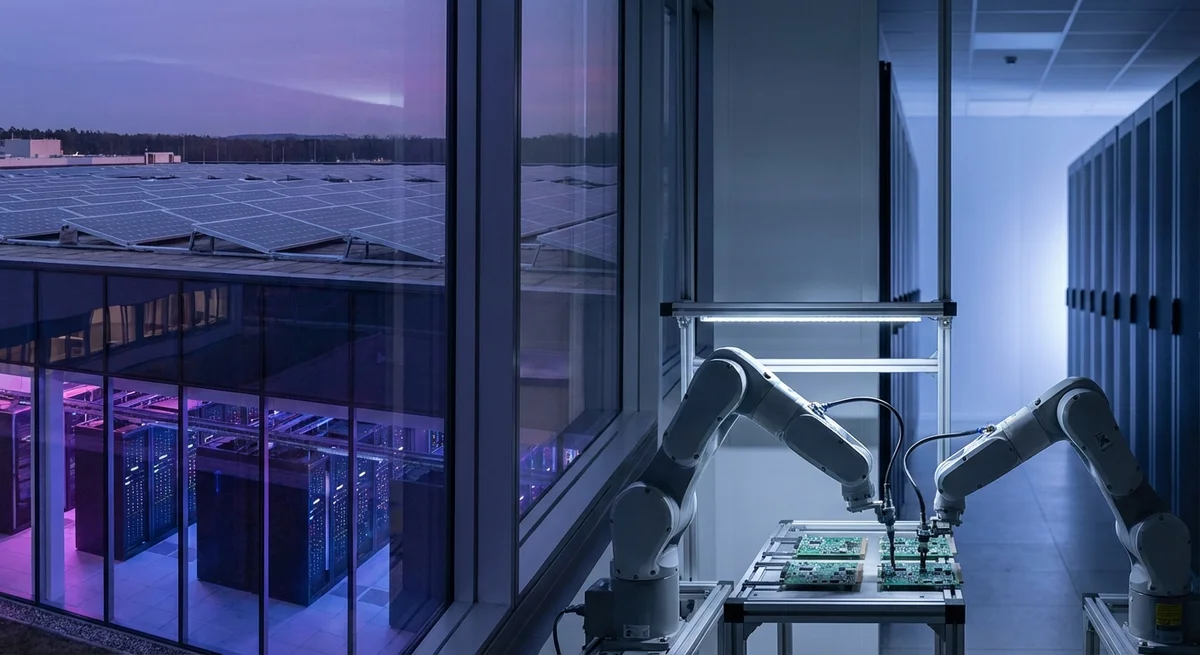
Elon Musk has once again surprised the world with his statements, this time concerning the future of the economy and the role of traditional currencies. In his social media post, he expressed confidence that after full integration of solar energy, robotics, chip manufacturing, and artificial intelligence (AI), traditional money such as the dollar will become more of an obstacle than a tool for development. According to his view, the key metrics will be power capacity and production volumes, not nominal value in fiat currencies.
This statement is not merely a futuristic vision, but a logical continuation of technological development in which Musk actively invests. His companies, such as Tesla (in the field of solar energy and robotics), Neuralink (in chip development), and xAI (in artificial intelligence), strive to create a self-sufficient ecosystem where energy, manufacturing, and intelligence work in symbiosis. If this ecosystem becomes reality, then traditional economic models based on monetary exchange may indeed become obsolete.
What exactly does Musk have in mind? Presumably, he means that in the future, when robots produce goods and services using solar energy and controlled by AI, the need for money as an intermediary between production and consumption will disappear. Instead, access to resources—energy, materials, and computational power—will become key.
In such an economy, companies controlling these resources will possess enormous power, regardless of their financial status in the traditional sense. The consequences of such a scenario for the global economy are difficult to overstate. First, it could lead to redistribution of wealth and power.
Second, it will require rethinking existing financial institutions and regulatory mechanisms. Third, it could create new challenges in social justice and resource accessibility. However, it should be noted that the transition to such an economy is a long-term process that will encounter numerous obstacles.
Issues of AI safety must be resolved, energy system sustainability must be ensured, and mechanisms for fair resource distribution must be created. Additionally, the human factor must be taken into account—people's readiness to abandon familiar economic models and accept a new reality. In conclusion, Elon Musk's statement is not simply a bold prediction, but an invitation to discuss the future of the economy and the role of technology in shaping it.
Regardless of whether this scenario unfolds in full, it compels us to reflect on what values and principles will define our future.
Want to stop reading about AI and start using it?
AI News is a curated feed of AI/tech news. Hamidun Academy teaches you to use AI systematically in your work.