Olympics-2026: AI Chatbots and Drones Will Transform You Into Competition Participants
Remember those days when the height of ambition during an Olympic broadcast was a slow-motion shot of the finish line in low resolution? In 2026 in Milan and…
AI-processed from Wired; edited by Hamidun News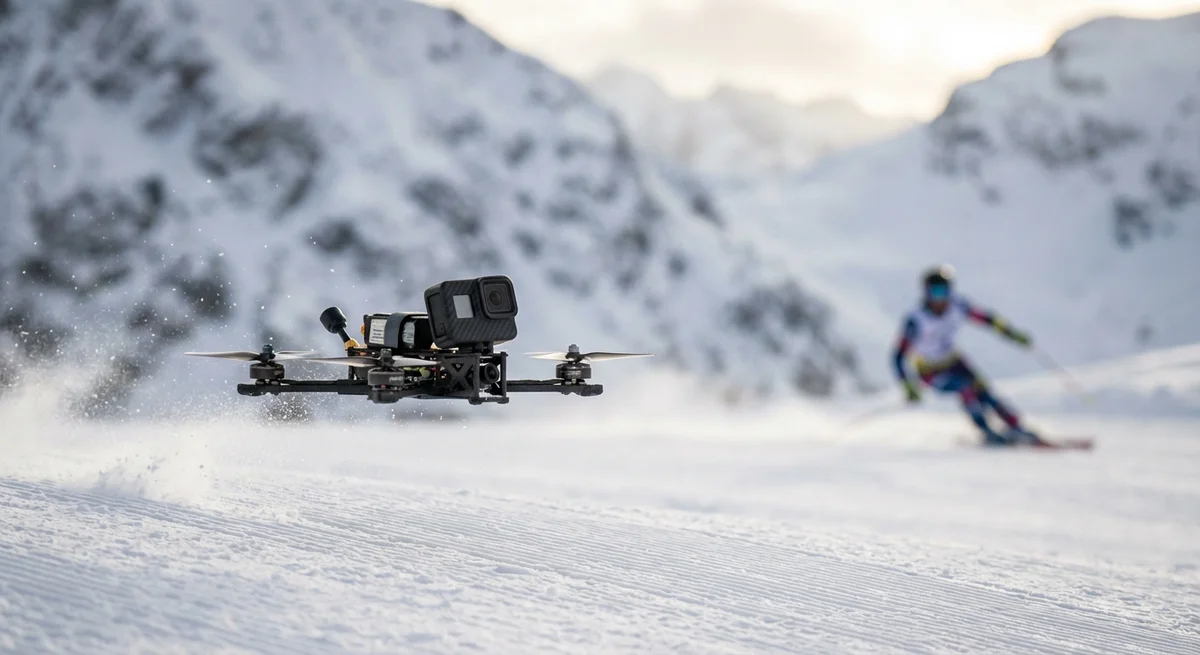
Remember those days when the height of ambition during an Olympic broadcast was a slow-motion shot of the finish line in low resolution? In 2026 in Milan and Cortina, those memories will finally become antiques. The organizers decided that watching skiers from the sidelines is a thing of the past, and now they want to stick us right inside an athlete's helmet. And do it in a way that doesn't make you dizzy or reach for the remote to switch to another series.
Sports broadcasting has long remained one of the most conservative niches in media. While the internet was exploding with interactivity, Olympic television images changed reluctantly. Yes, they added 4K, added name placards, but the essence remained the same: you sit on a couch and watch a tiny dot moving somewhere in the distance along a snowy slope. Milan-2026 breaks through this wall. The use of FPV drones (First-Person View) in broadcasts of this scale is not just a nod to gadget trends, but an attempt to convey that very edge-of-limits speed and adrenaline that a skier feels on a descent.
Previously, drones at stadiums worked like flying cranes — slowly, smoothly and predictably. Now small, nimble devices will rush after athletes at speeds of over a hundred kilometers per hour, following the trajectory of their movement. This changes the very aesthetics of the frame. We will see not just "a person in the snow," but the dynamics of every micro-movement, the tilt of the torso and the struggle against air resistance. This turns viewing into a video game, only without the option to hit "restart" in case of a mistake. To realize this task, engineers had to solve numerous problems with signal transmission without delays in mountainous terrain, but the result promises to be impressive.
The second major bet is placed on 360-degree replays in real time. Imagine that during a figure skater's complex jump or a hockey player's maneuver, you can literally "fly around" the moment, choosing any angle. The technology requires enormous computing power directly at sports facilities: dozens of cameras must synchronize the image, and cloud algorithms must stitch it into seamless three-dimensional space in fractions of a second. This is no longer just a "replay," it's an opportunity for every viewer to become the director of their own broadcast, examining details that were previously only available to judges.
But perhaps the most discussed innovation will be Olympics GPT. In an era when everyone in their pocket has access to any knowledge in the world, organizers realized: viewers need context here and now, not post-match reviews. This is a specialized language model trained on decades of Olympic statistics, rules of all sports, and detailed biographies of athletes. Instead of frantically Googling why they rub ice so vigorously in curling or what this particular snowboarder's personal record is, you simply ask the AI in the app. The model will be able to analyze what's happening on screen and provide explanations in real-time. This turns passive viewing into an interactive session with a personal expert.
Why does the International Olympic Committee need this? The answer is mundane: the struggle for survival in the attention economy. The younger generation is not ready to spend three hours watching a linear broadcast, if it doesn't have interactivity, gamification and dynamics.
AI and new visualization methods are a way to stay afloat in a world where TikTok and high-budget video games compete for the same 15 minutes of a user's free time. If you can't make sports more interesting than games, you'll have to make sports broadcasting look like a game. The Olympics is finally transforming from a simple competition into an incredibly complex technological show, where data and algorithms become as important as the physical training of the participants.
The main point: Olympics-2026 will show us a future where an AI chatbot in a smartphone becomes more important than a commentator, and a drone becomes more important than a traditional camera operator. The only question remains: won't all these special effects overshadow the drama of human achievement?
Want to stop reading about AI and start using it?
AI News is a curated feed of AI/tech news. Hamidun Academy teaches you to use AI systematically in your work.