DeepSeek vs GPT-5: China's tech market turned into a gladiatorial arena
The era when we evaluated neural networks by their ability to write essays about plastic waste or generate code for a calculator is officially coming to an…
AI-processed from Jiqizhixin (机器之心); edited by Hamidun News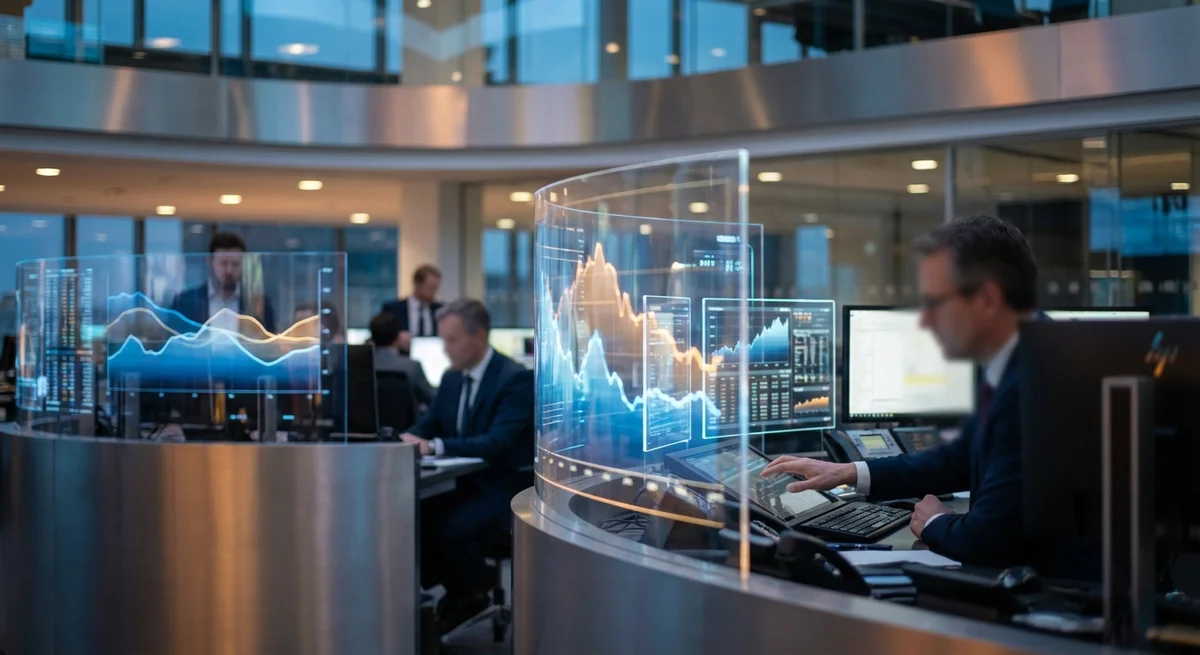
The era when we evaluated neural networks by their ability to write essays about plastic waste or generate code for a calculator is officially coming to an end. While Silicon Valley froze waiting for GPT-5, Chinese developers decided that the best test for intelligence is not an exam sheet, but stock quotes. China launched the first-ever arena for AI agents based on the high-tech STAR Market exchange. This is not a simulation or a closed beta test for the select few, but a full-fledged testing ground for autonomous systems in real financial market conditions.
Context here matters more than the news itself. The industry has been living in "benchmark war" mode for the last six months. DeepSeek, a young and audacious Chinese lab, spooked giants like OpenAI and Google by showing results comparable to top-tier models at a fraction of the training costs. But numbers in tables are one thing, and real decision-making under conditions of high uncertainty is another. The launch of a trading arena on STAR Market is China's attempt to seize the initiative and set a new standard for evaluating AI. If you call your model "intelligent," give it access to a terminal and see how much money it preserves by the end of the trading session.
What exactly changed in the approach? Traditional tests check static knowledge. But next-generation AI agents need to be able to plan, use tools, and adapt. On the trading arena, models face the need to analyze massive amounts of data in real time, filter noise from signals, and most challenging, compete with each other. This transforms AI development from a purely software task into a strategic zero-sum game. There is no room for hallucinations here: an error in interpreting a financial report leads to immediate loss of position, not just a strange chatbot response.
Why is this important right now? We are witnessing a transition from "chatbots" to "agents." This is a fundamental shift. An agent is an entity that has a goal and tools to achieve it. China's financial sector, which has always been under strict control, suddenly becomes the most open place for such experiments. This suggests that Beijing is betting on AI not just as a tool for censorship or surveillance, but as a key economic driver. While the West discusses ethical risks and erects barriers, the East creates an environment where neural networks learn to survive and win under conditions of capitalist Darwinism.
The connection of this news to the upcoming GPT-5 release is obvious. OpenAI promised that their next model would have "reasoning capabilities." But Chinese DeepSeek is already here, and it's already on the exchange. If it turns out that specialized and lighter models handle financial planning tasks better than universal monsters from San Francisco, then the strategy of "the more parameters, the better" will have definitively lost. We are entering a phase when efficiency will be valued higher than raw power.
Bottom line: benchmarks are dead, long live the real sector. The ability of an AI agent to operate on the STAR Market exchange is the first step toward full autonomy in corporate governance. Are we ready to trust our portfolios to an algorithm trained on Chinese low-cost chips, or will we wait for salvation from Sam Altman?
Want to stop reading about AI and start using it?
AI News is a curated feed of AI/tech news. Hamidun Academy teaches you to use AI systematically in your work.