Tesla: почему Илон Маск превращает автозаводы в дата-центры
Тесла меняет стратегию в Китае. К 2026 году компания планирует залить рынок инвестициями в ИИ-софт, «железо» и энергетику. Вице-президент Тао Линь подтвердила:
AI-processed from 36Kr (36氪); edited by Hamidun News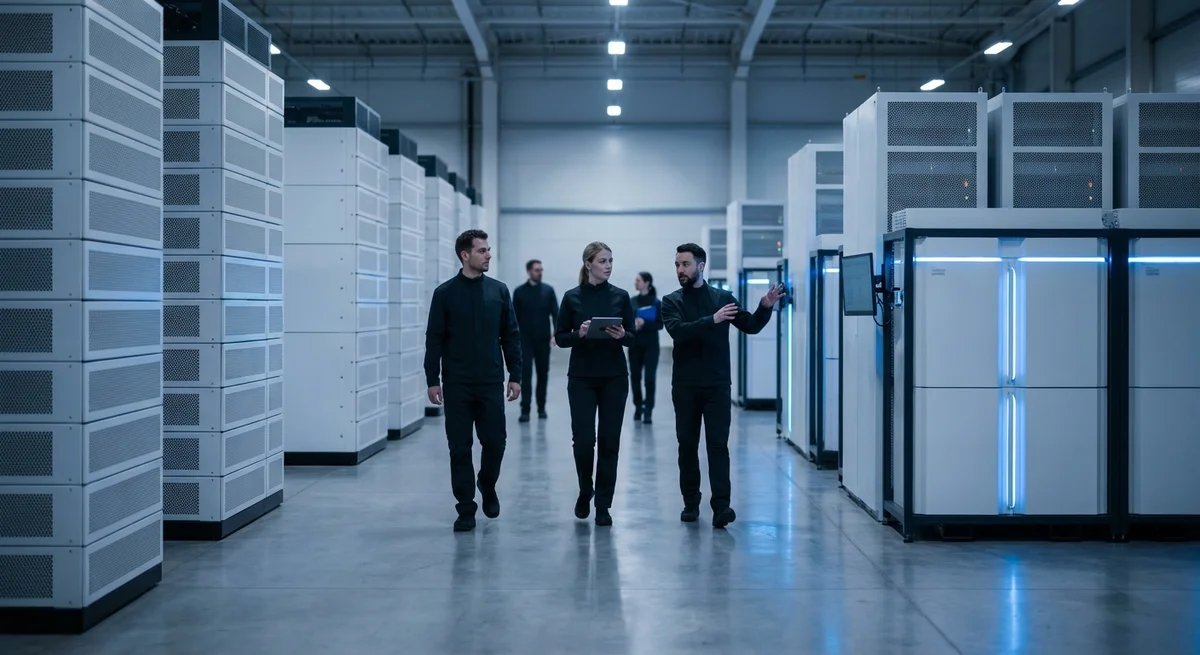
If you still think Tesla is a company that simply assembles charming electric cars with a large tablet on the dashboard, then Tesla's Vice President Tao Lin has news for you. At a recent meeting in Beijing, she stated plainly: the era of "just cars" is over. By 2026, Tesla intends to completely transform into a giant standing on three pillars: artificial intelligence, robotics, and energy.
And China plays the role not just as an assembly workshop, but as the main testing ground for this new reality. Let's look at the numbers, because they're impressive even for those used to Elon Musk's appetites. Tesla's global capital expenditures in 2026 will exceed $20 billion.
Where will this money go? Not to new assembly lines for the Model 3. The main stream of financing will be directed toward computing power for AI, factories for producing humanoid robots, and preparation for mass production of the Cybercab autonomous taxi.
To make all this work, Tesla has already deployed local neural network training centers in China that fine-tune the autopilot for the specific—and frankly, chaotic—traffic of local megacities. Interestingly, the company has begun openly acknowledging that a car is merely a temporary form of existence for their AI. Tao Lin emphasized that the vehicle remains the most important "carrier" of intelligence, but the company's vision is now broader.
This is an attempt to create a global ecosystem where Optimus robots work in factories and Cybercab autonomous vehicles transport people, while all this infrastructure is powered by intelligent energy grids. Musk is betting that the world of the future will be fully electrified, and a single AI brain will manage this electricity and infrastructure. The energy aspect here deserves special attention.
While competitors try to squeeze out an extra 50 kilometers from a battery, Tesla is building a megafactory in Shanghai for energy storage production. The product called Megapack will become the key export commodity for markets in the Asia-Pacific region and Europe. The logic is simple: AI centers require a colossal amount of energy, and old power grids can't handle such a load.
Tesla wants to sell not only "brains" in the form of software, but also "food" for these brains in the form of energy storage systems. Essentially, we're witnessing Tesla trying to escape the trap of classical automotive industry, where margins are falling under pressure from Chinese brands like BYD or Xiaomi. Instead of engaging in price wars over "hardware," the company is moving into areas of high added value—software and infrastructure.
If the plan works, in a couple of years, buying Tesla will be perceived not as acquiring a means of transportation, but as subscribing to a global neural network that also happens to drive you to work. The only question is whether Musk will manage to realize these ambitions before Chinese tech giants copy his approach. The main point: Tesla is officially ceasing to be a car manufacturer and entering the league of AI infrastructure companies.
Will Musk be able to convince investors that robotaxis and mega-batteries will bring more profit than Model Y sales?
Want to stop reading about AI and start using it?
AI News is a curated feed of AI/tech news. Hamidun Academy teaches you to use AI systematically in your work.