Maia 200: Microsoft pits its silicon against Amazon and Google
Microsoft показала Maia 200 — второе поколение собственного ИИ-ускорителя на базе 3-нанометрового техпроцесса TSMC. Внутри более 100 миллиардов транзисторов, а
AI-processed from The Verge; edited by Hamidun News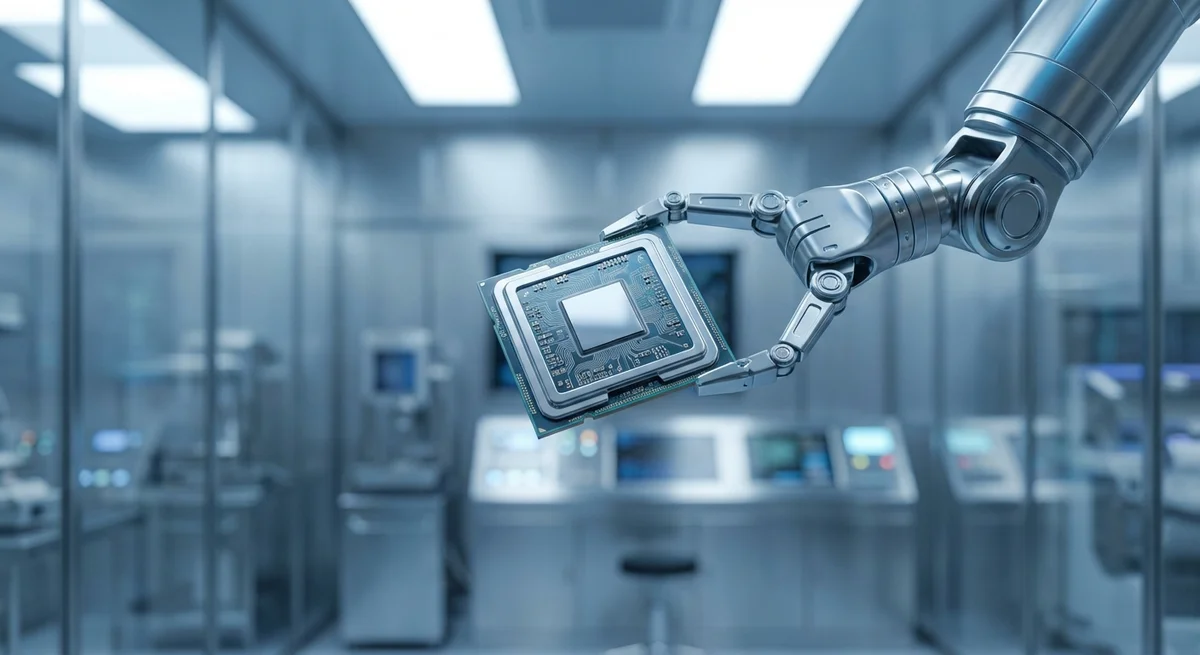
Seems like Microsoft finally got tired of waiting in the NVIDIA queue and overpaying for every FLOP. The company unveiled Maia 200 — its new answer to competitors' dominance in hardware AI. If Redmond used to be associated exclusively with Windows and Office, it's now a full-fledged player in the semiconductor market, ready to compete with Amazon and Google on their own turf. The shift to in-house solutions is not just Satya Nadella's whim, but a hard necessity in a world where model training costs grow exponentially.
The context here is simple: cloud giants figured out long ago that buying ready-made solutions is a path to poverty. Google has been perfecting its TPU for years, Amazon actively deploys Trainium, and only Microsoft relied on external suppliers for a long time. After the first Maia version launched, it became clear the company needed something more ambitious. Maia 200 is built on TSMC's cutting-edge 3-nanometer process and carries over 100 billion transistors. This is enormous power density aimed at solving one task: running heavy neural networks faster and cheaper than competitors do.
The numbers Microsoft cites look like a straight slap in the face to its peers. Scott Guthrie directly states that Maia 200 is three times faster than Amazon's third-generation Trainium in FP4 operations. Moreover, the chip supposedly outperforms Google's seventh-generation TPU in FP8 computations. These are serious claims, considering Google has been working on its processors for over ten years. Microsoft is clearly betting on narrow specialization: their silicon is tailored to specific Azure workloads and OpenAI models, giving them an optimization advantage unavailable to universal solutions.
Why does this matter to us? Simple: the more efficient the hardware in data centers, the faster and cheaper AI services become. If Microsoft can reduce inference costs for models like GPT-4 or the future GPT-5, it gives them room to maneuver in a price war with Anthropic and Google itself. Additionally, having its own chip allows designing software and hardware simultaneously, creating a unified stack where every transistor knows its job. This is exactly the strategy that once made Apple a leader in mobile processors, and now we see this approach migrating to server racks.
However, don't think NVIDIA should start packing their bags. Jensen Huang still controls the CUDA software ecosystem, which is extremely hard to leave. Microsoft is building Maia 200 primarily for its own needs and key partners. It's an attempt to create a "safe haven" within Azure, so external market upheavals in chips can't stop the development of their AI products. The power margin engineers mention hints that Redmond already knows the parameters of next-generation models that will require even more computing resources.
In the end, the fight for AI is a fight for energy and silicon. Whoever controls the physical layer of computing dictates terms to everyone else. Microsoft was long in the role of a follower, but Maia 200 shows they're willing to spend billions to become self-sufficient. It will be extremely interesting to see real tests in the cloud when chips start massively serving user requests. Because on paper everything always looks beautiful, but the real world of AI workloads knows how to quickly ground even the most ambitious players.
The bottom line: Microsoft is finally becoming a "hardware" company, and that's bad news for NVIDIA, but great for Azure infrastructure development. Will this be enough to surpass Google in the long-term race?
Want to stop reading about AI and start using it?
AI News is a curated feed of AI/tech news. Hamidun Academy teaches you to use AI systematically in your work.