AI-счет на $650 миллиардов: Big Tech сжигает мосты и кэш ради будущего
Крупнейшие игроки рынка — Microsoft, Meta, Alphabet и Amazon — готовятся влить безумные $650 миллиардов в инфраструктуру для ИИ к 2026 году. Это не просто закуп
AI-processed from Bloomberg Tech; edited by Hamidun News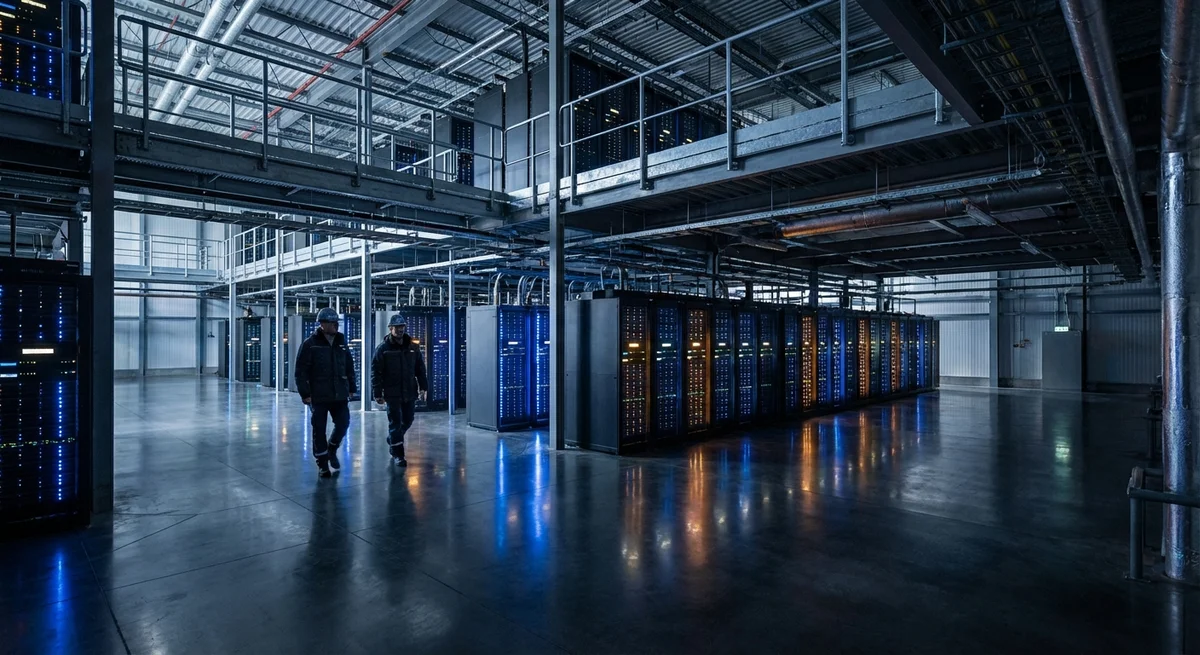
Imagine you're sitting at a poker table where the minimum bet has just been raised to the budget of a small European country. This is exactly what's happening in Silicon Valley right now. Four of the largest technology giants in the US — Microsoft, Meta, Alphabet, and Amazon — have planned capital investments that will reach an astronomical $650 billion by 2026. To put this in perspective: this is more than the GDP of most countries in the world, and all this money will go toward a single goal — dominating the artificial intelligence sphere. We are witnessing not just an investment cycle, but the most expensive gamble in human history.
It all started when OpenAI released ChatGPT, and the world suddenly realized that old server capacity was no longer sufficient. Since then, the industry has been living in a state of perpetual shortage. First there weren't enough Nvidia chips, then there wasn't enough data center space, and now the stability of power grids is at risk. After previous attempts to find the "next big thing" like the metaverse ended ambiguously, companies decided to stop taking chances and went all-in. If investors previously demanded caution, they now punish any signs of slowdown in the AI race.
What exactly are they buying with these billions? The lion's share goes to the latest generation of graphics processors, which cost like elite real estate, and to the construction of colossal computing hubs. These facilities require so much electricity that tech giants have started buying up nuclear power plants and investing in small modular reactors. Microsoft has already negotiated restarting a reactor at Three Mile Island, and Google and Amazon are looking for ways to ensure their "intelligence factories" have stable power. This is no longer the software business in the traditional sense, but the heavy industry of the digital age.
Why does this matter right now? Because we've reached a point where algorithmic capabilities are hitting physical hardware limitations. To train the next version of GPT or Gemini, simply having "smart code" is no longer enough — you need thousands of hectares of servers and gigawatts of energy. Companies are afraid of being in a situation where they have a brilliant idea but lack the computing capacity to implement it. This fear of missing out, or FOMO at the corporate level, is forcing them to spend money as if tomorrow will never come. The market is so far forgiving these expenditures, hoping that AI will start generating comparable revenue in the next couple of years.
However, behind this optimism lies a serious risk. Analysts are starting to ask: where, exactly, is the profit? So far, the main beneficiaries of this gold rush remain the shovel makers — Nvidia and energy equipment suppliers. If end products based on AI don't start generating hundreds of billions of dollars in the near term, Big Tech will face a severe hangover. But they can't stop: in this race, whoever first stops building data centers automatically admits their defeat in the battle for the future of technology.
Bottom line: Big Tech is transforming into an infrastructure monster, where success depends not on programmer creativity, but on access to cheap energy and endless rows of servers. Will they be able to recoup these $650 billion before investors run out of patience?
Want to stop reading about AI and start using it?
AI News is a curated feed of AI/tech news. Hamidun Academy teaches you to use AI systematically in your work.