Waymo World Model: Google's autonomous vehicles now train in their own 'Matrix
Autonomous driving has always hit the same wall: reality is predictable in 99% of cases and frighteningly chaotic in the remaining one percent. To teach a…
AI-processed from MarkTechPost; edited by Hamidun News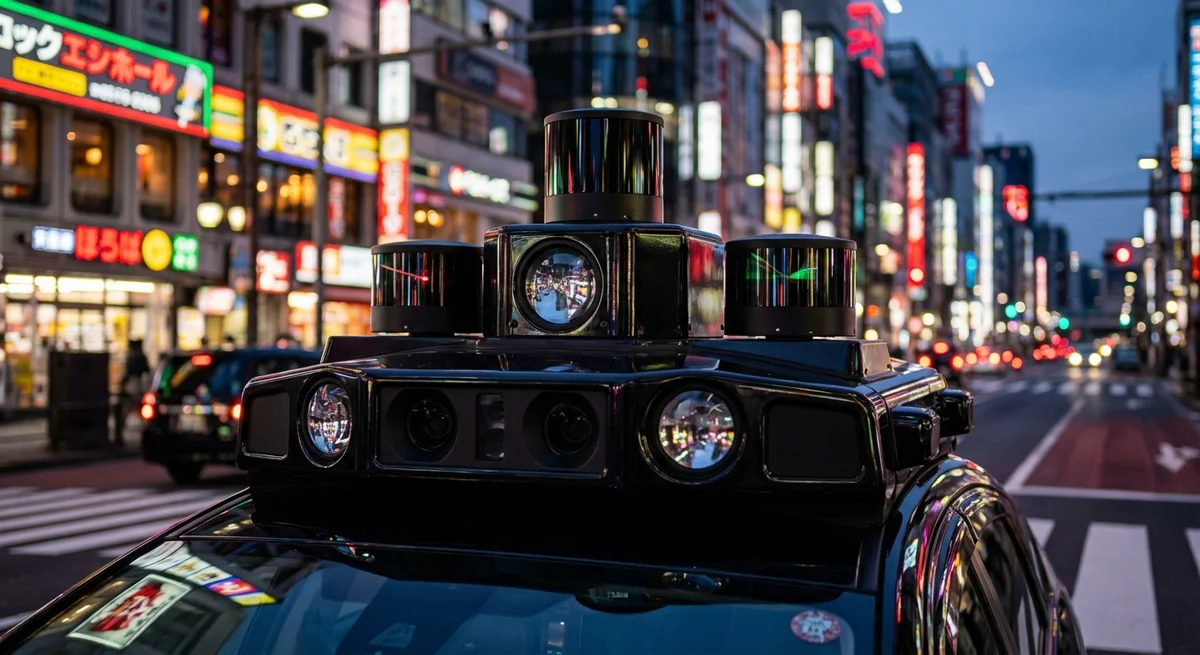
Autonomous driving has always hit the same wall: reality is predictable in 99% of cases and frighteningly chaotic in the remaining one percent. To teach a machine to handle this one percent, you need either to drive billions of kilometers or build a perfect digital copy of the world. Waymo chose the second path, introducing Waymo World Model — a generative system that turns autonomous vehicle training into endless viewing of hyperrealistic dreams of traffic.
Previously, simulators for autonomous vehicles resembled advanced video games. Developers manually created 3D models of trees, houses, and pedestrians, programmed their behavior rules, and hoped that would be enough. But the real world is far more complex: light reflections on asphalt after rain, strange shadows, or erratic driver behavior are hard to program manually. Waymo World Model changes the rules of the game by leveraging Google DeepMind's Genie 3 foundation. Now the system doesn't "assemble" a scene from blocks, but generates it as a whole, understanding physics and visual nuances at a deep neural network level.
The main advantage of the new model is controllability and multi-sensor capabilities. This is not just a beautiful image generator like Sora. The system creates coherent data for all of the autonomous vehicle's sensors: cameras, lidar, and radar. If a virtual car brakes, the entire surrounding world responds to this action accordingly. This allows Waymo engineers to play through thousands of "what if" scenarios that could have ended in tragedy in reality. Want to test how the car will behave if a ball suddenly rolls in front of it and a truck flies around the corner? Now it's a matter of a few seconds of generation.
Context matters more than the technology itself here. Waymo has already driven over 200 million miles in fully autonomous mode, making it an undisputed industry leader. However, even such gigantic experience is not enough to anticipate all "edge cases." Using DeepMind's developments shows that Google has finally begun to effectively combine its divisions. While other companies are simply trying to survive or polish a basic autopilot, Waymo is building a factory of synthetic data that could accelerate technological development by orders of magnitude.
Interestingly, the transition to generative world models is an acknowledgment that classical algorithms and manual programming have reached their ceiling. We are entering an era where AI trains another AI in a virtual environment that becomes almost indistinguishable from reality. For the industry, this means a new round of arms race: now victory goes not to the one with the most cars on the roads, but to the one whose neural network best "hallucinates" road situations. There remains only one question: how safe is it to trust a system that learned to drive in a world created by another neural network?
The bottom line: Waymo is definitively moving autonomous vehicle development into the realm of pure AI, where simulation becomes more important than real-world miles.
Want to stop reading about AI and start using it?
AI News is a curated feed of AI/tech news. Hamidun Academy teaches you to use AI systematically in your work.