Китайский SOTA-прорыв и агенты OpenAI: ИИ выходит на улицы
Неделя доказала: доминирование Запада в сфере больших языковых моделей — это миф. Китайские SOTA-модели показывают, что скорость и открытость важнее раздутых бю
AI-processed from Habr AI; edited by Hamidun News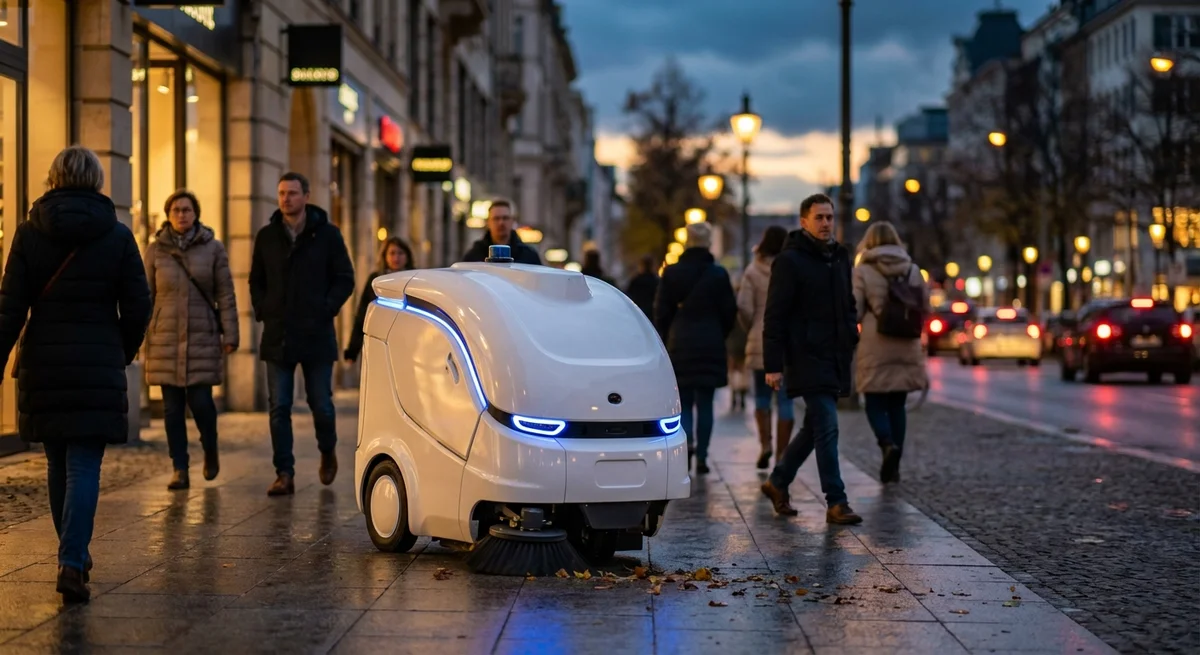
The world of artificial intelligence has stopped resembling a closed academic conference and has definitively turned into a noisy global marketplace, where Chinese vendors are beginning to shout louder than everyone else. If previously we waited with bated breath for each update from San Francisco, today news from Beijing and Shanghai is forcing engineers at OpenAI to nervously double-check their benchmarks. Chinese SOTA models have suddenly ceased to be "good for their region" and have simply become the best in the world in terms of price-to-quality ratio. This is a fundamental shift: the era of American exceptionalism in transformer architecture is coming to an end, giving way to pragmatic and very rapid copying followed by aggressive improvement.
While the East is taking over through sheer scale and speed, Sam Altman and company have decided it's time to turn chatbots into full-fledged digital employees. OpenAI's Codex application is not just another interface for text generation, but an attempt to release AI agents into the wild. We've long debated whether neural networks should be able to press buttons and independently execute tasks within an operating system, and here it's happening before our eyes. This is an important transition from the concept of "ask me" to "do it for me." If Codex takes off, the line between software and user will become completely blurred, turning smartphones into remote controls for autonomous assistants that don't just advise but act.
The music industry and visual content sphere have also taken another blow. The emergence of free Suno alternatives suggests that the barrier to entry for quality audio generation has completely collapsed. A year ago we were surprised by crude melodies, today we can't distinguish a generated track from a chart hit. Together with real-time avatars like Lucy 2.0, this creates a frighteningly realistic digital environment. Now a "person on the screen" or in a Zoom call window might turn out to be a set of pixels rendered in real-time with zero latency. This is no longer the future, it's our new work context, where trust in video calls becomes an unaffordable luxury, available only through in-person contact.
Against the backdrop of this technological madness, news from Chile looks extremely ironic. There, people for one day literally replaced ChatGPT, answering user questions manually. This is not just an amusing performance, but a harsh critique of the ecological footprint left by each generation of text or image. While we celebrate new models, massive data centers consume electricity and water on the scale of small nations. The Chilean experiment reminded us that behind every "smart" answer stands a quite tangible physical price paid by the planet. This is an important wake-up call for the industry: efficiency and sustainability will soon become more important than pure computational power.
At the same time, in Moscow AI is gaining quite physical, not just cloud embodiment. Cleaning robots on the streets are no longer footage from science fiction films, but everyday reality for municipal services in a big city. While experts debate whether GPT-5 will replace programmers and lawyers, simple machines are already replacing those who hold a broom. This clearly shows that automation is happening from two sides simultaneously: from above, from the realm of complex computations, and from below, through mechanics and sensors. We find ourselves in a kind of sandwich between virtual agents and quite real mechanical helpers, and it seems this is exactly the right time to reconsider our place in this new ecosystem.
Main point: The era of pure "generation" has ended—the era of action has begun. Whoever can teach a neural network to use a browser and a broom faster will capture the market. Are you ready for AI to become as familiar and invisible as electricity in a socket?
Want to stop reading about AI and start using it?
AI News is a curated feed of AI/tech news. Hamidun Academy teaches you to use AI systematically in your work.